




 Contact Us


 Other Insurance
Best Low-Glycemic Fruits for Controlling Diabetes
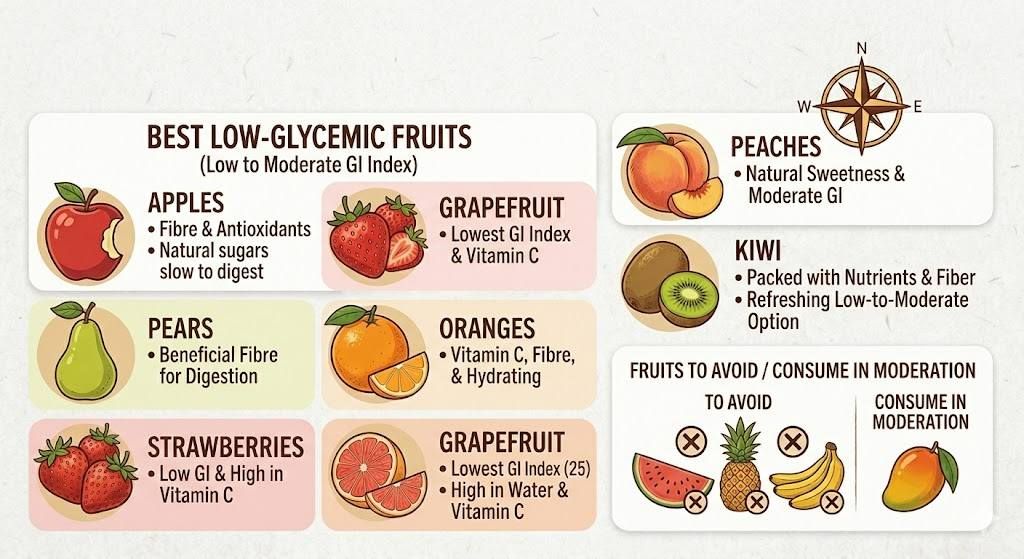
Date: Apr 20, 2026 - Last Modified May 5, 2026


Diabetes requires careful monitoring of all food items consumed by a person. Certain foods can adversely affect a person’s blood glucose levels, leading to an increase in Diabetes symptoms.
Fruits are a vital part of a healthy diet because they offer a variety of vitamins, minerals, dietary fibres, and antioxidants. However, a person with diabetes should be careful in selecting fruits, so that their blood glucose levels remain normal in their body. In this regard, fruits with a low GI index can be a vital help.
What is the Glycemic Index?
The Glycemic Index is a measure of how fast a food with carbohydrates can raise blood glucose levels. There are broadly three levels to understanding the GI:
Foods and fruits with a low GI Index have a score of less than 55 and can cause a gradual rise in blood glucose.
The Medium Glycemic Index foods have a score of 56-69, leading to a rise in blood glucose at a moderate level.
Foods in the High Glycemic Index list have a score of more than 70 and can cause a sudden rise in blood glucose.
The glucose index of fruits varies based on the type of fruit, its ripeness, and the quantity of the fruit consumed. The low GI fruits are ideal for diabetics as they keep the condition under control and still allow individuals to enjoy the natural sugars present in fruits.
Glycemic Index of Common Fruits
Understanding the glucose index of fruits can help people make better dietary choices. Below is a simplified chart showing common fruits and their glycaemic index values.
| Fruit | GI Value (as per a 120 grams serving) | Category |
| Apple | 36 | Low |
| Grapefruit | 25 | Low |
| Orange | 47 | Low |
| Strawberry | 41 | Low |
| Kiwi | 58 | Medium |
| Banana (ripe) | 62 | Medium |
| Mango | 60 | Medium |
| Watermelon | 76 | High |
Most fruits with a low GI index are rich in fibre and water content, which slows digestion and stabilises blood sugar levels.
Top 7 Fruits with Low GI Index for Diabetics
Many fruits can be included in the diet of diabetics, as they can be consumed in moderation without any adverse effects on the body. Some of them include:
Apples
Apples contain fibre and antioxidants, which can be beneficial for the heart. The natural sugars in apples take longer to be digested and can be included in a diabetic’s diet.
Pears
Pears contain fibre that can be beneficial in the digestion process and can be included in the list of the best fruits with a low GI index.
Strawberries
Considering the low glycemic index of strawberries and the advantages of vitamin C, they can be included in a diabetic diet as well.
Oranges
Oranges contain vitamin C, fibre, and hydrating properties, and it is a fruit with a low GI index. This makes it a must in a balanced diet for diabetics.
Peaches
These have natural sweetness and moderate glycemic index values. Therefore, these fruits can be included in the fruit list in the diabetes meal plan.
Grapefruit
With a GI value of 25, grapefruits are among the lowest-glycemic options available. They are high in water and vitamin C, which makes them excellent for stabilising blood sugar levels.
Kiwi
Kiwi has a GI value of 58, which still falls within the low- to moderate-glycemic range. It is packed with nutrients and fiber, and offers a refreshing option for a balanced diabetic diet.
Consuming these fruits in one’s daily diet can help obtain the required nutrients without causing any rapid increases in blood sugar levels.
Fruits to Avoid
Some fruits contain high GI index values and can cause a rapid increase in blood sugar levels. These fruits include watermelon, pineapple, and bananas. Fruits like mangoes should also be consumed in moderation.
Recommended Intake of Fruits for Diabetes
Moderation is key in the management of diabetes. Generally, most health organisations recommend one or two servings of fruit for a diabetes patient. One serving can be:
- One small apple or orange
- Half a cup of berries
One small pear
Although fruits with a low GI index have been recommended for people with diabetes, the quantity is still important since fruits have natural sugar.
Tips for Eating Fruits Safely with Diabetes
Pairing Fruits with Protein or Healthy Fat
Pairing fruits with nuts, yoghurt, and seeds can help manage diabetes.
Choosing Whole Fruits Instead of Juices
Whole fruits have fibre that can help manage diabetes since they can help manage the sugar level in the blood.
Monitoring the Portion Size
Even fruits with a low GI index should be taken in moderation.
Avoiding Overripe Fruits
Overripe fruits have a higher sugar level compared to less ripe fruits. This increases the GI index of fruits.
Importance of Having Health Insurance Plans
While maintaining a diet rich in low-glycemic fruits is a fantastic way to manage blood sugar levels naturally, a comprehensive approach to diabetes also requires financial preparedness. Diabetes is a long-term condition that may necessitate regular consultations, diagnostic tests, and specialised care. A dedicated health insurance plan ensures these expenses don't strain your savings.
If health complications arise, health insurance ensures you get advanced medical treatment right away without worrying about the bill, subject to policy wordings. Securing a policy from a trusted provider like SBI General Insurance allows you to focus on your wellness journey with peace of mind.
Conclusion
Understanding the glycemic index is important, as it can help people living with diabetes consume the right fruits without the risk of rising blood sugar levels.
With informed dietary choices and proper healthcare support, including appropriate medical coverage, people with diabetes can lead healthy and balanced lives.
Note: This article is for informational purposes only and is not medical advice. Consult a qualified healthcare professional for diagnosis or treatment decisions.
FAQs
1. What fruits can a person with diabetes consume?
The best fruits for diabetes include apples, strawberries, pears, cherries, and grapefruits because they have a low GI index, which does not lead to a sudden increase in blood sugar levels.
2. Can a person suffering from diabetes consume fruits daily?
Yes, with precaution and consultation from a doctor, diabetic patients can moderately consume fruits on a daily basis, but only fruits with a low GI index.
3. Do fruit juices affect blood sugar levels?
Yes, fruit juices can cause a sudden increase in blood sugar levels because they do not contain fibre.
4. Why are whole fruits better than juices for diabetics?
Whole fruits contain essential dietary fiber that slows down the absorption of sugar into the bloodstream. Juices lack this fiber, which can lead to a rapid spike in blood glucose levels.
Access and manage all your Insurance Needs in one place, right at your Fingertips.




4/5*
Access and manage all your Insurance Needs in one place, right at your Fingertips.



Vision
Our vision is to become the most trusted general insurer for a transforming India.
Mission
Our mission is to provide simple and innovative general insurance solutions, be responsive to our customers' needs and build a sustainable business for the future.
We're socially active!




