


 Contact Us


 Other Insurance
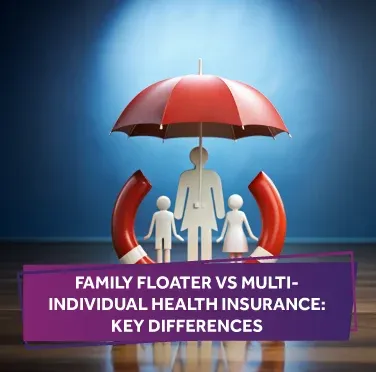
Family Floater vs Multi-Individual Health Insurance: Key Differences
Date: Feb 10, 2025 - Last Modified May 5, 2026


Buying health insurance requires consideration of several factors, such as features, premium amount, illness covered, coverage provided, and much more. Another aspect one should consider is whether to buy family floater health insurance or get multi-individual health insurance.
While family health insurance plans bring a whole family under one umbrella, a multi-individual health insurance plan provides the flexibility to each individual according to their needs, age, medical conditions, etc.
This article explains the key differences between family floater and multi-individual health insurance plans, including coverage structure, premium calculation, and claim impact. It helps readers choose the right option based on family size, age profile, medical needs, and budget preferences.
What Is a Multi-Individual Plan?
A multi-individual health insurance, also called as non-floater plan, is designed to provide coverage for more than one individual in the same policy. This plan provides each individual with their own limit, i.e., even if one person utilises their limit, the policies of other individuals under the same plan remain unaffected.
This type of individual health insurance is best suited for big families requiring multiple insurances. It can also be used by businesses to provide coverage to their employees and their families. A multi-individual plan provides the flexibility to customise a health insurance policy that can meet the variety of needs of each individual exclusively.
What Are the Benefits of a Multi-Individual Plan?
Following are key benefits of a multi-individual insurance plan:
Individual factor considerations
Each individual is unique and therefore requires specialised coverage plan. Multi-individual plans take personal factors into account, enabling them to offer tailored and more effective coverage solutions.
Beneficial in case of chronic illnesses
The need for specialised coverage becomes even more pronounced when someone is living with chronic illnesses. Their healthcare requirements are often more complex and ongoing. An individual insurance plan can offer substantial coverage to manage these expenses.
Ensures continued protection
Since the plan is linked to an individual, it does not affect the coverage of other family members. They continue to enjoy insurance protection even if one member’s coverage is exhausted, an essential advantage in today’s dynamic environment.
However, it is important to note that this feature can also be a limitation. An individual whose coverage has been exhausted cannot access the unused coverage of other members, even if it is available.
What Is a Family Floater Plan?
A family floater health insurance, as the name suggests, covers an entire family under a single policy. In a family floater health insurance, a fixed insured sum is offered. This sum can be used by any member of a family that is registered under the family health insurance plans.
For instance, if one family member falls sick and requires medical assistance, the cost of treatment will be provided by using the common sum insured. This common sum insured is the total amount allocated to all registered members of the family.
What Are the Benefits of a Family Floater Plan?
Below are the benefits of a family floater plan:
Single premium:
A family floater insurance plan is a single policy with one consolidated premium. The insurer evaluates the family’s overall risk profile to determine the premium, making it fair and competitive. In addition to being cost-effective, a single premium is easier to schedule, helping ensure timely payments.
Comprehensive coverage:
Since the insurance plan covers the family as a whole, any member who requires medical care can claim the insured sum as required. This ensures that funds are readily available when they are needed most.
However, this can also be a disadvantage, as in the case of a severe illness, a single individual may exhaust the entire coverage, leaving the remaining family members without adequate protection.
What Is the Difference Between the Two: Family Floater vs. Multi-Individual Plans?
To better compare family floater health insurance vs multi-individual health insurance, a look at the differences between them is crucial.
| Family Floater Health Insurance | Multi-Individual Health Insurance |
| Provides coverage for the entire family. | Has separate coverage limits. |
| Has a fixed sum insured that is shared by the family. | Has room for customisation and the coverage limit varies for each individual. |
| An individual can access the entire sum assured. | Each individual has independent coverage. |
| An individual can use up the whole sum assured for their own need which will lead to the exhaustion of the policy until renewed. | An insurance claim by an individual in the same policy won’t affect anyone else. |
Also Read: 5 Important Benefits of Health Insurance
How to Make the Right Choice?
The question that arises is - how to know which insurance is best suited for the family? Picking between a family floater health insurance and multi-individual health insurance can become tricky. Here is a guide on how to analyse and opt for health insurance according to your needs:
1) Assess Your Family’s Healthcare Needs
Account for the medical needs of every family member. Factors such as age, pre-existing ailments and medical history should be considered. If an individual requires customised healthcare, a multi-individual plan may provide more precise coverage.
2) Consider Family Size
A family floater plan is usually suggested for small families, whereas a multi-individual plan would be more feasible for large families, as they would have diverse medical needs. Health insurance should be opted on the basis of family members and the coverage required for them.
3) Review Coverage Limits
Review the limits of coverage provided by both - family floater health insurance and multi-individual health insurance. While a family floater gives a shared sum insured, multi-individual plans provide individual coverage limits. This helps in selecting a plan based on overall healthcare requirements.
4) Evaluate Premiums and Affordability
Compare the premiums of available options. Multi-individual plans and family floater plans are priced differently based on coverage structure and benefits. Consider your budget and coverage needs before making a decision.
5) Consider Future Healthcare Needs
Many factors may come into play in the future - parents getting older, adding new family members, or any unforeseen circumstances. Select a plan that offers flexibility and adequate long-term coverage.
Conclusion
The key difference between multi-individual plans and family floater plans is the structure of their coverage. While multi-individual plans provide each person with their personalised coverage limit, a family floater gives a sum insured that can be utilised by the entire family. Based on the different requirements and health insurance needs, one should choose a plan that aligns with their healthcare needs.
For those exploring suitable coverage options, SBI General Insurance offers a range of health insurance plans designed to cater to varying healthcare requirements.
FAQs
1. What is the main difference between family floater and multi-individual health insurance?
Insurance coverage is the main difference between family floater vs individual health insurance. Family floater plans offer a shared sum insured that can be collectively utilised by all members under the policy. A multi-individual health insurance plan provides separate coverage for each member, which can be used exclusively by the individual it is assigned to.
2. Which is better: family floater or individual health insurance?
Both family floater and multi-individual health insurance plans are beneficial. Consider your family’s health insurance requirements, number of members, and other factors to choose the right plan.
3. How is the premium calculated in a family floater plan?
The premium is calculated based on factors such as age, health conditions, and number of family members covered under the policy.
This blog is intended solely for educational and informational purposes. Content reflects data at time of publication and may not accurately reflect current premiums, terms, or regulations. Readers are encouraged to confirm the accuracy and relevance of the data before making any significant decisions. SBI General Insurance disclaims responsibility for any errors or consequences arising from the use of outdated information provided herein. For more details, please refer to the policy wordings and prospectus before concluding the sales. *Add-ons are subject to payment of additional premium.
Access and manage all your Insurance Needs in one place, right at your Fingertips.



4/5*
Access and manage all your Insurance Needs in one place, right at your Fingertips.


Vision
Our vision is to become the most trusted general insurer for a transforming India.
Mission
Our mission is to provide simple and innovative general insurance solutions, be responsive to our customers' needs and build a sustainable business for the future.
We're socially active!