


 Contact Us


 Other Insurance
How Does the PMFBY Crop Insurance Scheme Benefit Farmers?

Date: Nov 13, 2024 - Last Modified Mar 27, 2026


The Pradhan Mantri Fasal Bima Yojana (PMFBY), launched in 2016 by the Government of India, is the country's flagship crop insurance program. Aimed at providing financial protection to farmers in the face of unforeseen risks, this scheme serves as a safety net against the volatility of agriculture, safeguarding farmers from crop failures due to natural disasters, pests, and diseases.
What is Pradhan Mantri Fasal Bima Yojana (PMFBY)?
The Pradhan Mantri Fasal Bima Yojana is a crop insurance scheme that helps reduce the risks faced by Indian farmers due to situations like unpredictable weather conditions or pest infestations. By covering both pre-and post-harvest losses, PMFBY plays an important role in stabilizing farmer incomes.
The scheme provides coverage for:
- Losses during the entire crop cycle, from sowing to post-harvest.
- Damage caused by unseasonal rains, pest infestations, or other adverse events.
- Prevented sowing due to natural calamities.
Key Features of PMFBY:
- Affordable Premiums: Farmers pay a fixed premium of 2% for Kharif crops, 1.5% for Rabi crops, and 5% for horticultural crops. The remaining premium is subsidized by the government.
- Comprehensive Coverage: The scheme covers natural disasters (droughts, floods), pests, and diseases. Post-harvest losses due to local risks like hailstorms and landslides are also included.
- Quick Claim Settlement: PMFBY aims for faster settlement of claims through technological interventions, such as crop-cutting experiments to assess losses.
How Does the PMFBY Crop Insurance Scheme Benefit Farmers?
PMFBY benefits in many ways:
Financial Security:
The scheme ensures that farmers do not face severe financial hardships when crops fail. By insuring crops, the risk of income loss due to weather conditions or pest attacks is reduced. This secures livelihoods, especially in rain-fed and disaster-prone regions.
Affordable Premium Rates:
Farmers pay as low as 2% of the total sum insured for Kharif crops and 1.5% for Rabi crops, while for horticultural crops, the premium rate is 5%. This affordability makes PMFBY crop insurance accessible to small and marginal farmers who might otherwise be unable to bear the financial burden of such a scheme.
Mitigating Loan Default Risk:
By securing their crops, farmers are in a better position to repay loans, preventing defaults. This is not only a farmer benefits scheme but also strengthens the overall agricultural financing system.
Technology-Driven Implementation:
The PMFBY integrates advanced technologies like satellite imaging, drones, and mobile apps for precise estimation of crop loss, ensuring accurate claim settlements.
Timely Compensation:
The government aims to process claims within two months of the harvest to ensure that farmers get the compensation quickly, preventing them from falling into debt traps.
How To Apply for PMFBY?
Farmers can apply for the Pradhanmantri Fasal Yojana through various channels:
- Online: By visiting the official PMFBY portal, farmers can register and submit their applications.
- Offline: Farmers can visit their nearest Common Service Center (CSC) or bank branch to fill out and submit the application form.
- Insurance Agents: Many insurance agents and companies also allow the application process.
When applying, farmers need to submit basic details such as land records, Aadhaar cards, and details of the crops they are insuring.
Related Blog: PMFBY Crop Insurance – A Quick Summary on Registration, Eligibility & Documents
Conclusion
The Pradhan Mantri Fasal Bima Yojana is a lifeline for millions of Indian farmers, offering protection against o farmers. With a technology-driven approach, it enhances transparency and efficiency in the claims process.
For farmers seeking a reliable insurance provider, SBI General Insurance offers seamless registration, efficient claim processing, and comprehensive coverage under PMFBY. Their network of branches and mobile app ensures that the latest crop insurance scheme for farmers is accessible to all farmers.
Frequently Asked Questions
What is the PMFBY Crop Insurance Scheme?
PMFBY is a government-backed crop insurance scheme aimed at protecting farmers from financial losses due to crop failures caused by natural disasters, pests, and diseases.
Is there a premium that farmers need to pay under PMFBY?
Yes, farmers need to pay a nominal premium—2% for Kharif crops, 1.5% for Rabi crops, and 5% for horticultural crops, with the remainder subsidized by the government.
How can farmers apply for PMFBY?
Farmers can apply through the PMFBY website, mobile app, or by visiting their nearest CSC or bank branch.
What types of risks are covered under PMFBY?
PMFBY covers risks like natural disasters, droughts, floods, pest infestations, and post-harvest losses.
Who is eligible for PMFBY?
All farmers growing notified crops, including those with loans, are eligible for PMFBY.
When can farmers file a claim under PMFBY?
Farmers can file claims after the harvest if yield losses are reported due to natural calamities.
How is the claim amount calculated under PMFBY?
The claim amount is calculated based on crop losses, determined through crop-cutting experiments (CCE) and advanced technologies like satellite imaging.
Disclaimer: The above information is indicative in nature. For more details on the risk factor, terms and conditions, please refer to the Sales Brochure and Policy Wordings carefully before concluding a sale.
This blog is intended solely for educational and informational purposes. Content reflects data at time of publication and may not accurately reflect current premiums, terms, or regulations. Readers are encouraged to confirm the accuracy and relevance of the data before making any significant decisions. SBI General Insurance disclaims responsibility for any errors or consequences arising from the use of outdated information provided herein. For more details, please refer to the policy wordings and prospectus before concluding the sales. *Add-ons are subject to payment of additional premium.
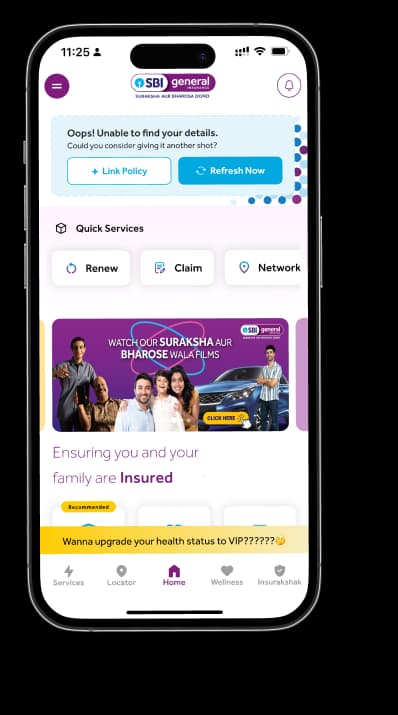
Access and manage all your Insurance Needs in one place, right at your Fingertips.



4/5*
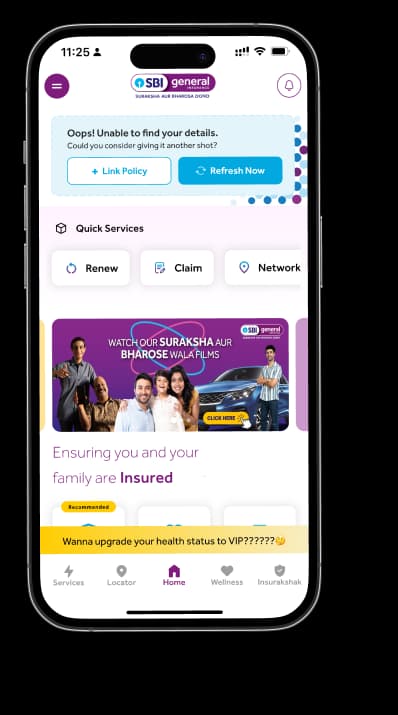
Access and manage all your Insurance Needs in one place, right at your Fingertips.


Vision
Our vision is to become the most trusted general insurer for a transforming India.
Mission
Our mission is to provide simple and innovative general insurance solutions, be responsive to our customers' needs and build a sustainable business for the future.
We're socially active!