


 Contact Us


 Other Insurance
Positive Thinking Day 2022: Why Positive Thinking Matters?

Date: Sep 14, 2022 - Last Modified Sep 14, 2022


All of us wish to lead a joyful & stress-free life. We seek peace of mind and positivity to be the best version of ourselves. Maintaining a positive outlook towards life usually takes some effort, but the end result is always worth it. On Positive Thinking Day 2022, we reflect on the importance of thinking optimistically and practising positive thinking habits. Read on.
Positive Thinking Day 2022Introduced by an American entrepreneur in 2003, Positive Thinking Day is celebrated on the 13th of September every year. This day is dedicated to educating people about the benefits of harnessing positive thoughts, how they impact life's quality in general and training people to maintain a positive attitude.
Importance of Positive Thinking on Your HealthPositivity does not necessarily cure physical illnesses. But a positive attitude helps you focus on the good instead of the stress factors. For instance, a cancer diagnosis can affect anyone's spirit, but patients who concentrate on the treatment instead of feeling sorry for themselves tend to recuperate faster.
With positive thinking, you can approach unpleasant life situations head-on. It is also believed that optimistic people tend to lead healthier lives. Increased lifespan, reduced risk of cardiovascular and respiratory diseases, lower rates of depression, etc., are some of the health benefits of positive thinking.
How to Focus on Positive Thinking?Here are some effective ways to look at life positively.
-
Identify and reframe negative thoughts
You can focus on positive thinking by first identifying your negative thoughts and trying to approach situations positively. For instance, if, someday, you do not get the desired outcome, you may feel angry, which can have cascading effects on the rest of your day. Instead of getting angry, remind yourself that getting upset about things beyond your control is futile.
-
Surround yourself with positivity
Just like a filthy environment can affect the physical quality of life, so does a negative environment affect your mental health. Therefore, you must surround yourself with people with a positive outlook towards life and keep negative people who impact your self-esteem at arm's length.
-
Practice positive affirmations
Positive self-talk is the key to mental resilience. Instead of thinking 'I don't know how to do this', think 'This is an opportunity to learn something new'. Train your mind to convert negative self-talk into positive self-talk.
-
Maintain a healthy lifestyle
Exercise keeps both body and mind healthy. Engaging in physical activities can positively affect your mood. A healthy diet keeps your gut healthy. You can sleep better and manage your stress levels.
A positive attitude towards life keeps your mind and body healthy. However, life is unpredictable, and your health may be affected despite your best efforts. That's why it is always best to stay prepared. This Positive Thinking Day, ensure your physical and mental well-being by investing in health insurance.
Your health insurance policy covers you against all kinds of physical ailments. As per the IRDIA directive, insurers are also mandated to cover mental conditions like depression, anxiety, Bipolar disorder, PTSD, etc. While the insurer covers the treatment expenses, you can focus on getting the best treatment.
Disclaimer: The above information is indicative in nature. For more details on the risk factor, terms and conditions, please refer to the Sales Brochure and Policy Wordings carefully before concluding a sale.This blog is intended solely for educational and informational purposes. Content reflects data at time of publication and may not accurately reflect current premiums, terms, or regulations. Readers are encouraged to confirm the accuracy and relevance of the data before making any significant decisions. SBI General Insurance disclaims responsibility for any errors or consequences arising from the use of outdated information provided herein. For more details, please refer to the policy wordings and prospectus before concluding the sales. *Add-ons are subject to payment of additional premium.
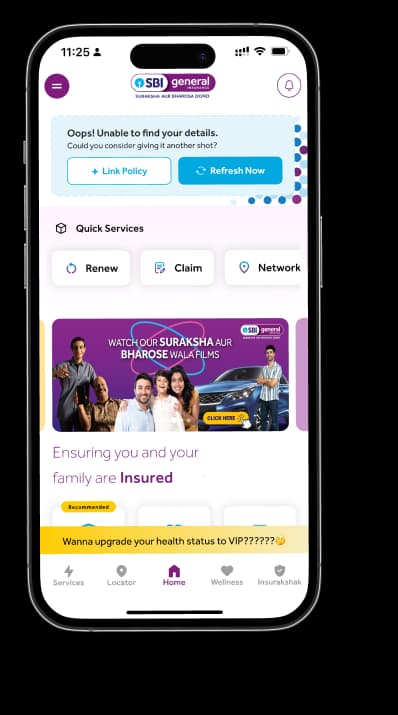
Access and manage all your Insurance Needs in one place, right at your Fingertips.



4/5*
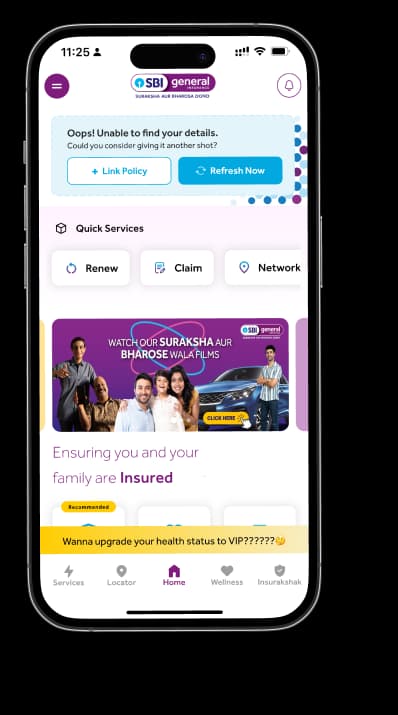
Access and manage all your Insurance Needs in one place, right at your Fingertips.


Vision
Our vision is to become the most trusted general insurer for a transforming India.
Mission
Our mission is to provide simple and innovative general insurance solutions, be responsive to our customers' needs and build a sustainable business for the future.
We're socially active!