


 Contact Us


 Other Insurance
Cobra Stretch Exercise: Benefits, Steps & Mistakes to Avoid
Date: Jun 11, 2026 - Last Modified Jun 11, 2026


Yoga can be practised by people of all ages and experience levels. Among the many yoga poses, the Cobra Pose is a simple stretch that can help release tension and leave you feeling more relaxed. Once you understand the correct technique, it can be easily incorporated into your daily routine.
This article explains what the cobra stretch exercise is, how to perform it, which muscles it targets, its benefits, and provides safety tips and precautions.
What is the Cobra Stretch Exercise?
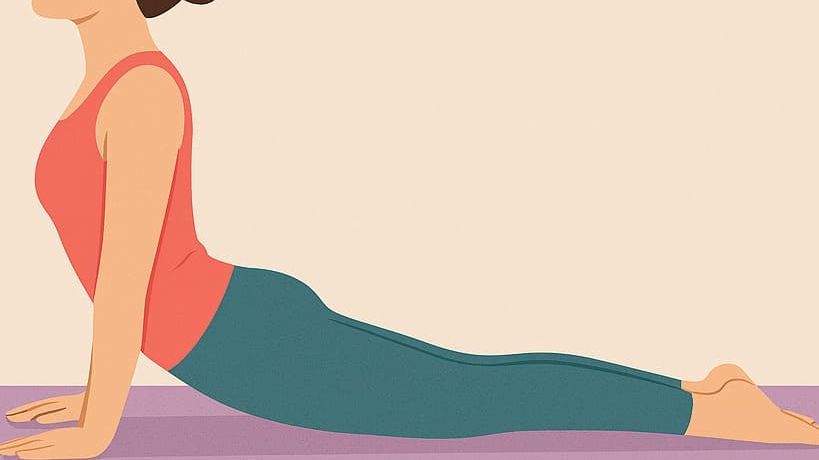
The cobra stretch exercise is also known as Bhujangasana. It is a combination of the Sanskrit words ‘Bhujang’ (serpent) and ‘asana’ (pose). Like many other yoga poses, it is named after the animal it resembles. In this case, the stretch resembles a cobra raising its hood and creating an arch.
How to Do the Cobra Stretch Correctly?
For the cobra stretch exercise, individuals must follow these steps:
1. Starting Position
Begin by lying flat on the stomach on a yoga mat. Next, stretch the legs with the feet resting on the floor. The toes should be pointing backwards, and the thighs must be gently pressed against the mat.
2. Hand Placement
Place the palms under the shoulders and spread the fingers wide. The elbows should be close to the torso and relaxed. The forehead can be placed on the floor. This can help the neck relax.
3. Prepare the Spine
Take deep breaths to prepare the spine for a gentle arch.
4. Inhale and Lift
With a deep inhale, press into the palms and lift the chest off the floor. Ensure that the shoulders are rolled back and away from the ears.
5. Open the Chest
Expand the chest forward and upward to create an arch in the upper back. Keep the pelvis and legs pressed to the floor. Look up slightly, but be mindful not to strain the neck.
6. Engage Muscles
Tighten the core slightly and lengthen the spine gently. Hold the pose for 15-30 seconds while maintaining steady breathing.
7. Exhale and Release
Lower the chest and forehead back to the floor. Relax the arms along the sides of the body.
8. Repeat
Repeat this exercise two-to-three times. Individuals can rest between repetitions.
Muscles Targeted During Cobra Stretch
Generally, backbends help stretch the front muscles while engaging the posterior muscles.
The muscles toned in the cobra back stretch are:
Top of the feet
Abdominals
Hip flexors
Front neck cervical flexors
Muscles engaged in the cobra stretch:
Hamstrings
Spinal extensors
Upper back muscles, such as the rhomboids and middle trapezius
gluteus maximus
triceps
Benefits of Cobra Stretch
The cobra stretch benefits can be linked to mental and physical well-being. The following are some general advantages of yoga:
May Relieve Lower Back Pain
A 2020 review of numerous studies examining the effect of yoga on lower back pain found that it led to improvements in symptoms. Another study stated that practising yoga for 12 weeks could improve lower back pain and the anxiety associated with chronic pain.
May Improve Blood Circulation
This pose helps open up the chest, which may help improve blood circulation throughout the upper body. As the chest expands, blood flow to various organs can increase. Over time, circulation improvement may lead to a rise in energy levels.
May Improve Lung Capacity
The pose helps stretch the intercostal muscles between the ribs while expanding the chest cavity. This expansion encourages a deeper and more effective breathing pattern that may persist beyond the yoga practice.
May Enhance Self-Esteem
According to a 2020 study, yoga can be particularly beneficial for adolescents. Adolescents can experience loneliness, and practising yoga can improve emotional regulation and self-esteem.
While these benefits are linked to yoga as a whole, incorporating poses such as the Cobra Pose into a regular practice can encourage mindful movement and body awareness that support these positive outcomes.
May Reduce Inflammation
Inflammation is a common byproduct of major health conditions, such as cancer. According to a 2014 study of 200 breast cancer survivors, participants showed reductions in inflammation after attending a 90-minute yoga class twice a week for 12 weeks.
As a commonly practised yoga posture, the Cobra Pose can be part of a broader yoga routine that supports these benefits.
Adding such stretches to the daily routine may help individuals improve overall health. However, health emergencies can arise at any time, and individuals must be prepared to bear these medical costs. Health insurance can provide financial security in such circumstances. It can help cover hospitalisation expenses, diagnostics, and treatments without causing significant financial strain. Being prepared with the right coverage allows individuals to focus on recovery rather than worrying about unexpected expenses.
Common Mistakes to Avoid
Though the cobra pose promotes relaxation, it can lead to injury if it is not done correctly. The following are some mistakes individuals can avoid:
Performing the steps too fast and applying too much pressure on the back
Overextending the elbows
Moving the neck too quickly or too much
Creeping the shoulders up, towards the ears
Dropping the pose suddenly
Flexing the toes
Putting complete pressure on the arms
When to Avoid the Cobra Stretch
The cobra stretch exercise benefits can be extensive. However, it must be avoided by individuals for several reasons:
Herniated Lumbar Disc
As this pose extends the spine backwards, it can compress the posterior disc. If individuals with existing herniation perform it, their condition may worsen. It is best to find another safer pose for relaxation.
Pregnancy
The cobra back stretch can put direct pressure on the abdomen and the uterus. Hence, it must ideally be avoided during the period.
Carpal Tunnel Syndrome
There is a significant wrist load in this exercise. Individuals who have carpal tunnel syndrome can therefore benefit from a variation of the exercise.
Recent Abdominal Surgery
This stretch can directly engage the surgical site and must therefore be performed only after clearance from a medical professional.
Safety Tips and Precautions
Individuals who are new to the cobra pose can benefit from the following tips and precautions:
Warm up with gentle stretches.
Mindfully engage the core and legs.
Press your shoulders down and away from your ears.
Bend the elbows slightly to avoid locking them.
Focus on steady, even breathing.
Conclusion
The cobra stretch exercise benefits can extend beyond stretching, helping improve physical and mental well-being. Owing to these holistic benefits, individuals can incorporate the exercise into their daily routine. It is a simple and adaptable stretch that can be perfected and practised with ease by following some tips and taking minor precautions.
Staying active is an important part of looking after your health. Health insurance from SBI General Insurance can help you stay financially prepared for life's unexpected medical situations.
Note: This article is for informational purposes only and does not substitute professional medical advice.
FAQs
1. What muscles does the cobra stretch target?
The cobra stretch targets the abdominals, hip flexors, biceps, neck flexors, and ankle dorsiflexors, while engaging the hamstrings, spinal extensors, upper back muscles, glutes, and triceps.
2. Is a cobra stretch good for lower back pain?
The cobra stretch may help relieve mild lower back pain and stiffness by improving spinal mobility and strengthening supporting muscles when performed correctly.
3. How long should you hold the cobra stretch?
The cobra back stretch can typically be held for 15–30 seconds while maintaining steady breathing. It may be repeated two to three times with short rests in between.
4. Can beginners do the cobra stretch exercise?
Yes, beginners can perform the cobra stretch. It is a simple pose that can be adapted to individual comfort levels, provided proper technique and precautions are followed.
Access and manage all your Insurance Needs in one place, right at your Fingertips.




4/5*
Access and manage all your Insurance Needs in one place, right at your Fingertips.



Vision
Our vision is to become the most trusted general insurer for a transforming India.
Mission
Our mission is to provide simple and innovative general insurance solutions, be responsive to our customers' needs and build a sustainable business for the future.
We're socially active!