


 Contact Us


 Other Insurance
All You Need to Know About Break-In Period in Car Insurance

Date: Apr 4, 2022 - Last Modified Apr 15, 2025


Car ownership comes with a certain risk factor, which can only be mitigated via motor insurance. Car insurance can protect you from liabilities if a third party is harmed during an accident involving your vehicle. It can also reimburse you for loss or damage caused to your car, whether it is due to man–made reasons or natural calamities. One important term to be familiar with when it comes to car insurance is the break–in period. Let’s understand what this term means.
What is the Car Insurance Break–In Period?
It is important that you renew your car insurance policy on time to continue enjoying its protection. However, sometimes due to unavoidable circumstances, you might forget insurance renewal deadlines. During this time, the policy becomes inactive, but you still have a specific period known as the break–in period. The break–in period acts as a grace period during which you can renew your motor insurance policy without losing the accumulated benefits. Thus, a break–in period is technically the duration between the expiry and the renewal date of your car insurance.
Most insurers offer a break–in period that lasts up to three months.
Few Things to Know About the Car Insurance Break–In Period
- No Claims Can Be Made: Your car insurance policy is inactive during the break–in period. Thus, you cannot raise claims any claims during this time. As we know, in India, it is mandatory to have valid third–party motor insurance before driving your car on the roads. During a break–in period, your policy is inactive, and you expose yourself to the risk of legal and financial liabilities if you meet with an accident. You can also meet with fines if you are caught driving with an expired car insurance policy.
- Continuity of No Claim Bonus (NCB): The No Claim Bonus is a discount that insurance companies offer on the renewal premium if you have not raised claims during the previous policy period. You can enjoy the continuity of your NCB if you renew your plan within the 90–day break–in period.
What Happens if You Do Not Renew Your Car Insurance During the Break–In Period?
As mentioned, during the 90–day break–in period between the expiry and renewal dates, you continue enjoying benefits like NCB. However, you cannot do so if you do not renew your policy during the 90 days provided. Once the break–in period has lapsed, the policy is considered closed, and you will have to purchase a brand–new car insurance policy and lose all accumulated benefits.
The primary objective of a car insurance policy is to protect yourself from financial expenses caused due to damage or loss to your vehicle. However, you cannot count on such financial assistance if your car is damaged during the break–in period. To avoid bearing the financial burden yourself, renew your policy and get your four–wheeler insured.
Now that you understand break–in period and the implications of the non–renewal of your insurance policy, make sure to renew your insurance coverage on time to drive with peace of mind.
Disclaimer: The above information is indicative in nature. For more details on the risk factor, terms and conditions, please refer to the Sales Brochure and Policy Wordings carefully before concluding a sale.
This blog is intended solely for educational and informational purposes. Content reflects data at time of publication and may not accurately reflect current premiums, terms, or regulations. Readers are encouraged to confirm the accuracy and relevance of the data before making any significant decisions. SBI General Insurance disclaims responsibility for any errors or consequences arising from the use of outdated information provided herein. For more details, please refer to the policy wordings and prospectus before concluding the sales. *Add-ons are subject to payment of additional premium.
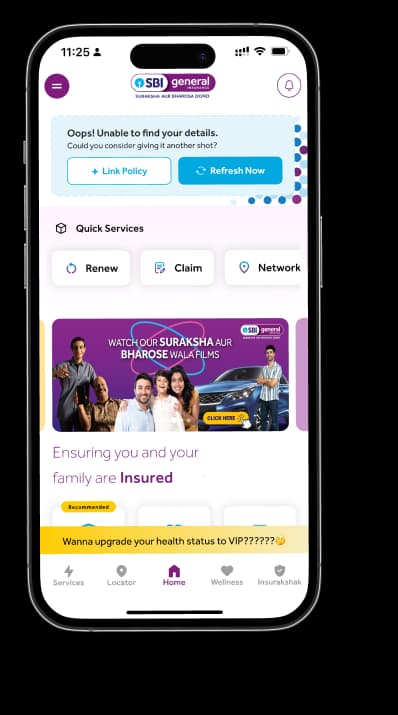
Access and manage all your Insurance Needs in one place, right at your Fingertips.



4/5*
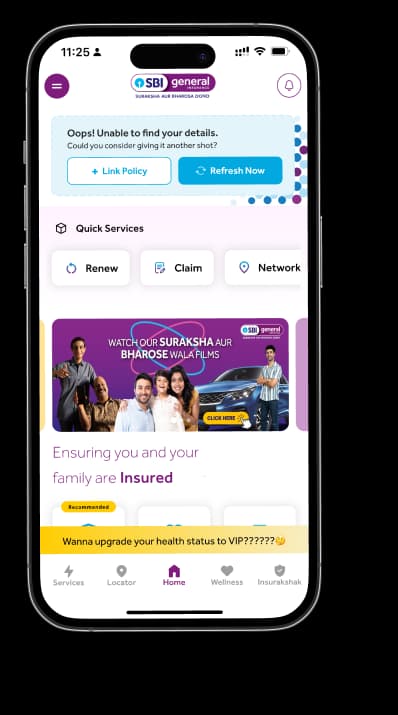
Access and manage all your Insurance Needs in one place, right at your Fingertips.


Vision
Our vision is to become the most trusted general insurer for a transforming India.
Mission
Our mission is to provide simple and innovative general insurance solutions, be responsive to our customers' needs and build a sustainable business for the future.
We're socially active!