Sbig App
Install our App to get easy Access toBuy, Link, Renew, Claim and More
Get

UAE (Dubai) Visa for Indians: Application Process & Requirements
blog
Mar 4, 2026
expertexpertexpert

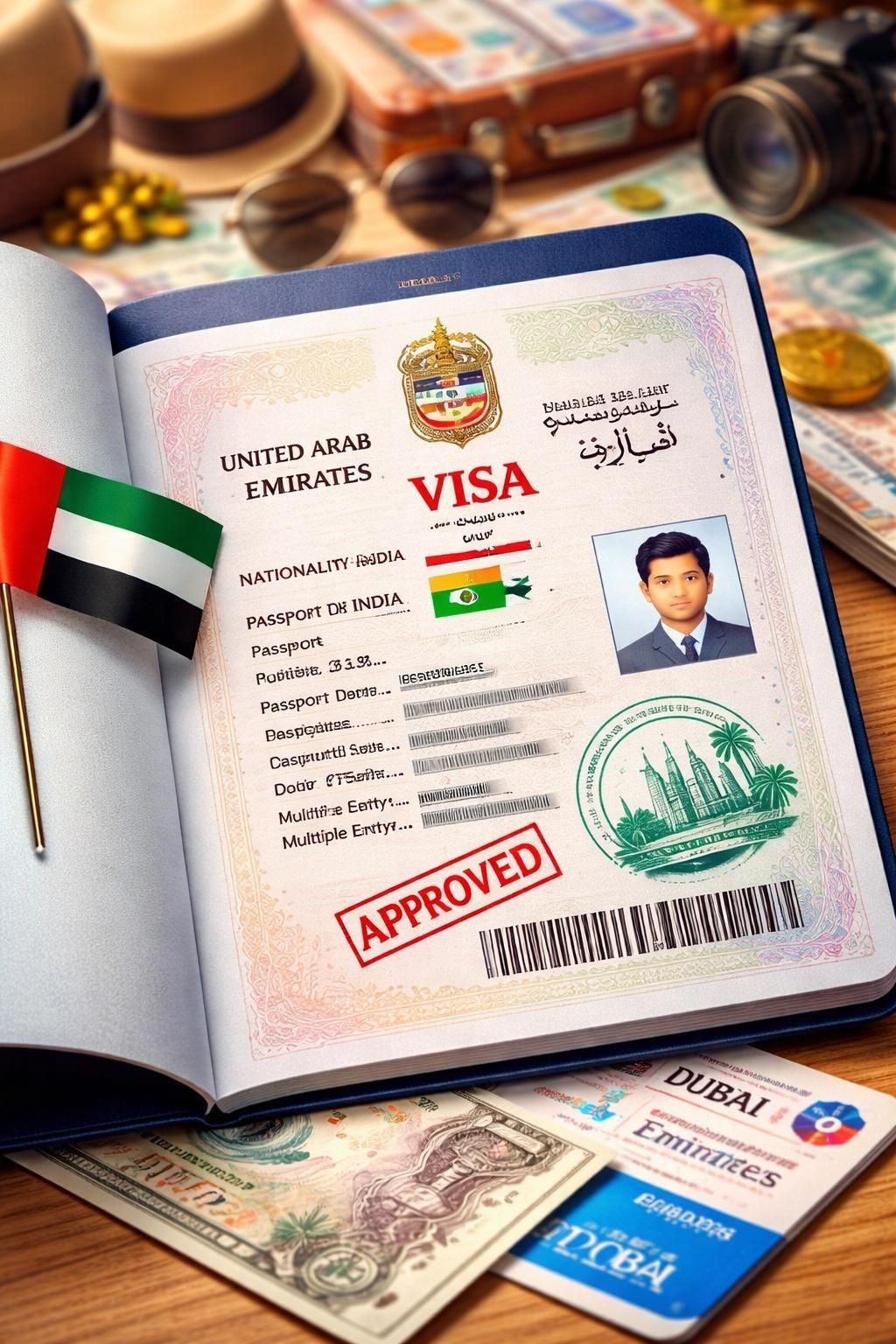
Travel to and from India and the UAE is continuing to increase due to tourism, business opportunities, and short-term work assignments. The necessary travel document for Indians visiting or going to Dubai for most purposes is a Dubai Visa. The Dubai Visa cannot be obtained once in Dubai, but if specific visa-on-arrival criteria exist, then these will permit entry without obtaining the visa in advance. In addition to having the appropriate visa, you should obtain international travel insurance, as it will help in managing the financial risks of both medical and travel-associated accidents while you are overseas.

What Are the Different Types of Dubai Visa for Indians?

Tourist Visa

  • Issued for leisure travel with validity options such as 30 days or 60 days.
  • Common use: sightseeing, visiting family or friends.

Business Visa

  • Issued for leisure travel with validity options such as 30 days or 60 days.
  • Common use: sightseeing, visiting family or friends.

48-Hour Transit Visa for Indians

  • Applicable for brief stopovers of up to 48 hours.

96-Hour Transit Visa for Indians

  • Designed for longer stopovers of up to 96 hours.
  • Non-extendable and strictly time-bound.

Work Permit

  • Issued for employment in the UAE.
  • Requires sponsorship from a UAE employer and approval from relevant authorities.

Study Visa

  • Granted to Indian students admitted to UAE-recognised institutions.
  • Proof of admission and financial capacity is mandatory.

Medical Permit

  • Issued for individuals travelling for medical treatment.
  • Written confirmation from a UAE hospital will be required.


Eligibility Criteria for Dubai Visa Application

Here are the requirements for a Dubai Visa for Indians:

  • Have a valid Indian passport

  • Have no active UAE immigration ban

  • Demonstrate sufficient financial means

  • Provide verifiable travel and accommodation details

Step-by-Step Visa Application Process

Dubai visa requirements for indian citizens include the following steps:

  • Determine which visa type is best suited to your travel plans.
  • Choose an application channel: airline, authorised agent, or sponsor.
  • Fill the form using the details specified in the passport, including middle names if present.
  • Upload documents with sharp scans and correct file orientation.
  • Pay the fee and save the reference number.
  • Track the status of your visa application and respond to any requests for clarification.
  • Once you receive your e-visa, make sure that all the details are correct before you travel.

Many travel portals and agency systems refer to the above process as the Dubai visa application Route.
 

Dubai Visa Fees for Indians

Visa charges vary by type and duration:

  • 30-day tourist visa: Approx. INR 7,500–9,000
  • Transit visas: Lower fees, often airline-dependent
  • Business Visa: Approx. INR 9,000- 13,000

Once your Dubai visa application has been processed, all visa application fees are non-refundable. However, fees can vary and should be confirmed closer to the application date. 

Common Reasons for Visa Rejection and Avoidance Tips

Common rejection factors include:

  • Incomplete documentation
  • Passport validity issues
  • Previous overstay records

By submitting complete and accurate documentation, you can reduce the chances of visa rejection to an extent.

Do We Need Travel Insurance for a Dubai Visa?

International travel insurance may not be a requirement for all visa categories, but it is recommended that you have it prior to boarding the flight to Dubai. Coverage typically includes:

  • Emergency medical treatment
  • Hospitalisation expenses
  • Trip cancellation or delay
  • Personal Liability Cover
  • Loss of passport
  • Home burglary cover

Thus, international travel insurance ensures financial protection during unforeseen events.
 

Best Places to Visit in Dubai

Popular attractions include:

  • Burj Khalifa
  • Dubai Mall
  • Palm Jumeirah
  • Dubai Marina
  • Desert Safari reserves
     

Conclusion

There are specific requirements for obtaining a Dubai Visa for Indians: having the correct documentation, meeting eligibility requirements, and applying promptly. It is important to understand which category your visa falls under, what the fees will be, and what compliance requirements you will have in order to avoid being denied a visa.

International travel insurance is an important part of preparing for your trip and is also in keeping with responsible international travel practices.

While we strive to ensure that the information is accurate and up-to-date, visa policies and requirements are subject to change. We recommend that readers verify all details with official government sources.

FAQs

1: Is a visa required for Indian citizens to visit Dubai?

Indian citizens are required to get a pre-approved Dubai visa before they travel to Dubai, although there are some Indians who may be eligible for a visa-on-arrival according to the eligibility criteria established by the UAE authorities. 

2: Is it mandatory for Indians to get travel insurance for a Dubai visa?

Travel insurance is not mandatory; however, it is advisable to obtain international travel insurance to cover medical emergencies, delays in flights, and several other costs that you may incur while you are in Dubai.

3: What is the new rule for the requirements of the Dubai visa for Indians?

Dubai’s visa laws depend on several factors, including passport validity, travel history, and permanent residency in any country, including the US, UK, or EU. Applicants must check the latest UAE immigration guidelines before applying.

4: Which visa is best for Dubai from India?

The tourist visa is the best visa for Indians who wish to visit Dubai for leisure or sightseeing purposes and for a short-term visit. The appropriate visa type and duration should correspond with the reason for the visit and how long the traveller will stay.

This blog is intended solely for educational and informational purposes. The content may include outdated information regarding the topic discussed. Readers are encouraged to confirm the accuracy and relevance of the data before making any significant decisions. SBI General Insurance disclaims responsibility for any errors or consequences arising from the use of outdated information provided herein.

Recent Blogs

icon

Travel Insurance

Family Travel Insurance

Whether you are a frequent traveller, or just an occasional globe trotter, travel insurance is a must nowadays for protection against any kind of financial losses that might be incurred while you are out and about. – from medical emergencies to flight cancellations or stolen bags. Let's find out more on how family travel insurance works, why it's so important and what factors you should keep in mind while buying a policy. What is family travel insurance? Travel insurance that covers the entire family is called Family Travel Insurance. It usually covers two to four members of a family when they are travelling together. Anyone who is a temporary or permanent Indian resident can buy family travel insurance when undertaking trips abroad, either for business or official purposes or for a holiday. The risks covered under family travel insurance can include unexpected medical expenditure during travel, delay/loss of checked baggage, loss of passport, interruption or delays in flights, missed connection, trip cancellation/delay/curtailment, home burglary while you are away, among other things. The premium of travel insurance policies depends upon factors like the extent of coverage, age of the family members, travel location and whether it is a single or multi-trip plan. Single-trip policy is usually valid for travelling just once within a predetermined span of time. Whereas multi-trip policy is valid for travelling as many times as possible during a certain time period. Where can you buy family travel insurance? Insurance aggregators: Online insurance aggregators can help you compare various policies from different insurers and find the best family travel insurance plan for yourself that suits all your requirements. Insurance agents: In certain cases, insurance agents can prove to be the most helpful in getting the best family travel insurance plan, especially if you fall in the high-risk zone. The insurance agents are usually well-versed with the nitty-gritties of different policies and can help you find the specific cover that you are looking for. Buying directly from the insurer: Almost all leading insurers in India sell their policies online through their official web portals. You can simply check websites of different insurers, compare the features and specifications of different plans and choose the desired product for your family. What are the benefits of buying Family Travel Insurance? When you plan any trip with your family, the first thing you keep in mind is that the holiday should be as stress-free as possible. Family Travel Insurance works towards that very purpose. And what's even better is that buying a family plan offers some added advantages on top of the benefits available under regular plans. Let's take a look: Firstly, buying a family travel insurance policy eliminates the need to buy individual travel insurance for different members of the family. This helps you save money on premiums that can be spent on something better during your trip. Insurers are usually open to customising family travel insurance scheme as per the requirements of a particular family in order to persuade them to opt for such schemes instead of individual travel insurance policies. Insurers can also offer relevant add-ons (like emergency cash, coverage for repatriation, etc.) at a discounted rate when you are buying family travel insurance plans. Besides lower premium rates, family travel insurance plans can also offer other facilities of cashless claims, international assistance, minimal documentation, etc. What is not covered in Family Travel Insurance? Despite the comprehensive coverage that a Family Holiday Insurance Policy provides, there are certain risks and expenses that are usually not covered by most travel plans. They are as follows: Suicide, attempted suicide or self-inflicted injury or illness Mental disorder, anxiety, stress or depression Use/Abuse of intoxicating drugs or alcohol Taking part in Naval, Military or Air Force operations Acts of war, invasion, enemy hostilities, civil war, rebellion, revolution, etc Contamination by radioactivity from nuclear waste, etc Air travel other than as a passenger of a commercial airliner Participation in adventure sports or professional sports (unless covered under a special plan) Disclaimer: The above information is indicative in nature. For more details on the risk factor, terms and conditions, please refer to the Sales Brochure and Policy Wordings carefully before concluding a sale.
icon

Travel Insurance

How Travel Insurance Works?

How Travel Insurance Works? Travelling is an investment you readily make. When you travel, the priority is to have the bookings done for the best accommodation, best touristy sites, etc. Buying travel insurance, however, should be the foremost priority if you are planning a trip. How travel insurance works, is that it forms a safety net against unexpected unfortunate events that may happen during your trip. By way of your travel insurance, you would be provided compensation and support by your insurance provider, in return of the premium you pay. Why Travel Insurance? Travel insurance is not a mandatory requirement in most cases. But if you invest in one, it will ensure that your trip is hassle-free. The importance of travel insurance can be understood from the following benefits the policy offers: Medical Emergencies: When you go on a trip, be it for pleasure or for business, the last thing you would want falling sick. Still worse, suffering from an injury. However, accidents can happen anytime and anywhere. The travel insurance will provide you compensation for medical assistance that you probably need during your travels. Loss/Damage of Baggage: There are instances, especially in long-distance/connecting flight journeys, of baggage getting damaged or lost. In such cases, you can claim monetary compensation from your travel insurance provider. Trip Cancellation/Postponement: Sometimes even the most meticulous plans can go wrong. If you have to cancel or postpone your trip for some legitimate reasons, by way of your travel insurance policy, you can claim a refund on the flight ticket bookings, accommodation bookings etc. The only condition in such a situation is that the reason for cancellation or postponement of the trip should be legitimate and supported by some proof as well. Frequent Flier Programmes: Many times, you may be required to fly out or travel due to business needs. Applying for separate travel insurance policies before every trip could be challenging. Travel insurance companies solve this by providing multiple-trip programmes which can be easily availed if you are a frequent flier. Mechanics Behind Travel Insurance For you to understand how does travel insurance work, a few points are elaborated below: Step 1: Whenever, during a trip, you face an unexpected situation--bodily injury, loss of baggage, medical emergency etc-- you would need to inform your travel insurance provider. This can be done via an e-mail or telephone. Step 2: Once you connect with your travel insurance provider, they will ask you for certain supporting documents to supplement your claim form. It is your responsibility to diligently complete all the documentary obligations for the claim process to move forward. Step 3: Upon close scrutiny and investigation by your travel insurance provider, the appropriate compensation, basis your chosen insurance policy, would be provided by the travel insurance company. Quick Checklist when buying Travel Insurance A travel insurance policy can prove to be your best friend if an unfortunate event happens during your trip. Hence, it is vital that you chose this policy after enough consideration. Below are some of the important aspects which must be looked into when shopping for a travel insurance policy: Credibility of your travel insurance provider Geographical range where this policy would remain valid Provision for add-on riders on your base policy Coverage of medical conditions Conclusion An understanding of how holiday insurance works will come in handy if you land in an emergency situation during your travels. So, before you organise that long-awaited trip with friends and family, make sure you are making a smart travel insurance choice. Disclaimer: The above information is indicative in nature. For more details on the risk factor, terms and conditions, please refer to the Sales Brochure and Policy Wordings carefully before concluding a sale.
icon

Travel Insurance

How to Apply for Reissue of Passport?

An irreplaceable document like a passport serves as an important proof of identification and enables your international trips. The validity of a passport is generally 10 years, but you may need to get a passport reissued due to other reasons, such as running out of pages or updating or correcting your name on the passport. Here, you can learn about how to apply for reissue of passport, the required documents, and more.
icon

Travel Insurance

How To Buy Travel Insurance?

Buying a travel insurance policy is the most effective approach to protecting yourself from the financial risks that may arise during your travel. One question that pops up during discussions on insurance is this: ‘how much travel insurance should I buy’? It is a question you can answer the best because nobody knows the nature and scope of your trip better than you. Scope of Travel Insurance A travel insurance policy can serve you in diverse situations. A few circumstances wherein its benefits come into play are illustrated below to apprise you of its importance: • Medical Expenses: Accidents know no vacation. They can affect you anytime, anywhere. If you are on a trip and were to require medical assistance, then no better solution than a travel insurance policy. It promises to compensate you for medical expenses, including hospitalisation, diagnosis, ambulance services etc. • Evacuation: During your travel, there could be a situation wherein you can fall sick and need to be evacuated back to home for treatment. There could also be circumstances wherein you may get stuck in remote places where medical facilities are not the best and you would have to be taken away to the nearest possible hospital. In such a scenario, the costs incurred to get you to a place of comfort will be compensated by your travel insurance provider. • Loss/Damage of Luggage: If your luggage is damaged or lost during transit, it could come as a big blow to you. You may also suffer significant losses by way of your lost/damaged luggage. A travel insurance policy holds provision to raise claims for compensation against such events. • Cancellation/Postponement: If you were to cancel or postpone your travel plans due to some unavoidable situations, you would like a refund of your advance booking amounts pertaining to accommodation, tickets etc. Your travel insurance policy helps in refunding these costs to you. • Personal Accident Cover: The implications of an accident can be many. If you were to get permanently disabled during your trip, a travel insurance policy looks to provide monetary compensation to you up to a certain prescribed limit. In the unfortunate event of your demise, within your travel days, your nominee is eligible to receive the sum insured amount from your travel insurance provider. Buying Travel Insurance There are different travel insurance policies available in the market. To access these products, you may take the online or offline route: • Offline: How to buy travel insurance offline? Well, you may visit a travel insurance provider’s office directly. An executive will guide you through the process and apprise you of their different plans. You can fill in your details and basis the provider’s approval, a travel insurance plan will be issued to you on the decided premium payment. • Online: Almost all travel insurance providers have their own websites. You can conveniently browse through their available travel insurance products. You can make comparisons between different plans offered by different travel insurance companies and choose the most appropriate plan for yourself. After providing your details, you will be able to make an online payment and receive the soft copy of your travel insurance plan on your registered e-mail ID. Online Versus Offline The question of how I can buy travel insurance gets answered much easily through online avenues, considering the following aspects: • Provision for online plan and quote comparison of multiple insurance providers • No need for insurance agents • Minimal documentation needs • Contactless buying • Instant policy purchase • Convenient and hassle-free Conclusion: How to buy travel insurance is no longer a complicated question. The process has been rather simplified. You only need to make an informed decision after comparing different products to know what would fit you the best. Disclaimer: The above information is indicative in nature. For more details on the risk factor, terms and conditions, please refer to the Sales Brochure and Policy Wordings carefully before concluding a sale.