


 Contact Us


 Other Insurance
All You Must Know About Employees' State Insurance Scheme (ESIC)

Date: Apr 21, 2025 - Last Modified Apr 30, 2025


The Employees' State Insurance (ESI) scheme is a social security plan started by the Government of India under the Employees' State Insurance Act, 1948. The Employees' State Insurance Corporation is a government agency that oversees this plot. It gives restorative and monetary help to representatives and their families. The help is provided when a representative is incapable of executing their obligations due to illness, business damage, or maternity. ESIS is a self-financing plan wherein the employees and employers make month-to-month commitments to the scheme at a specific rate of their wages.
The Employees' State Insurance Scheme (ESIS) is a self-financing plan where the representatives and the bosses make normal monthly contributions to the scheme at a certain rate of their compensation. This scheme empowers representatives to nullify the monetary burden due to any unfortunate unforeseen occasion.
Employees' State Insurance Act, 1948
The ESI Act or Employees’ State Insurance Act, 1948, introduced by the Parliament, aims to financially cover workers in case of any eventualities at work, such as death, temporary or permanent disability of the insured, and to give medical care to the insured and their families. The ESI Act provides medical and other benefits to workers working in manufactories, hospitals, road transport, journals, educational or medical institutions, and shops, wherein 10 or further persons are employed.
Still, in Chandigarh and Maharashtra, the minimum number of workers for ESI coverage is 20. Under the Act, workers with a yearly income of over Rs 21,000 are eligible for the social security scheme. But for a person with a disability, the yearly income can be over Rs 25,000.
What is Covered Under the Employees’ State Insurance Scheme?
To understand the benefits of the Employees' State Insurance Scheme, one should know about its coverage and the ailments that are eligible for a health insurance claim. Here are important factors regarding the group health insurance plans, including individual health insurance and family health insurance:-
- ESIS gives maternity cover for 26 weeks. Additionally, the cover can be extended up to one month if compensation is subject to a commitment of 70 days.
- Beneficiaries are provided in instalments in portions amid unfortunate events.
- It offers three years of scope to an unemployed part. In any case, it is conceivable, as it is when the part uncovers basic points of interest like invalidity and past workplace.
- It supplies 90% of the employee's wage when a person becomes specially abled, temporarily or permanently.
- Complete restorative care and consideration are given to a worker enlisted beneath the Employees' State Protections Act, 1948, at the time of their inadequacy and rebuilding of health.
- The Worker State Protections Plot points to give scope to all specialists with a monthly instalment of less than or equivalent to Rs. 21,000.
- The insurance holders and their family members can benefit from healthcare benefits against particular sicknesses.
What Is Not Covered Under the Employees’ State Insurance Scheme?
The employees' state insurance scheme does have a few shortcomings in terms of coverage. Here are a few of them:-
- Workers with a yearly income of Rs 21,000 or further aren't covered.
- For people with disability, those with a yearly income of further than Rs 25,000 aren't covered.
- In Maharashtra and Chandigarh, the minimum number of workers in an organisation should be 20, whereas in other countries and Union homes, it's 10. Workers in organisations with a lower than the required number don't qualify for ESIS.
Benefits of Employees State Insurance Scheme (ESIS)
Individuals could look to avail multiple benefits of these group health insurance plans. Here is a list of ailments and medical situations which can be claimed under this health insurance scheme:-
Sickness Benefit:
The guarantor worker can profit from cash remuneration at the rate of 70% of the daily wage for a most extreme of 91 days in two successive benefit periods.
Medical Benefits:
Insured individuals and their families can profit from full therapeutic care from the day the individual is enrolled. There’s no constraint on the treatment expenses.
Disablement Benefit:
In case of brief disablement due to business damage, the backup plan pays 90% of the daily wage till recuperation. In case of changelessness or due to incapacity, the stipend is paid at the rate of 90% of the normal wage for the whole life.
Maternity Benefits:
Women can profit from cash benefits at the rate of 100% of the normal compensation up to 26 weeks for confinement/pregnancy. This period can be expanded by one month based on the medical advice.
Related Blog: 5 Things to Know About Maternity Insurance in India
Dependents’ Benefits:
If the guarantor endures passing due to work harm, an emolument at the rate of 90% of the deceased’s wage is given to the dependent family members per month. Children up to the age of 25 are qualified for compensation.
Retirement Benefit:
If a recipient is secured beneath ESIS for at slightest 5 a long time, the therapeutic costs of the backup plan and life partner will be secured indeed after retirement with an ostensible yearly charge of Rs 120.
Funeral Expenses:
Dependent family individuals can claim up to Rs 10,000 to perform the final rites of the backup plan.
Read our blog to know more about the ESIC Benefits and Eligibility Criteria
Conclusion
By contributing a portion of their pay envelope to the ESI scheme every month, workers are eligible for several benefits, just as sickness, medical, maternity, etc. Still, there are some ESIC eligibility criteria which one should be aware of before enrolling for the scheme. Those not eligible for the scheme should buy individual health insurance or family health insurance for monetary security during medical emergencies.
Frequently Asked Questions
Q1. How does the ESIC scheme help the employees?
The ESIC scheme provides medical, financial, and social security benefits to employees and their dependents.
Q2. What is the interest levied for late payment of the ESI contribution?
The interest levied for late payment of ESI contribution is 12% per annum.
Q3. How is the ESIC scheme funded?
The ESIC scheme is funded by contributions from both employers (3.25%) and employees (0.75%).
Q4. Is it compulsory for employers to register under the ESIC scheme?
Yes, employers must register under the ESIC scheme if they have more than 10 employees.
This blog is intended solely for educational and informational purposes. Content reflects data at time of publication and may not accurately reflect current premiums, terms, or regulations. Readers are encouraged to confirm the accuracy and relevance of the data before making any significant decisions. SBI General Insurance disclaims responsibility for any errors or consequences arising from the use of outdated information provided herein. For more details, please refer to the policy wordings and prospectus before concluding the sales. *Add-ons are subject to payment of additional premium.
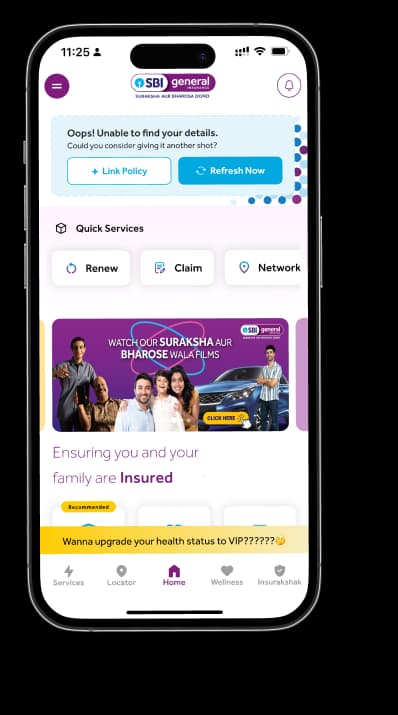
Access and manage all your Insurance Needs in one place, right at your Fingertips.



4/5*
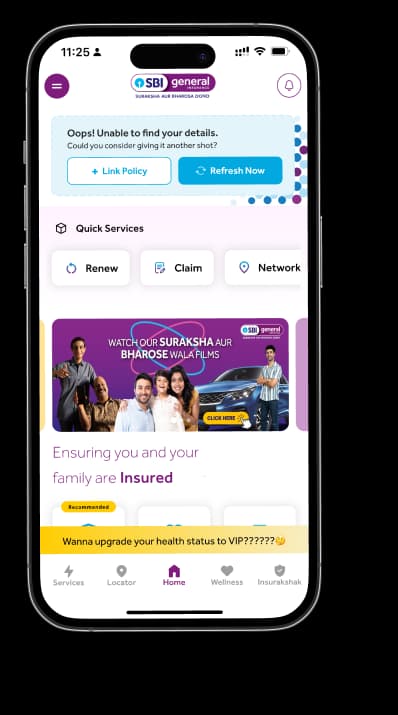
Access and manage all your Insurance Needs in one place, right at your Fingertips.


Vision
Our vision is to become the most trusted general insurer for a transforming India.
Mission
Our mission is to provide simple and innovative general insurance solutions, be responsive to our customers' needs and build a sustainable business for the future.
We're socially active!