


 Contact Us


 Other Insurance
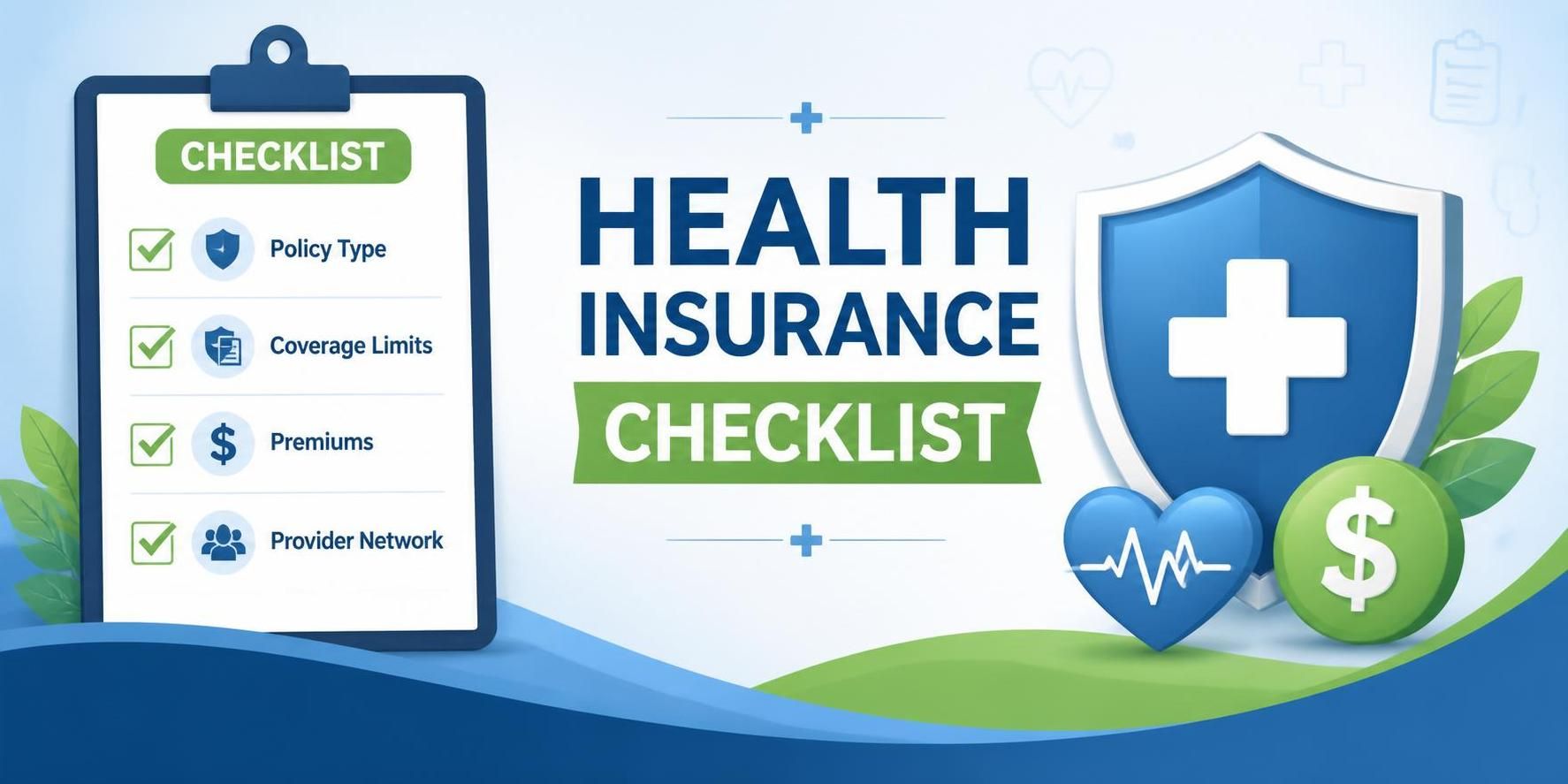
Health Insurance Checklist
Date: May 26, 2026 - Last Modified May 26, 2026


It is important to purchase a health insurance policy to safeguard your health and finances. However, as multiple options are available, it may be difficult to choose a policy that suits your needs. To simplify the decision-making process, a health insurance checklist can be utilised. A health insurance checklist is beneficial as it helps review the sum insured, waiting periods, and network hospitals. A checklist can also help re-examine the claim process before an individual finalises the policy.
In this article, we’ll discuss checklists that can help any individual looking to purchase health insurance.
Why You Need a Health Insurance Checklist Before Buying a Policy
A health insurance checklist can help simplify the policy evaluation process and ensure that important coverage aspects are not overlooked. It can also help individuals stay better prepared for unexpected medical expenses.
Before purchasing a health insurance policy, you can check factors such as waiting periods, network hospitals, co-payment clauses, and sub-limits, etc. A checklist before buying health insurance can help you choose a policy that ticks all these boxes.
You can use the following checklist:
1. Choose the Right Plan
Evaluate if the policy you are choosing offers individual or family floater coverage. An individual policy will only cover one family member. However, a single policy can cover all family members on a floater sum insured basis. Choose a plan based on your family size and healthcare needs, while ensuring it remains cost-effective.
2. Pick an Adequate Sum Insured Amount
The sum insured is the amount an insurer will pay for a claim. It is important to choose an amount that can sufficiently cover medical expenses while balancing affordability and coverage benefits.
3. Choose Comprehensive Coverage
Check the coverage offered by the health insurance plan. You must opt for one that covers more than just hospitalisation expenses. A policy that covers the cost of OPD treatments or daycare treatments, for instance, can offer added financial support.
4. Look for a Shorter Waiting Period
For pre-existing conditions such as high blood pressure, asthma, or high cholesterol, a waiting period may be applicable. This means that PED claims will be accepted after a set period. A policy with a shorter waiting period can be a good option.
5. Opt for Wider Coverage
Ensure that you evaluate the extent of the pre- and post-hospitalisation expenses. It is best to choose a plan that offers the maximum number of days of cost coverage.
6. Review Disease-wise Sub-limits
Sub-limit refers to the maximum amount an insurer covers for specific treatment costs. Check whether any sub-limits apply to specific procedures or diseases. Look for a plan that comes with reasonable sub-limits.
7. Enhance Coverage Over Time
It is important to select a policy that supports your family’s changing healthcare needs. Therefore, you must choose a plan that allows you to increase the sum insured over time. This will help you attain continued financial protection without the need to switch policies.
8. Review Policy Exclusions Carefully
Before you select a health insurance plan, understand its exclusions. Usually, these are treatments or conditions not covered by the insurer. Being aware of these helps set clear expectations, reduces the risk of claim rejection, and enables you to choose a plan with broader, more suitable coverage.
This health insurance compliance checklist can ensure you have a satisfactory experience with your plan over the long term.
9. Check Network Hospitals and Cashless Claim Availability
Distance is important to consider when hospitalisation is essential. Choose an insurer that includes nearby hospitals in its network. This can help you get cashless treatment, so the focus remains on recovery rather than expenses.
A cashless claim benefit can be quite beneficial during an unexpected hospitalisation. It makes payments hassle-free and offers a paperless experience. You may have the option of a cashless hospital stay or a reimbursement claim.
With SBI General Insurance health insurance , you can file a cashless claim with ease at one of our 18,000+ network hospitals across India.
Checklist for Things to Do After Buying Health Insurance
It is important to have a pre-purchase health insurance checklist. However, you must also pay attention to certain things after buying the policy:
- Review the policy document for errors. Ensure you identify issues with age, spelling, policy commencement date, and so on.
- Make it a point to check the coverage and benefits of the health insurance policy. This helps you better understand your policy.
- Ensure that you understand the claim process clearly. This can help you easily file claims during emergencies or unplanned hospitalisations.
Inform the members of your family about the claim process and policy benefits. - Save the policy as a soft copy on multiple devices and share a copy with all your family members.
- If you wish to add a newborn baby or your spouse to the policy, inform the insurer on time.
- Make sure you set a reminder for your policy due date, so you do not forget the timeline for health insurance renewal .
- Update personal details by informing the insurer, if necessary.
Conclusion
A health insurance checklist helps simplify the process of choosing and managing a policy. By evaluating factors such as sum insured, waiting periods, co-payment clauses, and network hospitals, individuals can ensure adequate coverage and reduce the risk of claim rejection.
A checklist helps avoid unexpected medical expenses and choose a plan that offers long-term financial security. Additionally, it helps you stay informed as you review policy documents, understand the claim process, and keep details up to date.
With a range of health insurance solutions, SBI General Insurance offers plans designed to support different healthcare and financial needs.
Frequently Asked Questions
1. Can I buy health insurance without a medical test?
Yes. Many insurers offer policies without medical tests. This is especially true for younger individuals or those with no medical history. The test requirements may vary based on factors such as age, sum insured, or health condition.
2. Does health insurance cover annual health check-ups?
Yes, many health insurance plans include annual or periodic health check-ups. This can either be an in-built benefit or a feature offered after a specified policy period.
3. How does co-payment affect my final claim amount?
Co-payment requires you to pay a fixed percentage of the claim amount. This reduces the insurer’s payout and increases your out-of-pocket expenses during treatment.
4. Can I port my existing health insurance policy to another insurer?
Yes, you can port your policy at renewal. This allows you to switch insurers while retaining benefits like waiting period credits, subject to terms and conditions.
5. Is employer-provided health insurance enough for long-term protection?
Not always. Employer-provided cover may be limited and ends when you leave the job. Having an individual policy ensures continuous and adequate coverage.
6. What happens if I miss my health insurance renewal date?
If you do not renew your insurance on time, you may get a grace period to renew without losing benefits. If the grace period is missed, the policy may lapse, resulting in the loss of coverage and waiting period benefits.
7. Does health insurance cover daycare procedures without hospitalisation?
Yes, most modern policies cover daycare procedures that do not require 24-hour hospitalisation, provided they are listed in the policy terms.
This blog is intended solely for educational and informational purposes. Content reflects data at time of publication and may not accurately reflect current premiums, terms, or regulations. Readers are encouraged to confirm the accuracy and relevance of the data before making any significant decisions. SBI General Insurance disclaims responsibility for any errors or consequences arising from the use of outdated information provided herein. For more details, please refer to the policy wordings and prospectus before concluding the sales. *Add-ons are subject to payment of additional premium.
Access and manage all your Insurance Needs in one place, right at your Fingertips.



4/5*
Access and manage all your Insurance Needs in one place, right at your Fingertips.


Vision
Our vision is to become the most trusted general insurer for a transforming India.
Mission
Our mission is to provide simple and innovative general insurance solutions, be responsive to our customers' needs and build a sustainable business for the future.
We're socially active!