


 Contact Us


 Other Insurance
Health Insurance for Unproven Treatment
Date: May 26, 2026 - Last Modified May 26, 2026


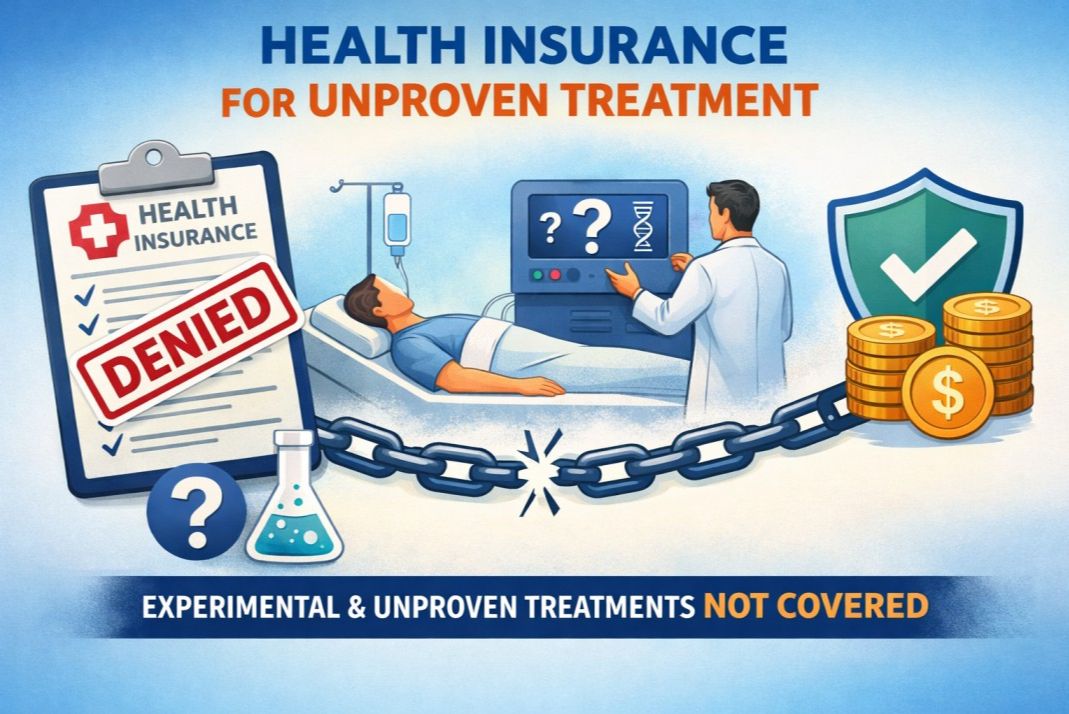
Health insurance coverage for unproven treatment refers to whether a policy covers experimental, investigational, or medically unestablished treatments. Insurers assess these claims based on medical evidence, approvals, and policy terms. Such treatments are often excluded due to limited proof of effectiveness.
In this article, we will understand how such treatments are covered under a policy and how individuals can make informed decisions.
What Is Unproven Treatment in Health Insurance?
Health insurance plans are designed to support medical needs in a structured way. However, some treatments may not follow standard medical practices. These treatments are often reviewed differently by insurers.
Unproven treatment refers to medical procedures or therapies that do not have widely accepted clinical evidence. These treatments may still be under research or not approved for routine use. In many cases, insurance for unproven treatment is assessed carefully before any support is considered.
Such treatments may vary based on medical condition and provider recommendations. Individuals reviewing a health insurance plan should check how these treatments are defined in the policy document.
How Health Insurance Views Unproven and Experimental Treatments?
Health insurance providers follow defined guidelines while assessing treatment types. Treatments that are not widely accepted may be categorised separately. Plans that mention unproven treatment insurance often include clear definitions and conditions. Insurers review medical evidence, approval status, and treatment purpose before considering coverage.
Types of Unproven Treatments Commonly Excluded from Coverage
Certain treatments are not part of standard medical practice and may be reviewed differently in policies. These include procedures under research, alternative methods, or therapies without established clinical support.
Experimental Procedures Without Established Clinical Evidence
Some procedures are still in early stages of testing and may not have complete medical approval. These are often part of research-based treatment plans. Policies that include insurance for unproven treatment explain how such procedures are evaluated.
Off-Label or Non-Standard Medical Treatments
Off-label treatments involve using approved medicines in a different way than intended. These may be suggested in certain cases by medical professionals. However, coverage depends on policy terms. Plans with unproven treatment insurance sections provide clarity on how such treatments are considered.
Alternative or Investigational Therapies Not Approved for Routine Use
Alternative therapies or investigational methods may not be part of standard care. These treatments are often evaluated based on available evidence and approval status. Many policies with experimental treatment insurance features describe how such therapies are handled.
Does Health Insurance Cover Unproven Treatments?
Coverage for such treatments depends on policy terms and medical evaluation. Some plans may consider partial support if certain conditions are met. In most cases, insurance for unproven treatment is clearly defined with inclusion or exclusion clauses.
Individuals should review the policy carefully to understand the scope of coverage. Providers such as SBI General Insurance offer detailed policy documents to help individuals make informed choices regarding treatment coverage.
Challenges of Getting Coverage for Experimental or Unproven Treatments
Getting coverage for such treatments can involve multiple steps. Insurers may review medical reports, approvals, and treatment details before making a decision. Plans with unproven treatment insurance include structured guidelines for such cases. This process ensures that all aspects are considered carefully. Individuals may need to provide detailed documentation to support the claim. Reviewing policy terms in advance helps in understanding the process better.
Key Policy Terms to Check Before Choosing Coverage for Unproven Treatments
Feature | What to Review |
Definition of treatment | How unproven or experimental treatments are defined
|
Coverage scope | Inclusion or exclusion of such treatments
|
Approval requirements | Medical or regulatory approvals needed
|
Documentation | Reports and records required for claims |
Claim process | Steps involved in claim submission |
Policy conditions | Specific terms related to treatment eligibility |
Benefits and Limitations of Health Insurance for Unproven Treatment
Health insurance plans provide structured support, but coverage for certain treatments depends on policy terms. Understanding both benefits and conditions helps in making informed decisions regarding treatment options.
Possible Financial Support in Select Cases
In some cases, policies may offer limited support for treatments that meet specific conditions. Plans that include experimental treatment insurance outline such possibilities clearly.
Coverage Restrictions and Approval Conditions
Policies include defined conditions for evaluating treatments. Insurance for unproven treatment often depends on approvals and medical validation. This ensures that coverage decisions follow a consistent approach.
Limited Availability Across Policies
Not all plans include provisions for such treatments. Availability may vary across insurers and policy types.
How to Review a Policy Before Opting for Coverage?
- Read the policy document carefully to understand treatment definitions
- Check inclusion and exclusion sections related to treatment types
- Review approval and documentation requirements
- Compare plans based on health benefits offered
- Ensure clarity on claim process and timelines
- Check compatibility with existing health insurance coverage.
Who Should Pay Extra Attention to These Coverage Terms?
Individuals exploring advanced treatment options or specialised medical care may benefit from reviewing these terms closely. It is also useful for those planning long-term coverage or seeking clarity on different treatment types. Understanding experimental treatment insurance provisions helps in making informed decisions.
Conclusion
Health insurance plans include clear guidelines to support structured medical care. A careful approach ensures better alignment between treatment needs and policy features.
With SBI General Insurance, individuals can choose health insurance coverage that supports their medical needs with greater clarity and confidence.
FAQs
1. What is considered an unproven treatment in health insurance?
An unproven treatment refers to medical procedures or therapies that do not have widely accepted clinical evidence or are not approved for routine medical use.
2. Are experimental treatments covered under all health insurance plans?
Experimental treatments are not included in all plans. Coverage depends on policy terms, and some plans may outline specific conditions under which such treatments are evaluated.
3. Can I find policies that offer limited coverage for experimental treatments?
Some policies may offer limited support for experimental treatments if specific conditions are met. It is useful to review policy documents to understand such provisions clearly.
4. What should I check in the policy wording before buying?
Review treatment definitions, inclusion and exclusion clauses, approval requirements, and claim process details to understand how the policy handles unproven or experimental treatments.
This blog is intended solely for educational and informational purposes. Content reflects data at time of publication and may not accurately reflect current premiums, terms, or regulations. Readers are encouraged to confirm the accuracy and relevance of the data before making any significant decisions. SBI General Insurance disclaims responsibility for any errors or consequences arising from the use of outdated information provided herein. For more details, please refer to the policy wordings and prospectus before concluding the sales. *Add-ons are subject to payment of additional premium.
Access and manage all your Insurance Needs in one place, right at your Fingertips.



4/5*
Access and manage all your Insurance Needs in one place, right at your Fingertips.


Vision
Our vision is to become the most trusted general insurer for a transforming India.
Mission
Our mission is to provide simple and innovative general insurance solutions, be responsive to our customers' needs and build a sustainable business for the future.
We're socially active!