


 Contact Us


 Other Insurance
Avoid These Common Mistakes While Renewing Your Bike Insurance Policy
Date: May 11, 2026 - Last Modified May 12, 2026


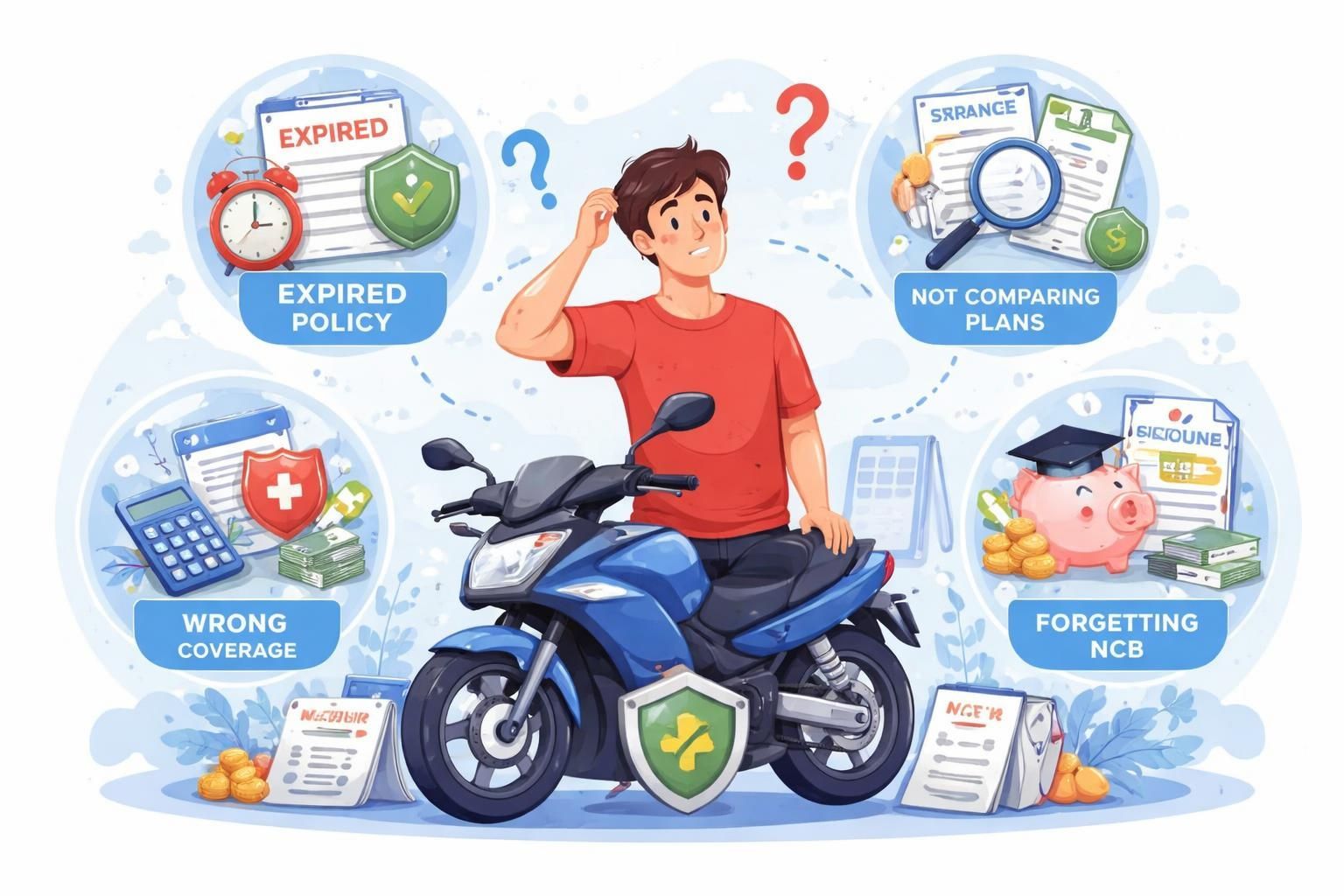
Bike insurance renewal can feel like a formality, but even a small miss can come back to trouble you later. It is quite common to overlook discounts or to choose coverage that does not meet your requirements. Spending some time going through the details can make a noticeable difference. Understanding the bike insurance renewal process and knowing bike insurance renewal mistakes to avoid can help you stay protected.
Avoid Bike Renewal Mistakes While Renewing Bike Insurance
- Many policyholders treat renewal as a quick checkbox activity, often repeating their previous choices without reviewing them. This is one of the most common bike insurance renewal mistakes. Your needs may have changed over time, and sticking to an outdated policy can leave gaps in coverage.
- Another frequent mistake is ignoring the policy expiry date. Even a short lapse can lead to loss of benefits like the No Claim Bonus (NCB), and in some cases, may require inspection before renewal.
- Riders also tend to focus only on price, choosing the least-cost policy without understanding what it covers. This can result in inadequate protection during accidents or theft.
- Incorrect personal or vehicle details are another issue. Something as simple as an incorrect registration number or an outdated address can complicate claims later. Many people also skip add-ons to reduce premium costs, without realising how useful these can be in emergencies.
It is important to approach renewal as a review exercise rather than a formality. Take time to assess your current policy, compare options, and ensure your coverage aligns with your present needs.
Key Factors to Check Before Renewing Bike Insurance
Before you proceed with renewal, there are a few important elements you should review carefully.
Check the Insured Declared Value (IDV)
First, check the Insured Declared Value (IDV). This is the current market value of your bike and determines the maximum claim amount. If your IDV is set too low, your premium may be reduced, but you will receive less compensation in case of total loss or theft. On the other hand, an unnecessarily high IDV can increase your premium without adding real value.
Review Your No Claim Bonus (NCB)
Next, review your No Claim Bonus (NCB). If you have not made any claims during the policy period, you are eligible for a discount on your premium. This discount can go up to 50% over time. Missing or incorrectly applying your NCB is one of the key bike insurance renewal mistakes to avoid.
Evaluate Relevant Add-ons
You should also evaluate add-ons such as zero depreciation cover, roadside assistance, and engine protection. These can make a real difference to your coverage, especially if you often ride through heavy traffic or areas that tend to flood.
Double-check Personal and Vehicle Details
Lastly, take a moment to double-check your personal and vehicle details. Even a small mistake can cause issues at the time of a claim, so a quick review goes a long way in keeping your bike insurance renewal smooth and hassle-free.
Tips for Hassle-Free Bike Insurance Renewal
A smooth renewal experience comes down to staying prepared and paying attention to the details.
- One of the easiest things you can do is set a reminder well before your policy is due to expire. Renewing early helps you avoid last-minute stress and keeps your coverage active without any breaks.
- It is always a good idea to compare policies before you renew. Taking a quick look at other options might help you find better coverage or pricing. Many insurers also make it easy to switch at the time of renewal.
- Make sure you have all your documents ready, including your previous policy details and vehicle information. This helps speed things up and reduces the risk of mistakes.
It is also wise to reassess your coverage needs. For example, if your bike has aged, you may want to adjust your IDV or reconsider certain add-ons. On the other hand, if you have upgraded your bike or use it more frequently, you may need stronger coverage.
What Happens If You Make Mistakes During Renewal?
Mistakes during renewal can lead to higher premiums, reduced coverage, claim rejections, or even legal trouble if your policy lapses.
Financial Loss Due to Wrong Coverage
Choosing the wrong coverage can have a direct impact on your finances. For example, opting for a lower IDV might lower your premium, but it also reduces the amount you receive if there is a total loss. In the same way, skipping key add-ons, such as zero depreciation, could mean you end up paying more for repairs out of your own pocket.
Missing out on NCB can also result in avoidable expenses. Over multiple renewals, these small gaps can slowly build up into a significant amount.
Claim Rejection Risks
Incorrect information during renewal is one of the most common reasons there are issues during claims. If your policy details don’t match your vehicle records or if something important is missing, there might be issues during claims.
For example, a small detail like an incorrect engine number or an old address might not seem like a big deal during renewal, but it can cause issues when verifying a claim. Keeping your details correct helps avoid unnecessary disputes and makes the whole process much smoother.
Legal Penalties for Expired Policy
In India, riding without valid third-party insurance is illegal. If your policy lapses and you continue to use your bike, you may face fines or other legal consequences.
Apart from penalties, a lapsed policy also leaves you financially exposed in the event of an accident. Renewing on time is not just a financial decision; it is also a legal responsibility.
How to Choose the Right Bike Insurance During Renewal
Choosing the right policy at renewal calls for a bit of balance.
- Start by looking at how you actually use your bike. If you are riding through city traffic every day, a comprehensive plan with a few add-ons can make more sense. But if it is only occasional use, a basic plan might be enough.
- Next, evaluate the insurer’s claim settlement record and customer support. A slightly higher premium may be worth it if the insurer offers reliable and quick claim processing.
- Pay attention to IDV selection. It should reflect the realistic market value of your bike. Avoid setting it too high or too low just to adjust your premium.
- Also, make sure your NCB is correctly transferred or applied, especially if you are switching insurers. This benefit belongs to you, not the insurer, and can significantly reduce your premium.
- Finally, choose add-ons based on your needs. For example, engine protection is useful in areas prone to waterlogging, while roadside assistance can be valuable for long-distance riders.
Making informed choices during renewal helps you avoid bike insurance renewal mistakes and ensures that your policy truly works for you.
Conclusion
Bike insurance renewal is not just a routine task. Avoiding common mistakes and reviewing your policy carefully helps you save money, stay legally compliant, and ensure reliable protection every time you ride.
Frequently Asked Questions
1. Can I renew bike insurance after expiry?
Yes, you can still renew it after expiry. However, you might lose benefits like NCB and may also need to get your bike inspected before the policy is issued again.
2. How does No Claim Bonus affect bike insurance renewal?
NCB gives you a discount on your premium for every year that is claim-free. The higher your NCB, the lower your premium at the time of renewal.
3. Is it mandatory to inspect the bike after policy lapse?
In most situations, yes. If your policy has expired, insurers may ask for a physical inspection before renewing it.
4. Can I switch insurers during renewal?
You can switch insurers at renewal without losing your NCB, as long as it is transferred correctly.
5. What is the ideal IDV for bike insurance renewal?
The ideal IDV is the current market value of your bike. It should not be set too high or too low, so that the premium and coverage remain well-balanced.
6. Are add-ons necessary during renewal?
Add-ons are not mandatory, but adding them can be quite useful. They enhance your coverage and help lower out-of-pocket costs during claims.
7. What happens if I enter incorrect details while renewing?
Incorrect details can cause delays in or even lead to claim rejection.
8. How early should I renew my bike insurance policy?
Renew it a few days before expiry to avoid a gap and ensure your coverage continues uninterrupted.
Access and manage all your Insurance Needs in one place, right at your Fingertips.



4/5*
Access and manage all your Insurance Needs in one place, right at your Fingertips.


Vision
Our vision is to become the most trusted general insurer for a transforming India.
Mission
Our mission is to provide simple and innovative general insurance solutions, be responsive to our customers' needs and build a sustainable business for the future.
We're socially active!