


 Contact Us


 Other Insurance
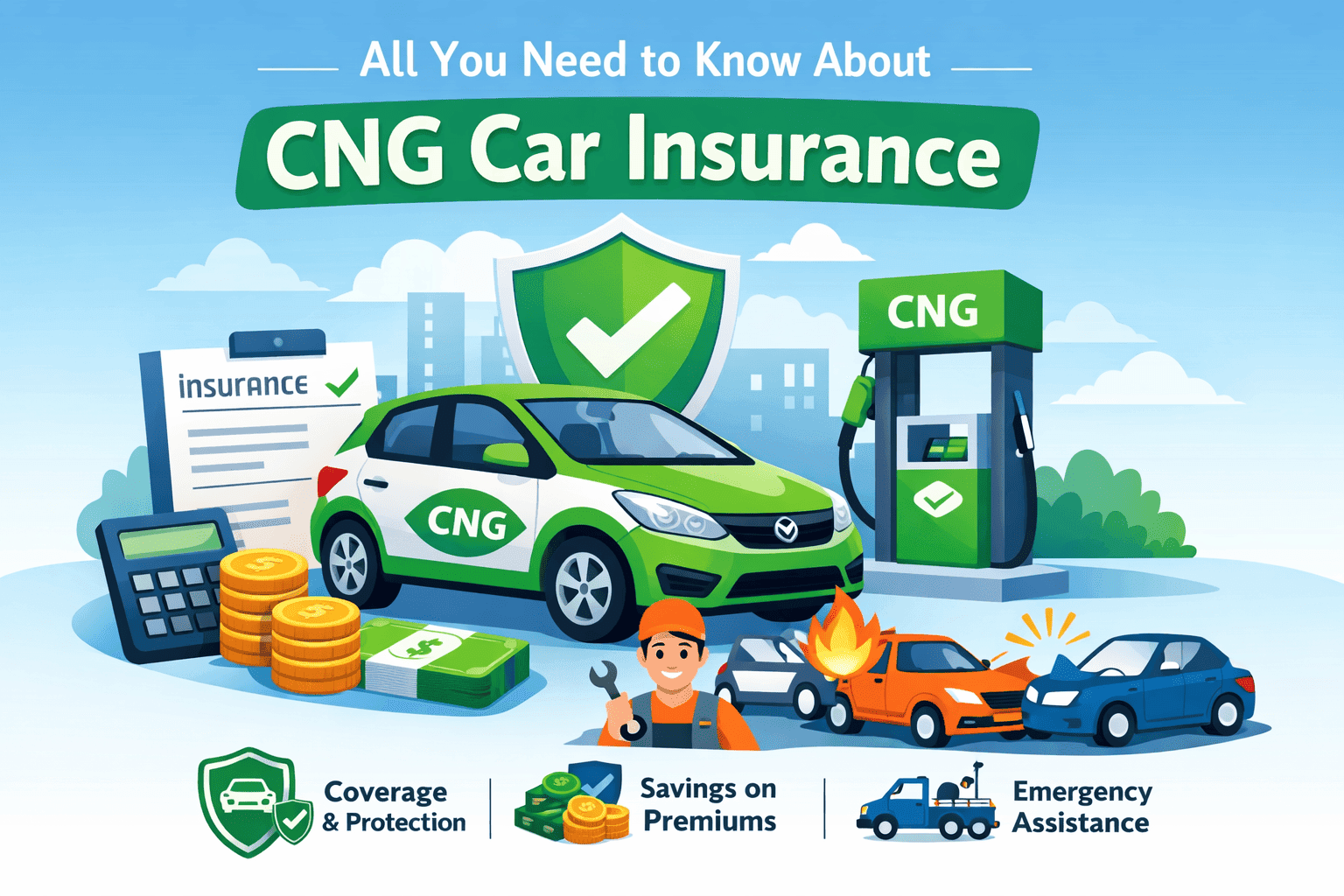
All You Need to Know About CNG Car Insurance
Date: May 13, 2026 - Last Modified May 13, 2026


CNG car insurance is a type of motor insurance policy that also covers the CNG kit installed in your vehicle, provided it is declared to the insurer. You need to get your policy updated to include the CNG kit, especially if it’s installed later. Factory-fitted kits are already covered, but aftermarket ones must be declared and documented to ensure proper coverage and hassle-free claims.
With rising fuel costs and growing environmental awareness, many car owners in India are shifting to CNG vehicles. While CNG is economical and eco-friendly, it also changes how your car is insured. Whether your car came with a factory-fitted CNG system or you have added a kit later, it is important to understand how CNG car insurance works to stay protected and on the right side of regulations. Aspects like premiums, paperwork, and coverage can vary a bit compared to regular motor insurance, and this article explains these in detail.
Types of CNG Car Insurance
CNG car insurance depends on how the kit is installed: factory-fitted, aftermarket, or retrofitted.
Insurance for Factory-Fitted CNG Cars
Factory-fitted CNG cars come with the kit installed by the manufacturer. Since the vehicle is designed and tested with the CNG system, insurers treat it as a standard variant. The Insured Declared Value (IDV) includes the CNG kit cost, and no separate declaration is required.
Premiums are generally stable because the risk is already assessed by the manufacturer. In most cases, insurers automatically include the CNG component under comprehensive policies, making this the simplest and most hassle-free option.
Insurance for Aftermarket CNG Kits
Aftermarket CNG kits are installed by authorised dealers after the car is purchased. In this case, the insurer must be informed about the installation. The cost of the kit is added to the IDV, which slightly increases the CNG car insurance cost.
Insurers may also require certification and compliance with safety standards. If declared properly, the kit is covered under the policy. However, failure to disclose it can lead to claim rejection, especially in damage or fire-related cases.
Insurance for Retrofitted/Converted CNG Cars
Retrofitted or converted CNG cars are typically older petrol vehicles that have been modified to run on CNG. Insurance for CNG cars of this kind requires extra caution. The insurer will request installation certificates and an RC endorsement confirming the conversion.
Premiums can be a bit higher, especially for older cars, as insurers may see them as slightly riskier. Coverage is only valid if the conversion is officially approved and clearly declared to your insurer.
How Does a CNG Kit Impact Car Insurance Premiums?
Adding a CNG kit directly affects your insurance premium because it increases the car's overall value. When you install a kit, its cost is added to the vehicle’s IDV. Since premiums are calculated based on IDV, this results in a marginal increase in the CNG car insurance cost.
Beyond cost, insurers also consider risk. CNG systems involve pressurised gas cylinders, which may slightly increase the perceived risk of fire or leakage if not installed correctly. As a result, some insurers may adjust premiums depending on the type of installation. Factory-fitted kits usually attract lower risk compared to retrofitted ones.
Why Must You Inform Insurer About CNG Installation?
Declaring your CNG kit to the insurer is not optional; it is mandatory. Insurance policies are contracts based on accurate disclosure. If you install a CNG kit and fail to inform the insurer, it is considered a material change in risk.
Non-disclosure can have serious consequences during claim processes. Even if the damage has nothing to do with the CNG kit, not declaring it can still complicate your claim. Insurers may question the details, which can slow things down or even affect the final pay-out.
When you inform your insurer:
The CNG kit gets added to your IDV
You are covered for any damage related to the kit
Your policy stays in line with regulatory requirements.
Coverage Offered Under CNG Car Insurance
A comprehensive CNG car insurance policy typically offers the same core coverage as regular car insurance with additional protection for the CNG kit if declared.
Here’s what is usually covered:
- Own Damage Cover: Protects against accidents, fire, theft, natural disasters and man-made events.
- Third-Party Liability: Mandatory coverage for injury, death or property damage caused to others.
- CNG Kit Coverage: If declared, the kit is covered against damage or loss.
- Add-ons* (optional): Zero depreciation, engine protection, roadside assistance, and return-to-invoice cover can be included.
Documents Required for CNG Car Insurance
To get your CNG car properly insured, you will need a few essential documents: your vehicle papers, existing insurance details and proof that the CNG kit has been installed.
Registration Certificate (RC) with CNG Endorsement
Your RC should clearly show that a CNG kit has been installed. This note confirms that the conversion has been officially approved by the transport authorities.
CNG Kit Installation Certificate
This certificate is issued by an authorised installer and verifies that the kit has been fitted according to safety guidelines.
Insurers use this document to understand how safely the CNG kit has been installed and whether it meets required standards. It usually mentions the type of kit, when it was fitted and if it complies with safety norms. Without this proof, the insurer may refuse to cover the CNG kit altogether.
Existing Insurance Policy Documents
Your current policy documents are required to update or endorse the CNG installation. These documents allow the insurer to update your car’s value and adjust the premium accordingly.
Difference Between Petrol, Diesel and CNG Car Insurance
At a basic level, insurance policies for petrol, diesel and CNG cars offer similar core coverage. However, there are key differences in how premiums and risks are assessed.
Petrol and diesel cars are considered standard vehicles with well-established risk profiles. Their premiums depend mainly on factors like IDV, location and driving history. There are no additional declarations required unless modifications are made.
CNG cars, on the other hand, require an additional component: a CNG kit. This increases the vehicle’s value and slightly alters the risk perception. As a result:
The CNG car insurance cost may be slightly higher
The kit must be declared and endorsed in the policy
Additional documentation is required.
This blog is intended solely for educational and informational purposes. Content reflects data at time of publication and may not accurately reflect current premiums, terms, or regulations. Readers are encouraged to confirm the accuracy and relevance of the data before making any significant decisions. SBI General Insurance disclaims responsibility for any errors or consequences arising from the use of outdated information provided herein. For more details, please refer to the policy wordings and prospectus before concluding the sales. *Add-ons are subject to payment of additional premium.
Access and manage all your Insurance Needs in one place, right at your Fingertips.




4/5*
Access and manage all your Insurance Needs in one place, right at your Fingertips.



Vision
Our vision is to become the most trusted general insurer for a transforming India.
Mission
Our mission is to provide simple and innovative general insurance solutions, be responsive to our customers' needs and build a sustainable business for the future.
We're socially active!