




 Contact Us


 Other Insurance
Does Location Affect Your Car Insurance Premium?
Date: May 13, 2026 - Last Modified May 13, 2026


If you have lived in different cities and purchased similar car insurance plans, you may notice a difference in premiums. This variation occurs because location plays a key role in determining car insurance pricing. In this article, we explain how your location can affect your car insurance premium and the factors insurers consider when calculating it.
Does Location Affect Your Car Insurance Premium?
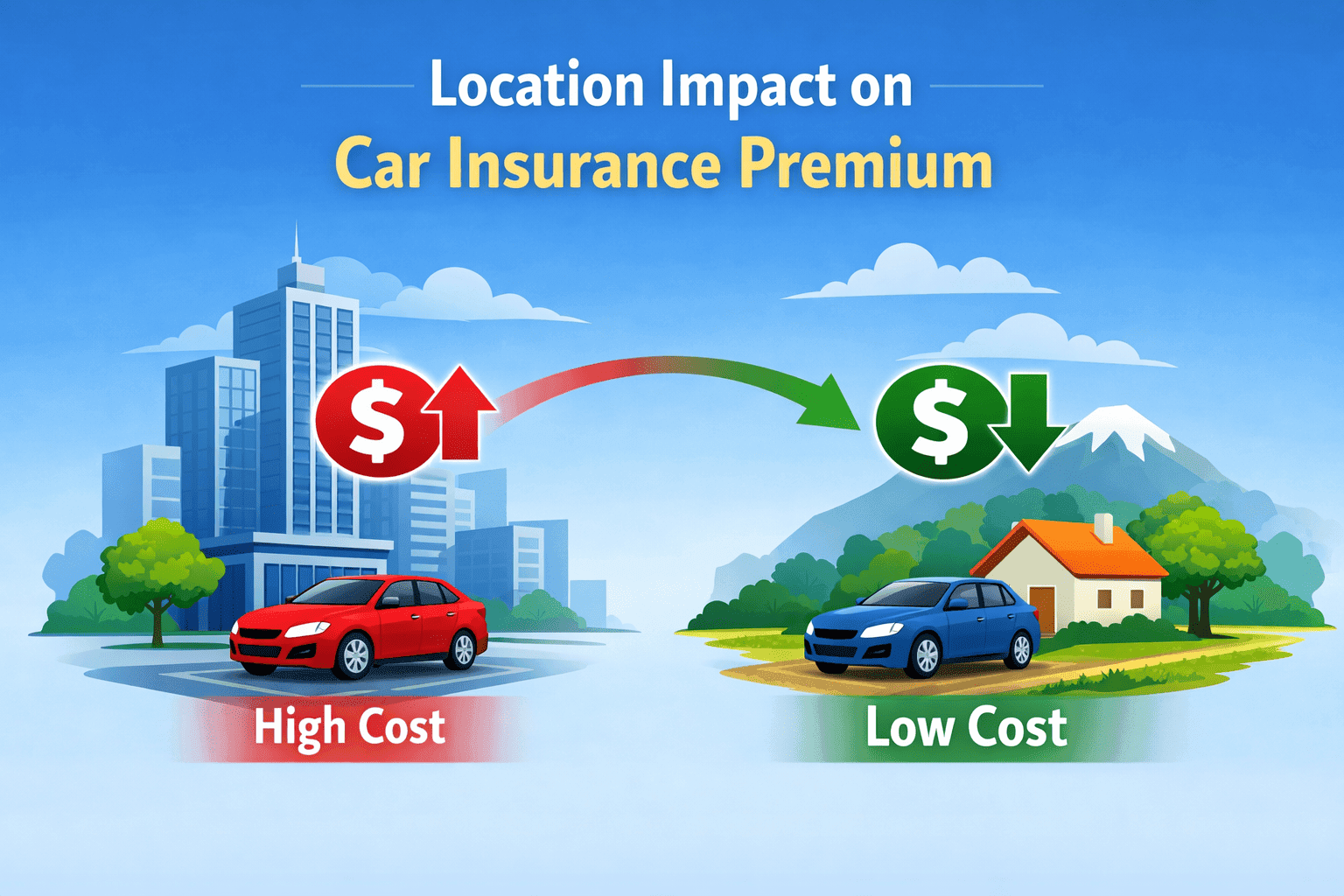
Your car insurance premium may vary based on your location, as insurers assess area-specific risks such as traffic, accident rates, vehicle theft, weather conditions, and repair costs. Higher-risk areas may lead to higher premiums, while safer locations may offer lower costs or different coverage options.
How Your Location Can Influence Car Insurance Premiums in India?
Among the various factors that determine premiums, geographical location is one of them. A car insurance premium by location differs, as different cities have different traffic and safety conditions. A city with higher road and safety risks will have higher insurance premiums.
The insurer's liability increases in a traffic-prone city, where the risk of vehicle damage is high. They may therefore charge a higher premium.
Car Insurance Zones in India Explained
The Insurance Regulatory and Development Authority of India (IRDAI) has created two zones for India. Zone A and Zone B. If you have wondered how location affects car insurance price, it is this zone-based division that affects it.
Metro vs Urban vs Rural Areas: How Premiums Differ
When opting for car insurance, remember that in zone A, major cities like Delhi, Mumbai, and Chennai are there. Here, car insurance premiums are typically higher than in other areas. This is often because traffic density is high, accident frequency and theft rates tend to be high, and repair services may be costlier.
In small cities and towns, even though the region is urbanised, traffic may still be lower than in metros. There may be lower insurance claims in such regions, as well as fewer accidents and thefts.
Location-Based Factors That Affect Your Car Insurance Premium
Many location-based factors affect insurance premiums. The leading parameters that have an impact on price are as follows:
Population Density and Traffic Conditions
The number of vehicles in a city plays a role in determining the car insurance premium by location. A location with a high population may have high vehicle traffic, increasing the risk of accidents.
Accident-Prone Roads and Claim Frequency in the Area
Insurance premiums are higher in areas with high accident rates and traffic congestion, as these factors can increase the likelihood of claims. Insurers may view these areas as high-risk, which drives up costs.
Vehicle Theft Rates in the Location
The number of thefts or other crimes in the area also plays a role in determining premiums. Areas with higher crime rates are more vulnerable to threats and therefore pose a higher risk to insurance companies.
This can lead to higher car insurance premium by location, as the risk of the car being involved in a crime is high.
Flood-Prone or Natural Calamity Risk Areas
Areas that are flood-prone or at higher risk of natural disasters pose greater risks for car owners and insurance companies. These occurrences are unpredictable and may cause considerable damage to motor vehicles.
Road Infrastructure and Parking Conditions
The infrastructure of an area, such as roads and parking amenities, plays an important role in determining premiums. In areas with poor infrastructure, vehicles may be involved in accidents more frequently. This usually increases insurance premiums.
Local Rules, Regulations, and Market Conditions
Different states or cities may have varied mandates regarding coverage for motor insurance. This can directly affect policy premiums. The local market trends also affect premiums. Insurance providers may offer different premiums due to competition.
Other Factors That Affect Car Insurance Premium, Along with Location
Apart from the car insurance cost by city, your vehicle’s age, model, and other factors also contribute to the motor insurance price. They include:
Car Model: The more luxurious the car, the higher the premium can be.
Type of Coverage: The more comprehensive your coverage, the higher your premium may be.
Add-on Covers: If you include many add-ons, the insurance premium may also be high.
- Safety Features: More safety features reduce the likelihood of claims, thereby lowering premiums.
How to Choose the Right Car Insurance Cover Based on Where You Live
To choose a car insurance premium by location, you must assess various factors:
Assess risks in your area and ensure that you choose the right cover.
In areas with high theft, maintain a higher Insured Declared Value (IDV) to ensure adequate compensation.
Understand the price trends in your region to accurately manage expectations.
Consider local weather conditions and opt for add-ons to safeguard against location-specific damage.
Remember that timely car insurance renewal is essential to protect your vehicle against mishaps. Therefore, regardless of your location, you must opt for it.
Conclusion
One’s car insurance premium depends on where they live, as factors like traffic, theft rates, infrastructure, and weather conditions affect risk and pricing. Understanding these factors can help you choose suitable coverage and manage costs better.
With SBI General Insurance, you can explore plans designed to offer reliable financial protection for your vehicle.
Note: The given information has been compiled from digitally available resources. It is subject to change due to several factors.
FAQs
1. How to find one’s car insurance premium?
You can calculate your premium online on insurer websites by entering details such as car model, location, coverage type, and add-ons.
2. Do car insurance premiums change from one city to another in India?
Yes. Premiums vary by city due to differences in traffic, accident rates, theft incidents, and overall risk levels.
3. What are Zone A and Zone B in car insurance?
Zone A includes major metro cities with a higher risk, while Zone B covers the rest of India with a lower risk.
4. Why is car insurance premium usually higher in metro cities?
Metro cities have higher traffic congestion, accident frequency, theft rates, and repair costs, increasing the insurer’s risk and premium.
5. Does living in a flood-prone area increase car insurance premiums?
Yes, areas prone to flooding or other natural disasters face a higher risk of damage, which may lead insurers to charge higher premiums.
6. Can I reduce my premium even if I live in a high-risk location?
Yes, you can lower premiums by choosing higher deductibles, installing safety features, and limiting add-ons to essential coverage.
This blog is intended solely for educational and informational purposes. Content reflects data at time of publication and may not accurately reflect current premiums, terms, or regulations. Readers are encouraged to confirm the accuracy and relevance of the data before making any significant decisions. SBI General Insurance disclaims responsibility for any errors or consequences arising from the use of outdated information provided herein. For more details, please refer to the policy wordings and prospectus before concluding the sales. *Add-ons are subject to payment of additional premium.
Access and manage all your Insurance Needs in one place, right at your Fingertips.




4/5*
Access and manage all your Insurance Needs in one place, right at your Fingertips.



Vision
Our vision is to become the most trusted general insurer for a transforming India.
Mission
Our mission is to provide simple and innovative general insurance solutions, be responsive to our customers' needs and build a sustainable business for the future.
We're socially active!




