


 Contact Us


 Other Insurance
What Is Endorsement in Car Insurance Policy?
Date: May 13, 2026 - Last Modified May 13, 2026


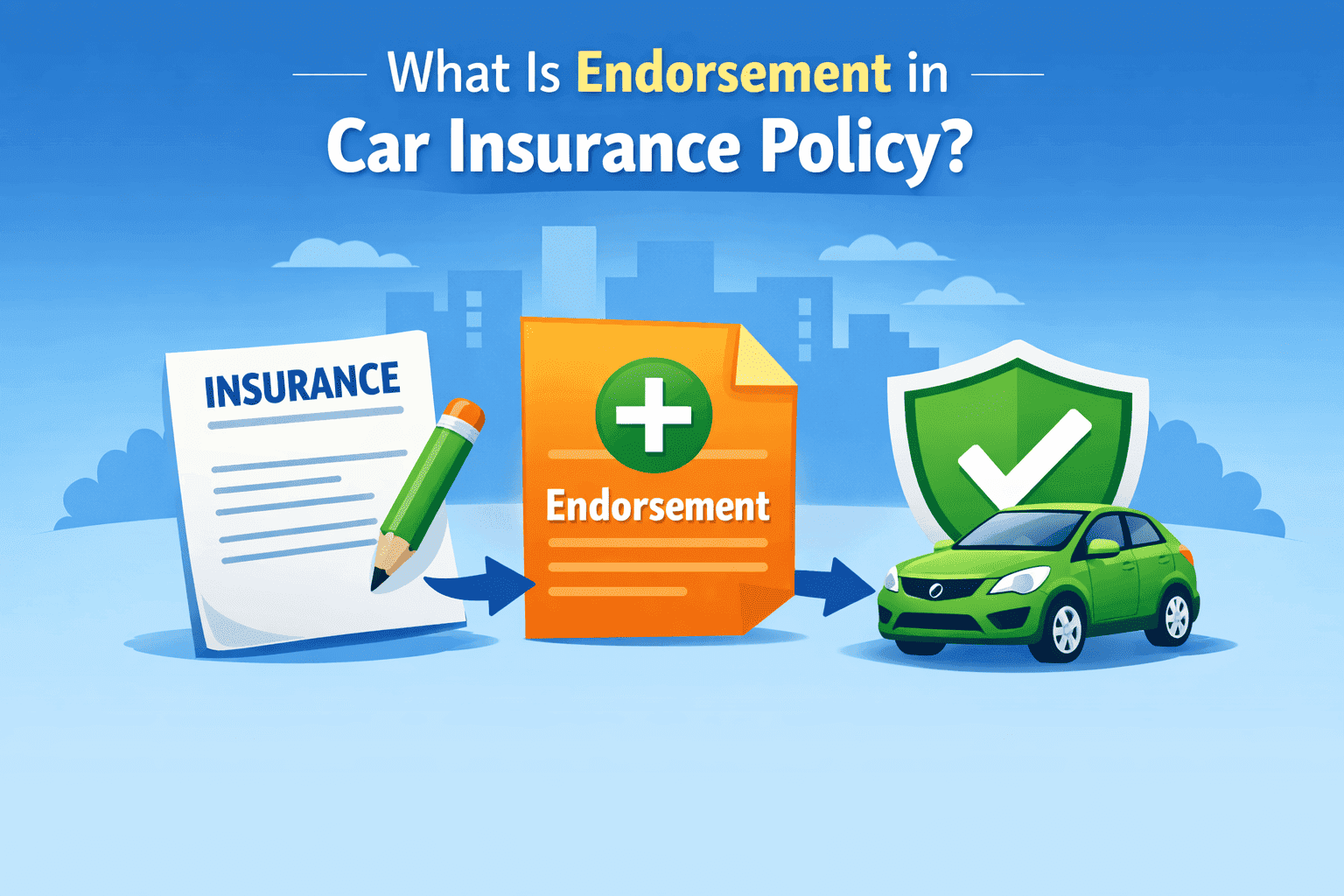
Life doesn’t stay the same, and neither does your car. You might relocate, modify your vehicle or even transfer ownership. When such changes happen, your insurance policy needs to reflect them accurately. This is where an endorsement in car insurance comes into play. This article explains how, instead of buying a new plan, you can modify the current one through a policy endorsement in the car insurance process. In short, car insurance with endorsements keeps your policy relevant as your needs evolve.
What is Endorsement in Car Insurance?
An endorsement in car insurance is an official update made to your existing policy to reflect changes in details or coverage. It can include corrections (like name or address), ownership transfer, or modifications such as adding accessories or a CNG kit. Depending on the type of change, endorsements may increase or decrease your premium. Informing your insurer promptly is essential, as unreported changes can lead to claim rejection or incomplete coverage.
Types of Endorsements in Car Insurance
Endorsements in car insurance can be broadly classified into financial, non-financial and mandatory categories, depending on whether they impact your premium, policy details or compliance requirements.
Financial (Premium-Bearing) Endorsements
Financial endorsements are changes that affect your premium amount. These updates either increase or decrease the insurer’s risk.
For instance, installing a CNG kit, adding accessories, or opting for additional covers like zero depreciation will usually increase your premium. On the other hand, removing certain add-ons may reduce it.
In such cases, the insurer recalculates your premium based on the revised risk profile. These types of endorsement in car insurance can change both how much you pay and what your policy actually covers, so they are worth thinking through carefully, not just ticking off as a routine update.
Non-Financial (Non-Premium) Endorsements
Non-financial endorsements are simpler updates that do not affect your premium. They are typically administrative changes that correct or update personal or policy details.
Examples include correcting your name, updating your address, changing contact details or fixing errors in the vehicle registration number.
While these may seem minor, they are crucial. Even small mismatches in policy information can create complications during claims. A quick policy endorsement car insurance request ensures that everything is accurate and avoids unnecessary delays later.
Essential Endorsements
These include those endorsements you must make to stay compliant with insurance and legal requirements.
A common example is transferring the policy after selling your car. The new owner must have the insurance transferred into their name within the stipulated period. Similarly, major vehicle modifications must also be updated.
Ignoring such endorsements can lead to serious consequences, including claim rejection. That is why car insurance with endorsements is not just convenient; it is essential for staying protected.
When Should You Request an Endorsement?
You should request an endorsement whenever there is a change that affects your policy details or risk profile. It is not something to delay or overlook. For example, imagine you have upgraded your car with a high-end music system or installed a CNG kit. If these changes aren't reflected in your policy, they may not be covered in the event of damage or theft.
If you have recently moved to a new city, your premium might change since insurers consider location-based risks. Updating your address helps keep your premium accurate and ensures you don’t miss any important communication from your insurer. Ownership transfer is another critical situation. If you sell your car but fail to transfer the insurance, any future claims could become complicated or even invalid.
Even minor corrections, such as fixing a typo in your name, should be addressed promptly. A well-maintained policy, with timely endorsements in car insurance, ensures your coverage works exactly as intended when you need it most.
Impact of Endorsement on Premium and Coverage
Endorsements can directly influence both your premium and the extent of your coverage. The impact depends on the type of change you are making. If the endorsement increases the insurer’s risk, like adding accessories or opting for extra coverage, your premium will go up. Conversely, removing add-ons or reducing coverage may lower your premium.
More importantly, endorsements define what is actually covered. For instance, if you install a CNG kit but don’t update your policy, any damage related to it won’t be reimbursed. This highlights why car insurance with endorsements is not just about compliance; it is about ensuring complete and accurate protection.
How to Apply for an Endorsement in Car Insurance
Applying for an endorsement is usually straightforward and can be done either online or offline, depending on your preference.
You will need to inform your insurer about the change, submit relevant documents, and, if applicable, pay the additional premium. Once processed, the insurer issues an updated policy document reflecting the changes.
For endorsements where one needs to update their personal details, they may be able to complete the process online.
The key is to act promptly. Delays can create gaps in coverage, which may affect claims later. A timely policy endorsement car insurance request ensures your policy remains up to date without any complications.
Common Examples of Endorsements in Car Insurance
There are several everyday scenarios where endorsements are required.
These include adding or removing accessories, installing a CNG kit, updating personal details, or correcting errors in the policy. Ownership transfer is another common situation that requires immediate endorsement. For instance, if you buy a used car, transferring the insurance policy into your name is crucial. Without it, you may not be able to make a valid claim.
Similarly, changing your city or adding safety devices like anti-theft systems should also be updated. These changes can even help reduce your premium in some cases. Such examples highlight how car insurance with endorsements helps your policy stay aligned with real-life changes.
What Happens If You Don’t Update Endorsements?
Failing to update endorsements can lead to serious issues, especially during claims.
If your policy doesn’t reflect your car’s actual condition or the correct ownership details, it can create problems when you file a claim. Insurers may reject it altogether, and even small mismatches can lead to delays or reduced pay-outs. For e.g., if your address is outdated or your vehicle has unreported modifications, the insurer may question the validity of your coverage.
In some cases, non-compliance with mandatory endorsements, like ownership transfer, may completely invalidate your policy. This is why keeping your policy updated through timely endorsement in car insurance requests is not just recommended, it is critical for protecting your financial interests.
Conclusion
An endorsement helps keep your car insurance policy up to date as things change. With timely updates, you can avoid claim hassles, ensure your coverage stays valid and continue enjoying complete peace of mind throughout your policy period.
FAQs
1. Is endorsement mandatory in car insurance?
In some situations, like transferring ownership or making major changes to your car, getting an endorsement is not optional; it is necessary. If you skip it, your policy might not stay valid, which can lead to problems when you need to make a claim.
2. Can endorsement be done online?
Yes, most insurers offer an online process, making it easy to request and track a policy endorsement car insurance update.
3. How long does endorsement take?
It usually takes a few hours to a couple of days, depending on the type of change and documentation required.
4. Is endorsement free of cost?
Not always. Non-financial endorsements are usually free, while financial ones may involve an additional premium.
5. Can I cancel an endorsement?
In some cases, yes. However, it depends on the insurer’s terms and the type of endorsement requested.
6. Does endorsement affect policy validity?
Endorsements ensure your policy remains valid and aligned with current details.
7. Can endorsement be done after a claim?
Endorsements should be done before a claim. Post-claim changes may not be accepted for that specific incident.
8. How many endorsements are allowed in a policy?
There is no limit on the number of endorsements. You can make multiple endorsements as needed, as long as they comply with insurer guidelines.
This blog is intended solely for educational and informational purposes. Content reflects data at time of publication and may not accurately reflect current premiums, terms, or regulations. Readers are encouraged to confirm the accuracy and relevance of the data before making any significant decisions. SBI General Insurance disclaims responsibility for any errors or consequences arising from the use of outdated information provided herein. For more details, please refer to the policy wordings and prospectus before concluding the sales. *Add-ons are subject to payment of additional premium.
Access and manage all your Insurance Needs in one place, right at your Fingertips.



4/5*
Access and manage all your Insurance Needs in one place, right at your Fingertips.


Vision
Our vision is to become the most trusted general insurer for a transforming India.
Mission
Our mission is to provide simple and innovative general insurance solutions, be responsive to our customers' needs and build a sustainable business for the future.
We're socially active!