


 Contact Us


 Other Insurance
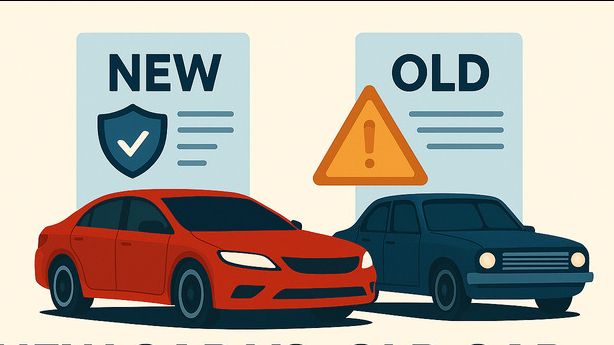
New Car vs Old Car Insurance: Key Differences You Must Know
Date: May 4, 2026 - Last Modified May 4, 2026


Owning a car offers exceptional convenience, allowing travel anywhere, anytime. It also provides an opportunity to unwind through leisurely drives and adds a sense of prestige to one’s lifestyle. There are two car-buying options: new and old. A new car is one that you have purchased recently, while an old car is one that you have owned for several years.
Whether the car is new or old, it holds value, both financially and emotionally. Hence, you would want to ensure its safety while maintaining it in the best possible condition. Buying car insurance is an effective way to do so. It provides financial coverage in critical situations, helping with repairs, replacements, or recovery in the event of total loss. There is a major difference between insurance for a new car vs an old car. This blog explains it in detail.
What Are the Insurance Options for New and Old Cars?
Insurance options you can explore for both new and old cars:
Third-party insurance – It offers financial coverage for third-party liabilities. The insurance is mandatory by law. Not having it can lead to penalties and legal consequences.
Standalone own damage cover – It provides financial coverage for liabilities associated with your own car. This coverage can be enhanced with add-ons, ensuring better protection for your car.
Comprehensive insurance – It extends financial coverage for both own car-associated liabilities and third-party liabilities. It ensures end-to-end protection, making it ideal for today’s fast-paced, dynamic traffic scenarios.
How Does Car Insurance for a New Car Work?
Based on the insurance plan you choose for your car: standalone or comprehensive, it will work in the following ways:
Application:
You can purchase insurance for your new car at any time; however, it is best to buy it before the car is on the road to ensure safety. You can buy insurance online or at the nearest insurance company branch. You will only need to fill out a form and submit essential documents.
Coverage:
Both standalone and comprehensive insurance plans provide solid coverage for your car. The base coverage will include repair and parts replacement costs if the car is involved in an accident, stolen, or affected by man-made or natural disasters, subject to policy wordings.
Add-ons:
A wide range of add-ons is available; explore them to enhance your car's protection. A valuable add-on you can opt for with your primary insurance plan is the zero-depreciation cover. As the name suggests, this cover provides financial protection without accounting for car depreciation. This becomes particularly beneficial as the car ages and experiences wear and tear.
Premium:
Premium is the term used to refer to the amount the policyholder pays to the insurance company on a regular basis to access the insurance coverage as required. The insurance company considers several factors for the premium amount. The top consideration factors are the car’s make, model, age, current value, usage location, coverage, and add-ons. Ideally, a new car has a higher insurance premium than an old car.
How Does an Old Car Insurance Work?
Whether you choose a standalone or a comprehensive insurance to secure your old car, here is how it will work:
Buying/renewing:
Buying car insurance for an old car is simpler than ever. One can do it online or offline by completing a basic form and meeting the documentation requirements. If you already have insurance, consider upgrading it with practical add-ons to ensure your car is completely protected.
Coverage:
The basic coverage for a new car and an old car is the same. It provides financial coverage for repairs, replacement, and losses if the car is involved in an accident, stolen, or affected by natural or man-made disasters. However, given the car's age, there may be certain exclusions. For example, engine protection cover may or may not be included.
Add-ons:
Several add-on options are available; consider your car’s requirements and preferences to opt for the most suitable ones. However, the available add-on options will differ from those offered for a new car. For example, zero-depreciation cover is not available for older cars, as they have already experienced significant depreciation. Ideally, for older cars, it is recommended to opt for add-on features like roadside assistance, as it ensures the car receives help when needed.
Premium:
As mentioned, the insurance company considers several factors when calculating the premium; hence, it differs case by case. Generally, the premium for older cars is lower than that of new cars, as their value has depreciated. It is also because the risk factor is lower for older cars, as the likelihood of them being stolen can be comparatively less.
What Is the Difference Between New Car Vs Old Car Insurance?
The following table explains the difference between new car vs old car insurance:
| Point Of Difference | New Car | Old Car |
| Insured Declared Value (IDV) | A new car has a higher market value, so the insurance company provides a higher IDV. | An old car has a lower market value due to depreciation; hence, the insurance company provides a lower IDV. |
| Premium | Since a new car has a higher market value, it is an asset that requires active protection, which is why its premium tends to be higher. | An older car has a lower market value and a reduced risk of theft. It requires reasonable protection; therefore, its premium tends to be lower than that of newer cars. |
| Add-on options | As car manufacturers evolve their offerings in response to consumer demand, the insurance company adapts accordingly by introducing a wider range of add-on features. | As a car ages, depreciation and wear and tear increase, and insurance companies may not be able to cover the full cost. So, limited add-on options are available. |
| Deprecation impact | A new car depreciates; however, the rate is slower than that of an old car. This impacts premium and resale value. | An old car depreciates faster, significantly reducing premium and resale value. |
Note:
The Insured Declared Value (IDV) is the amount set by the insurance company for your car, which is paid in case of total loss, such as theft or irreparable damage due to disasters. It is determined by considering the car’s showroom price at the time of insurance purchase.
Note that additional car accessories and the annual depreciation value are also taken into consideration each time. It affects your premium and, more importantly, the benefits you will receive if the car is damaged.
Another point to note is that older cars aren't always cheaper to insure. Some older models have higher theft rates or expensive repair costs that can make premiums comparable to or even higher than newer vehicles.
Conclusion
Whether it is a brand-new car or one that has been in your garage for years, it holds value in many ways: through convenience it offers, monetary worth, and emotional significance. Hence, it is natural to want to take care of your car in the best way possible. Buying car insurance is essential to ensure your vehicle is protected over time, and certain maintenance costs are covered. It provides financial coverage for car repairs, replacement, and loss caused by accidents, theft, and natural or man-made disasters.
There are three primary insurance plans: third-party insurance, standalone own damage cover, and comprehensive insurance. Buying third-party insurance is mandatory by law. When choosing insurance for your car, consider your requirements and preferences to make the right decision. SBI General Insurance offers a wide range of motor insurance plans, carefully designed in line with IRDAI guidelines and consumer needs, at affordable premiums, while ensuring adequate coverage.
FAQs
1. Is insurance cheaper for old cars compared to new cars?
Yes, insurance premiums for older cars are lower compared to new cars due to their reduced market value, higher depreciation, and decreased risk of theft.
2. Can I reduce coverage for an old car?
Ideally, you should consider significant insurance coverage for an old car. This is because as your car gets older, it becomes more prone to wear and tear, increasing the associated costs. An insurance policy helps you cover the cost, keeping your savings intact.
3. Do old cars get zero depreciation cover?
No, old cards generally do not get a zero-depreciation coverage, as they have already undergone a certain level of depreciation.
4. How does IDV differ for new and old cars?
Yes, the Insured Declared Value (IDV) differs in the case of car insurance for a new car vs an old car. A new car has a higher market value and a greater risk of being stolen, hence associated with a higher IDV. On the other hand, an old car has a lower market value and reduced risk of being stolen, therefore a lower IDV.
5. Should I buy comprehensive insurance for an old car?
Yes, it is always advisable to buy a comprehensive insurance plan for your car. This is because it offers extensive coverage, including most essential aspects needed to maintain and secure your car. Furthermore, the premium is fair and competitive, overall making it a cost-effective option for your car.
6. Is third-party insurance enough for old cars?
Third-party insurance is mandatory by law. However, it is not enough for your car as it covers only third-party liabilities. Buy a comprehensive insurance plan to cover both personal and third-party liabilities. SBI General Insurance offers it at a competitive premium, along with valuable services.
7. How does car age affect insurance premiums?
A car’s age is associated with its depreciation, which in turn affects insurance premiums and resale value. A recently purchased car is less affected by depreciation than a year-old car. Hence, it results in higher insurance premiums and resale values, whereas the opposite is true for older cars.
This blog is intended solely for educational and informational purposes. Content reflects data at time of publication and may not accurately reflect current premiums, terms, or regulations. Readers are encouraged to confirm the accuracy and relevance of the data before making any significant decisions. SBI General Insurance disclaims responsibility for any errors or consequences arising from the use of outdated information provided herein. For more details, please refer to the policy wordings and prospectus before concluding the sales. *Add-ons are subject to payment of additional premium.
Access and manage all your Insurance Needs in one place, right at your Fingertips.



4/5*
Access and manage all your Insurance Needs in one place, right at your Fingertips.


Vision
Our vision is to become the most trusted general insurer for a transforming India.
Mission
Our mission is to provide simple and innovative general insurance solutions, be responsive to our customers' needs and build a sustainable business for the future.
We're socially active!