


 Contact Us


 Other Insurance
Why Your Car Insurance Premium Might Increase Every Year
Date: May 4, 2026 - Last Modified May 4, 2026


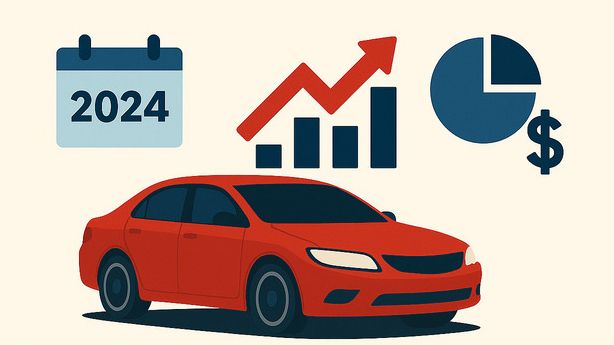
Does car insurance premium increase every year, even when no claims have been filed? For many car owners, the answer is yes. This article explores the primary causes that this might happen. It also outlines in detail the factors that are used to calculate car insurance premiums and how to keep premium payments low.
Key Reasons Why Car Insurance Premiums Increase
Several factors can trigger a car insurance premium increase at renewal. Insurers reassess risk annually, accounting for regulatory changes, vehicle condition, and evolving market dynamics.
- Third-party (TP) premium revisions by IRDAI: The Insurance Regulatory and Development Authority of India (IRDAI) periodically revises TP insurance rates based on industry-wide road accident data and claim trends. Third-party insurance is mandatory under the Motor Vehicles Act, 1988, (as maybe amended from time to time) and any upward revision directly raises the overall premium payable by vehicle owners.
- Changes in Insured Declared Value (IDV): The IDV represents the current market value of the vehicle and forms the basis for the own-damage premium component. As a vehicle ages, its IDV is recalculated at each renewal, which influences the premium amount.
- Selection of add-on* covers: Covers such as zero depreciation cover, engine protection cover, and roadside assistance each carry a separate premium charge, which increases the total premium outgo.
- Impact of No Claim Bonus (NCB) reset: The NCB is a percentage benefit applied to the own-damage premium for each consecutive claim-free year. Filing a claim resets this accumulation and results in a higher premium at the next renewal.
- Regulatory and compliance updates: Annual changes to insurance guidelines, GST applicability, and insurer-level risk assessment models may each contribute to premium adjustments from one year to the next.
Key Takeaways
- Periodic revisions to third-party insurance rates are governed by the Motor Vehicles Act, 1988.
- Annual recalculation of the Insured Declared Value (IDV) modifies the own-damage premium component.
- The inclusion of specific add-on covers and the status of the No Claim Bonus (NCB) directly influence the final cost.
Why Does the Premium Increase Even Without Making a Claim?
A common misconception is that premiums rise only when claims are filed. In practice, several external and structural factors raise the premium regardless of individual claim behaviour.
- Mandatory TP premium revisions: IRDAI revises third-party insurance rates based on industry-wide accident data and court-mandated compensation trends. These revisions apply to all policyholders, irrespective of personal claim history.
- Rising repair and parts costs: Inflation in spare parts prices and workshop labour increases an insurer's overall claim liability. This exposure is reflected in the own-damage premium at each renewal cycle.
- Vehicle ageing and risk recalibration: As a vehicle ages, its components are considered more susceptible to wear. Insurers may adjust the applicable risk profile and premium accordingly.
- Break-in policy loading: A lapsed policy is classified as a 'break-in' policy. Reinstating coverage after a lapse requires a fresh vehicle inspection and may attract additional premium loading.
- Profile or usage changes: Modifications to the declared vehicle usage, garaging address, or registered ownership details trigger a fresh risk assessment and can result in a revised premium.
Key Takeaways
- Industry-wide accident data and inflation in repair costs impact premiums regardless of individual behaviour.
- Changes in vehicle age, registered location, or usage patterns trigger fresh risk assessments.
- Lapses in coverage (break-in policies) often lead to additional premium loading and inspection requirements.
How to Lower Your Car Insurance Premium?
Making informed choices at car insurance renewal can help car owners manage insurance costs without reducing essential protection.
Build and protect the No Claim Bonus (NCB): The NCB reduces the own-damage premium by 20% after the first claim-free year, progressively increasing to a maximum of 50% over five consecutive claim-free years, as per IRDAI guidelines. Avoid filing claims for minor repairs that could reset this benefit.
Opt for a voluntary deductible: A voluntary deductible is the amount a policyholder agrees to pay at the time of a claim. Opting for a higher voluntary deductible reduces the applicable premium, though it increases out-of-pocket costs when a claim arises.
Select add-on covers based on actual need: Each add-on* cover carries a separate premium charge. Choosing only the covers relevant to the vehicle's age, condition, and usage pattern helps manage the total premium effectively.
Avoid unnecessary vehicle modifications: Structural or performance-based changes alter the insurer's risk assessment and can result in a premium revision. All modifications made to the vehicle must be communicated to the insurer at renewal.
Renew the policy before it lapses: Timely renewal preserves NCB continuity and prevents the additional premium loading associated with break-in policies.
Install IRDAI-approved anti-theft devices: Fitting a certified anti-theft device can reduce the vehicle's theft risk profile and may positively influence the own-damage premium component.
Compare plans using an online premium calculator: An online calculator helps identify coverage options suited to the vehicle's profile and budget.
Key Takeaways
- Maintaining a claim-free record secures a No Claim Bonus (NCB) of up to 50% over five years.
- Opting for a voluntary deductible reduces the immediate premium outgo in exchange for higher out-of-pocket claim costs.
Timely renewals and the installation of approved anti-theft devices help sustain lower premium rates.
Key Factors Insurers Use to Calculate Car Insurance Premiums
Insurers evaluate a defined set of vehicle-specific and policyholder-related variables when determining the applicable premium. Understanding what drives a car insurance premium increase enables car owners to compare and select plans more effectively.
- Make, model, and variant: These determine the vehicle's market value, repair costs, and risk classification, directly influencing the own-damage premium component.
- Engine cubic capacity (CC): IRDAI classifies vehicles by engine CC for third-party insurance. Higher CC vehicles attract higher mandatory TP premiums as prescribed by the regulator.
- Age of the vehicle and IDV: The Insured Declared Value (IDV) is the manufacturer's listed price minus applicable depreciation. It forms the basis for the own-damage premium and the maximum payout in the event of total loss or theft.
- Geographical zone: Metropolitan zones carry higher traffic density and accident probability, which is reflected in the premium computation compared to non-metro areas.
- Type of coverage selected: Comprehensive plans covering own-damage, third-party liability, and personal accident carry a higher overall premium than standalone third-party policies.
- Add-on covers opted for: Each selected add-on cover*, such as zero depreciation cover or engine protection cover, adds to the base premium.
- Claims history: A higher frequency of past claims signals elevated risk and can result in a higher own-damage premium at renewal.
Key Takeaways
- The make, model, and engine cubic capacity (CC) serve as the primary benchmarks for premium bracket classification.
- The Insured Declared Value (IDV) is calculated based on the manufacturer’s price minus age-related depreciation.
- Geographical zones with higher traffic density and accident frequency carry higher premium computations.
Conclusion
A car insurance premium reflects individual, regulatory, and market-driven variables that evolve annually. Awareness of these factors equips car owners to make proactive decisions. Managing claim history, reviewing coverage needs, and renewing on time can help maintain cost-effective protection.
FAQs
1. How does the car's location impact insurance premiums?
Insurers classify geographical zones based on traffic density, road conditions, and accident frequency. This zone classification directly affects the own-damage premium component of a car insurance plan.
2. Can modifying my car increase the insurance premium?
Structural or performance-based modifications can alter a vehicle's risk profile in the insurer's assessment. Changes to the engine, suspension, or external structure must be declared to the insurer at renewal. Such modifications may result in a revised premium applicable to the policy.
3. Do add-on covers increase the overall premium cost?
Each add-on cover* selected, such as zero depreciation cover, engine protection cover, or roadside assistance, involves a separate premium over the base policy cost. Policyholders should assess which covers align with their vehicle's age and usage before opting for them.
*Add-ons are subject to payment of additional premium.
This blog is intended solely for educational and informational purposes. Content reflects data at time of publication and may not accurately reflect current premiums, terms, or regulations. Readers are encouraged to confirm the accuracy and relevance of the data before making any significant decisions. SBI General Insurance disclaims responsibility for any errors or consequences arising from the use of outdated information provided herein. For more details, please refer to the policy wordings and prospectus before concluding the sales. *Add-ons are subject to payment of additional premium.
Access and manage all your Insurance Needs in one place, right at your Fingertips.



4/5*
Access and manage all your Insurance Needs in one place, right at your Fingertips.


Vision
Our vision is to become the most trusted general insurer for a transforming India.
Mission
Our mission is to provide simple and innovative general insurance solutions, be responsive to our customers' needs and build a sustainable business for the future.
We're socially active!