


 Contact Us


 Other Insurance
How to Deal with Car Engine Overheating?
Date: Apr 20, 2026 - Last Modified Apr 21, 2026


Some days go smoothly, and on other days, your car may be signalling when something isn’t right. One such sign is overheating. Whether it’s during your daily commute or a long drive down the highway, this problem is common.
The good news is that it is easy to manage once you understand the root cause and take the right steps. There’s no reason to panic as car engine overheating issues often have simple solutions. Let’s decode them in detail.
What is Car Engine Overheating?
Car engine overheating occurs when the engine temperature rises beyond safe limits, usually due to cooling system failure, low coolant, or mechanical issues. Immediate action is required to prevent serious engine damage.
Car engine overheating often results from issues in the cooling system, such as low coolant levels, leaks, faulty components, or low engine oil.
Early signs of overheating include warning lights, steam, unusual smells, engine noise, and reduced power.
You can safely pull over, switch off the engine, enable natural ventilation, and seek roadside assistance services from your car insurance provider as ways to address the engine overheating issue.
To prevent overheating, regularly service your vehicle, check coolant levels, and practice mindful driving habits.
Reasons for Car Overheating
Let’s start by understanding engine overheating causes to devise a plan of action to control the situation. Here are some of the common reasons for a car engine overheating:
a. Shortage of Coolant
If the coolant levels are below the manufacturer’s recommendation, you may face a car engine overheating issue. This is because coolant helps regulate engine temperature.
b. Leaking Hoses and Belts
Hoses help coolant move from the engine and radiator, and belts enable the water pump pressure. Any leakage from these components can affect coolant flow, leading to engine overheating.
c. Broken Water Pump
The water pump pushes the coolant around the car’s engine and can disrupt the coolant flow when broken or faulty. The natural impact is on the engine’s temperature regulation.
d. Defective Thermostat
The car engine’s thermostat regulates when the coolant flows through the engine. If it malfunctions, it can block airflow, leading to an overheated engine.
e. Defective Radiator Fan
A radiator helps regulate the coolant when it circulates through the engine. If it stops working, the heat isn’t released effectively, leading to engine overheating.
f. Low-Engine Oil
Engine oil provides the essential lubrication for moving parts, reducing friction and dissipating heat. When its levels are low, the engine runs hotter than usual.
Signs and Symptoms of an Overheating Engine
Here are the signs to check for an overheating engine of a car:
Temperature Warning Light
Most cars include this feature to warn you when your car’s engine is overheated. It’s a thermometer sign on your dashboard.
Steam or Smoke from the Bonnet
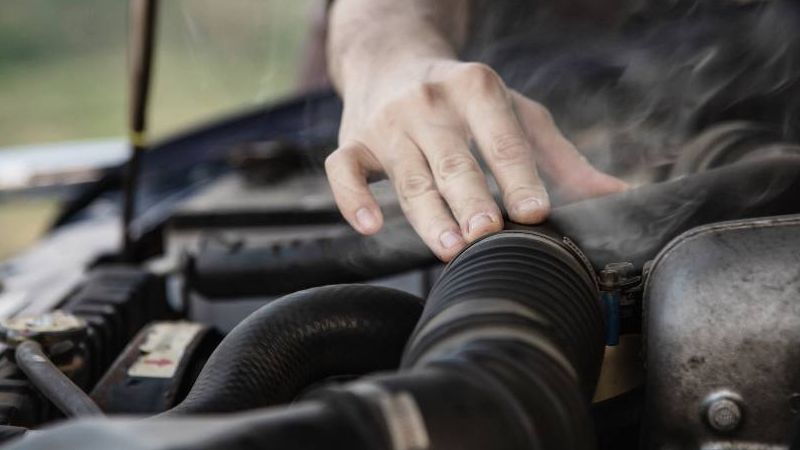
Many drivers report noticing steam coming from the bonnet in traffic, and further inspection reveals an overheated engine. This is a fairly common sign.
Burning Smell
A sharp, sweet or syrupy smell can come from overheated coolant or engine oil. It is often an early hint of a car engine overheating.
Engine Noise
Ticking, loud thumping, or knocking noises can indicate rising heat levels. Pay attention to such unusual noise.
Reduced Power
You will notice performance issues like sluggishness or a rough drive, which can be linked to an overheating engine of a car.
How to Deal with Engine Overheating?
You can calmly resolve car engine overheating issues with these practical steps:
Park Your Vehicle in the Shade
When things are looking safer, pull over and switch off your car’s engine. Limiting sun exposure helps minimise the heating.
Ventilate by Leaving the Windows Open
Open the bonnet once things cool down slightly and keep the windows open for a while. This helps release trapped heat and limits the heat buildup. Avoid opening the bonnet immediately in heavy traffic or on busy roads, as escaping steam can cause facial and hand burns.
Use the Car’s Air Conditioner Smartly
Turn off the air conditioner immediately. This may sound counterintuitive, but it pulls the heat away from the engine.
Check Coolant Levels
Once the engine has cooled down, check the coolant reservoir. If the levels are low, top it off to restore the balance.
Restart the Engine
You can finally restart the engine carefully. Monitor the temperature gauge as you do to confirm everything is good to go.
Seek Roadside Assistance
If the issue doesn’t resolve despite all the other steps, it’s best to call for help. Professional attention can help avoid serious damage.
While these steps address the immediate overheating situation and allow your engine to cool, they do not fix the underlying cause. After cooling and reaching a safe location, you must have a professional mechanic diagnose and repair the root issue. Driving repeatedly without addressing the cause can lead to major issues.
How to Prevent Engine Overheating?
While resolving the situation in the moment is great, making sure it doesn’t happen again is critical. Here are some simple habits that help with prevention:
Regularly Inspect Coolant Levels
Maintain the right coolant level to regulate engine temperature. Also, regular checks reveal any possible leaks.
Prioritise Regular Maintenance
Routine servicing, as per the manufacturer’s recommendation, helps you catch engine overheating causes early.
Limit AC Use in Extreme Heat
AC use on very hot days can add extra load to the engine. So, manage the AC use smartly and switch to the fresh air mode when needed.
Get the Radiator Flushed Periodically
Over time, dirt and deposits can reduce the radiator's efficiency. Periodically flushing it, as advised in service manuals, reduces the possibility of engine overheating.
Let the Engine Breathe
Avoid pushing your car for long stretches without any breaks. Give it time to breathe and keep the engine turned off in long traffic.
Conclusion
Car engine overheating is a common issue, and staying alert helps manage it effectively. Once you understand how to deal with engine overheating, you can take control of the situation without panic. Additionally, being prepared for overheating also goes a long way. That said, unavoidable situations warrant professional help. In such cases, the roadside assistance services available with car insurance by SBI General Insurance can come to your rescue. This add-on is also available with bike insurance to help you have a smoother ride!
Note: This article provides general guidance on addressing engine overheating. For accurate diagnosis and repair of your vehicle, consult a qualified mechanic or authorised service center.
FAQs
What should I do immediately if my car engine overheats?
Pull over safely and switch off the engine. Focus on cooling it down by turning on the heater and turning off the AC.
Can I drive my car after it overheats?
No, driving after the car’s engine overheats can worsen the damage. It’s better to let the engine cool completely before proceeding with normal car operation.
How long should I wait for the engine to cool down?
In most cases, you can wait for 30 minutes to an hour for the engine to cool down. It depends on the overheating level.
What are the main causes of engine overheating?
Common causes of engine overheating include low coolant level, leaks in hoses, faulty thermostat, a broken water pump, and the like.
Is low coolant the only reason for overheating?
No, low coolant is one of the many reasons. Problems with the radiator, water pump, engine oil levels, coolant system, etc., can also lead to overheating.
Can engine overheating damage my car permanently?
Yes, if left unresolved for long, it can lead to serious issues like a blown head gasket or engine failure.
How can I prevent my car engine from overheating?
You can focus on regular maintenance, checking coolant levels regularly, letting the engine breathe, and getting the radiator flushed when needed to prevent engine overheating.
This blog is intended solely for educational and informational purposes. Content reflects data at time of publication and may not accurately reflect current premiums, terms, or regulations. Readers are encouraged to confirm the accuracy and relevance of the data before making any significant decisions. SBI General Insurance disclaims responsibility for any errors or consequences arising from the use of outdated information provided herein. For more details, please refer to the policy wordings and prospectus before concluding the sales. *Add-ons are subject to payment of additional premium.
Access and manage all your Insurance Needs in one place, right at your Fingertips.




4/5*
Access and manage all your Insurance Needs in one place, right at your Fingertips.



Vision
Our vision is to become the most trusted general insurer for a transforming India.
Mission
Our mission is to provide simple and innovative general insurance solutions, be responsive to our customers' needs and build a sustainable business for the future.
We're socially active!