


 Contact Us


 Other Insurance
How Dashcams are Changing Car Insurance Claims?
Date: May 13, 2026 - Last Modified May 13, 2026


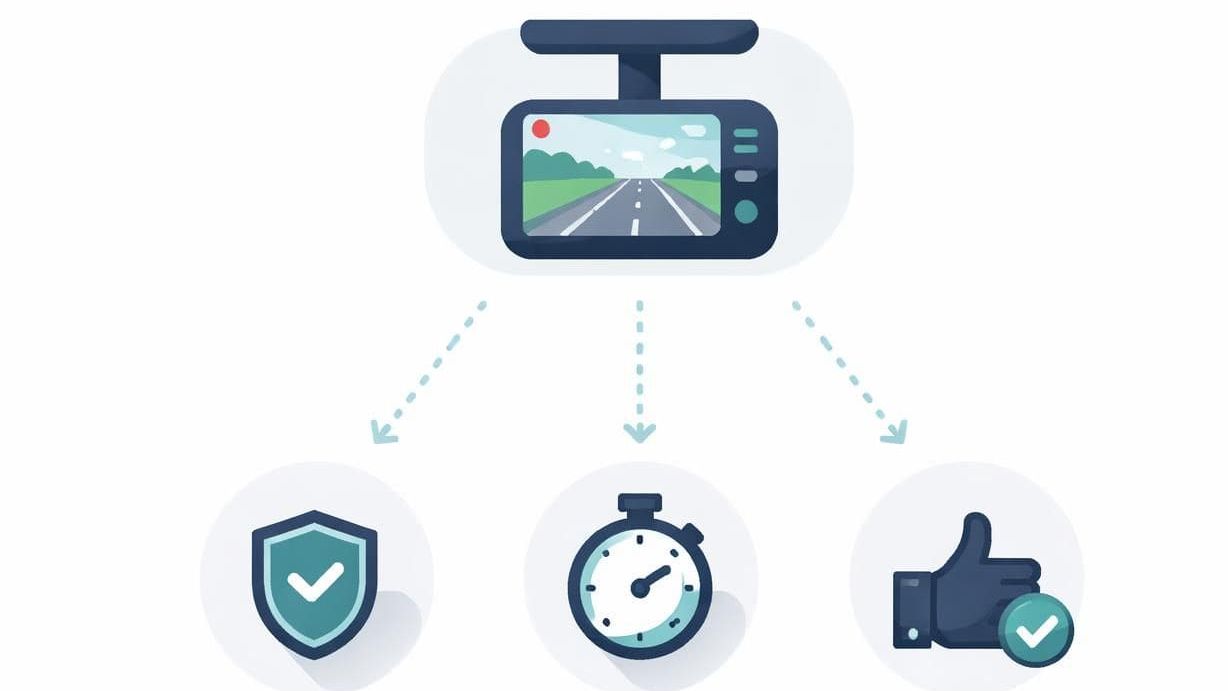
Dashcams are becoming increasingly popular among car owners as they offer an extra layer of security on the road. By recording real-time footage of accidents and unexpected incidents, they can help establish fault, reduce the chances of fraudulent claims, and make the insurance claims process quicker and more transparent. As more drivers turn to dashcams for peace of mind, insurers are also recognising their value.
In this article, we explore how dashcams are changing car insurance claims and why they are becoming an important tool for modern drivers.
How Dashcams are Changing Car Insurance Claims?
Car accidents can cause damage that can be financially burdensome. In case of such incidents, your insurance cover can offer some relief. However, you may at times need credible proof of your innocence for claim approval. This is when dashcam footage can become essential.
What is a Dashcam and How Does It Work?
A dashcam, or dashboard camera, is a small video camera mounted on the dashboard or windshield of a vehicle. The camera can be utilised to capture traffic accidents, drives, or road conditions. Some dashcams feature GPS tracking, motion detection, or dual-camera setups that record the road and the interior.
Here is how front and rear dashcams work:
A dashcam mounted near the windshield starts recording as soon as it is turned on.
It captures video in a loop, saving new footage and deleting old footage once the storage is full.
Many dashcams use memory cards, but some offer cloud storage.
Some dashcams have sensors that lock and save footage when a collision is detected.
Many dashcams have a parking mode that records events when you are away from the vehicle, helping protect it against theft.
Traditional Car Insurance Claims vs Dashcam-Based Claims
Dashcam car insurance claims can differ from traditional car insurance claims due to differences in processing speed, fraud risk, and the nature of investigations.
As dashcams capture real-time footage, they can help review the occurrences during an incident. Therefore, using this type of documentation can significantly affect claim outcomes.
The following are some general differences between traditional and dashcam-based claims:
| Feature | Traditional Claims | Dashcam-Based Claims |
| Convenience | May require more documentation and follow-ups | Can simplify process through recorded evidence |
| Claim processing time | Often takes weeks with heavy reliance on witness accounts, police reports, and driver statements | Offers immediate clarification enabling faster claim resolution |
| Dispute resolution | Lack of direct evidence of the incident may lead to disputes | Provides reliable evidence, helping reduce chances of dispute |
| Fraud risk | Relatively high possibility of false injury claims and other fraud | Can reduce the risk of fraud owing to the clarity offered by dashcam footage |
| Hit-and-run | Difficulty in proving fault and identifying culprit | High possibility of identifying the culprit |
Note: Not all insurers offer the option of a car insurance claim with a dashcam. It is important to choose car insurance that supports modern tools like dashcams, as they can make your claim experience more efficient.
Key Benefits of Dashcams in Car Insurance Claims
Dashcams can often streamline insurance claims and offer a much-needed sense of security. The following are key benefits of dash cams in the context of insurance claims:
Accurate records
One major advantage of a dashcam is its ability to capture a video of any incident while driving. This ensures that, in the event of an accident, the footage can help file an accurate report with the car insurer. A dashcam, therefore, helps reduce the risk of fraud and can support an individual’s case.
Protection against false claims
Dashcams are quite beneficial for guarding against false claims or staged accidents. If an individual is wrongfully accused, dashcam footage can be beneficial when filing a claim under third-party insurance.
Capturing unusual events
With a dashcam, it's easy to record unusual or unexpected events such as theft, hit-and-run, and vandalism.
Parking protection
At times, vehicles can be damaged, either accidentally or deliberately, while parked. Dashcam footage has an important role in such situations. It helps collect evidence and identify the culprit.
Faster claim settlement
A dashcam can help speed up the insurance claim process. It helps assess damage and liability, thereby helping shorten investigations in certain cases.
How Dashcam Footage is Used During Claims?
While the typical insurance claims process can be lengthy, dashcam footage can provide evidence that helps speed it up. The following are ways in which dashcam footage can be used during insurance claims:
Identifies the culprit
Insurers can review dashcam footage to understand the events leading up to and during an accident. Uncut and unbiased footage can help eliminate ambiguity. This helps reduce the time required for processing claims.
Enables quick damage assessment
Upon reviewing the dashcam footage, insurers can evaluate the severity of an accident. The footage may offer a clear view of broken parts, dents and airbag deployment. This can help assess damage alongside physical inspections.
Reduces eyewitness dependence
If eyewitnesses offer conflicting statements, it can weaken an individual’s case. This may lead to lower approval amounts for claims.
Reduces paperwork delays
When you upload dashcam footage with the claim request, insurers need fewer follow-up inspections to validate the event. This may reduce surveyor visits and the need for additional documents. This can help speed up the settlement process.
Prevents insurance frauds
Dashcam footage in insurance claims can help prevent fraud by providing an unedited recording of an accident. If an individual attempts to fake an accident to acquire insurance benefits, the insurer can easily verify the accuracy of the claim.
Scenarios Where Dashcams Make a Difference
Dashcams have become important safety tools, serving as witnesses in various situations. These are some scenarios where dashcams make a difference:
Road rage
In cases of tailgating or aggressive driving, a dashcam can provide clear evidence to authorities. Some cameras can also capture attempted robberies or vandalism, making it easier to identify the culprits.
Investigation assistance
A dashcam captures everything that happens and therefore serves as a neutral record of an incident. This can help speed up insurance claims and police reports.
Hit-and-run incidents
If a parked car is damaged, a dashcam with parking mode can record who is responsible. It may be able to capture the license plate, helping you hold the offender accountable.
Accident disputes
When drivers blame each other in accidents, dashcam footage can help prove the cause. This helps reduce the chances of prolonged disputes.
Things to Keep in Mind While Using Dashcams for Claims
During accidents, motor insurance can protect against third-party liabilities and damage to the insured vehicle. When using dashcams for claims, some key considerations are:
Save and lock the footage immediately after an incident to prevent it from being overwritten due to loop recording.
Back up the footage in multiple locations (SD card, device, and cloud) to avoid accidental data loss.
Avoid sharing compressed versions, as they may reduce quality and remove important metadata.
Do not edit, enhance, or alter the original footage, as it may raise concerns about tampering.
Inform your insurer promptly and submit the footage, along with the required documents, to avoid delays in claims processing.
Be mindful of privacy; avoid publicly sharing footage without masking personal or sensitive details.
Conclusion
Dashcams are changing how car insurance claims are reviewed. They provide clear evidence that improves accuracy, reduces disputes, and accelerates settlements. By minimising reliance on manual investigations and eyewitness accounts, they enhance transparency and efficiency. This makes the claim process more reliable and helps policyholders safeguard their interests.
With a reliable car insurance plan by SBI General Insurance, policyholders can benefit from a hassle-free claims process backed by dependable support.
FAQs
1. Is dashcam footage valid for car insurance claims in India?
Dashcam footage is generally accepted by many insurers in India, subject to verification and policy terms.
2. Can dashcams speed up claim settlement?
Yes. Dashcams can speed up claim settlements by providing timestamped video evidence. It can also help reduce reliance on eyewitnesses, and instant clarification from relevant footage can shorten approval times.
3. Do insurers accept video evidence for claims?
When it comes to dashcam and car insurance, many insurers accept video evidence to support claims, as it can provide clear, unbiased proof of an incident.
4. Can dashcams prevent claim rejection?
As dashcam footage in insurance claims provide unedited, unbiased and clear evidence, they can help prevent claim rejection if the applicant is not at fault.
5. Is a dashcam mandatory for insurance claims?
In India and other locations, dashcam footage is not mandatory for insurance claims. However, it can be beneficial for evidence and can offer other advantages.
6. Can dashcam footage be used in legal disputes?
Yes. Dashcam footage can be used as supporting evidence in legal disputes if it is clear, does not violate privacy laws and is relevant to the incident.
7. Does dashcam footage help in third-party claims?
Yes, dashcam footage is highly effective in third-party claims. It serves as objective evidence to prove fault, expedite claims, and protect against fraudulent insurance claims.
8. Are there any legal restrictions on dashcam usage in India?
Though dashcams are legal to use, individuals must avoid recording in restricted, high-security, or private areas.
This blog is intended solely for educational and informational purposes. Content reflects data at time of publication and may not accurately reflect current premiums, terms, or regulations. Readers are encouraged to confirm the accuracy and relevance of the data before making any significant decisions. SBI General Insurance disclaims responsibility for any errors or consequences arising from the use of outdated information provided herein. For more details, please refer to the policy wordings and prospectus before concluding the sales. *Add-ons are subject to payment of additional premium.
Access and manage all your Insurance Needs in one place, right at your Fingertips.



4/5*
Access and manage all your Insurance Needs in one place, right at your Fingertips.


Vision
Our vision is to become the most trusted general insurer for a transforming India.
Mission
Our mission is to provide simple and innovative general insurance solutions, be responsive to our customers' needs and build a sustainable business for the future.
We're socially active!