


 Contact Us


 Other Insurance
Bike Insurance Glossary: Definitions and Common Terminologies

Date: Feb 10, 2025 - Last Modified Feb 10, 2025


While buying bike insurance, you may come across various terms and jargon you may not have heard of before. Insurance providers use these terminologies to maintain uniformity across the industry and specify various insurance terms. Such jargon may seem complex to understand but they form an essential part of the policy document and outline the terms and benefits of the insurance plan. Hence, it is important to decode them to make an informed buying decision. Let us assess some of the common but vital bike insurance terms, in this article.
Important bike insurance terminologies
Listed below are the common terms used in bike insurance policy documents:
Add-on riders:
Add-on riders provide coverage addressing specific damages not covered in your base policy. You can select them individually with your comprehensive bike insurance policy. Add-on riders enhance your protection, and therefore attract an additional premium.
Cashless garages:
When your insured bike is damaged, you must get it repaired and the insurer compensates your losses. A cashless garage facility reduces the time taken for the same. It allows you to repair your bike, while the insurer settles the cost directly with the partnered garage.
Deductible:
Bike insurance companies pay the claim amount up to a limit. The remaining portion is considered a deductible, borne by you. Deductibles are categorised as compulsory and voluntary. While you pay the former as a mandatory obligation, the latter is adjustable based on your preference.
Exclusions:
One of the important terms in the bike insurance glossary, exclusions refer to losses, damages, and mishaps not covered under the policy. Insurers do not consider your two-wheeler insurance claim if you file for compensation of facilities excluded from coverage.
First, second, and third party:
In bike insurance, the policyholder is referred to as the first party, the insurance provider as the second party, and the person affected by the insured vehicle as the third party.
Insured Declared Value (IDV):
In case of 'total loss' where your two-wheeler becomes irreparable and requires a replacement, insurers consider its IDV. IDV is the maximum payable sum, calculated based on your vehicle's market value minus the depreciation rate.
No claims bonus:
No claims bonus or NCB is the reward you receive for not filing claims during the policy period. Insurers provide it either as a discount on the bike insurance premium amount or as an enhanced sum insured. The type of reward depends on the insurer, and you can claim the benefit during policy renewal.
Zero depreciation cover:
Zero depreciation cover is an add-on rider covering the depreciation value of your bike's damaged parts, which is typically not covered in a standard bike insurance policy.
Buy bike insurance
Once you are well-versed with the glossary of bike insurance, you can easily compare the coverage and benefits. Understanding these terms also helps you buy a policy that best suits your requirements. Insurers assist you in the buying process by detailing the policy's terms and conditions on their website. Today, you can buy your bike insurance policy online. You can customise your insurance plan with the necessary add-on riders and obtain comprehensive bike insurance coverage.
Disclaimer: The above information is indicative in nature. For more details on the risk factor, terms and conditions, please refer to the Sales Brochure and Policy Wordings carefully before concluding a sale.
This blog is intended solely for educational and informational purposes. Content reflects data at time of publication and may not accurately reflect current premiums, terms, or regulations. Readers are encouraged to confirm the accuracy and relevance of the data before making any significant decisions. SBI General Insurance disclaims responsibility for any errors or consequences arising from the use of outdated information provided herein. For more details, please refer to the policy wordings and prospectus before concluding the sales. *Add-ons are subject to payment of additional premium.
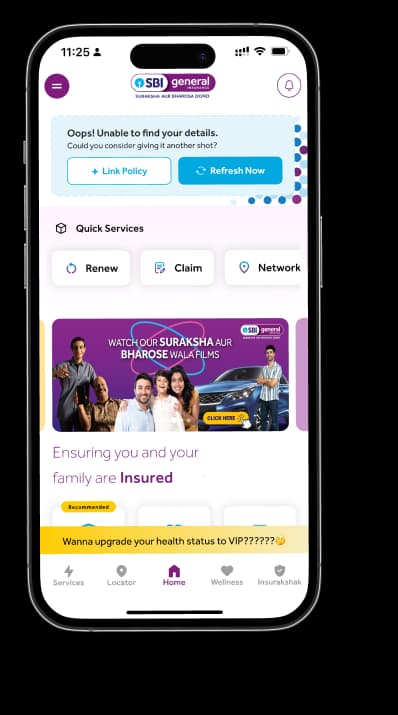
Access and manage all your Insurance Needs in one place, right at your Fingertips.



4/5*
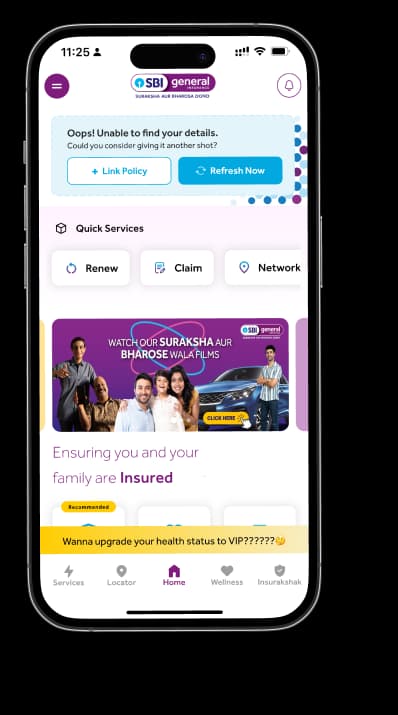
Access and manage all your Insurance Needs in one place, right at your Fingertips.


Vision
Our vision is to become the most trusted general insurer for a transforming India.
Mission
Our mission is to provide simple and innovative general insurance solutions, be responsive to our customers' needs and build a sustainable business for the future.
We're socially active!