


 Contact Us


 Other Insurance
Checklist for Car Insurance Buyers in India

Date: Apr 10, 2020 - Last Modified Apr 10, 2020


Buying car insurance can be tricky. Choosing the right policy cover at a good price requires a lot of homework. Before you get worked up as your car insurance is about to expire, we are here to help you. Follow the below checklist for car insurance buyers in India and buy the right plan for yourself.
Here’s a checklist that will help you make an informed choice
- Third-party insurance or comprehensive
In India, there are mainly two types of car insurance policies: Third-party cover and comprehensive cover. Third-party cover is legally mandatory, which means it should be a part of the checklist for car insurance buyers. It will compensate the third party in case of any damages caused during an accident or mishap. However, any damages caused to your vehicle remain unprotected. Comprehensive policy covers both third party and insured vehicles. - Availability of add-ons
When you buy car insurance policies, you have the option to enhance your coverage. This, you can do, by opting for additional value-added services like no claim bonus, insurance cover for consumables, roadside assistance, depreciation reimbursement, etc. Add-on riders are offered by most of the insurance providers in India. Though these services come at an additional premium, at the time of need, they can be of great use. For instance, roadside assistance is an additional rider can be quite handy if your car breaks down in the middle of the night. - Insured Declared Value (IDV)
A crucial thing to pay attention to when you buy car insurance in India is the Insured Declared value or IDV of your vehicle. In simple terms, IDV is the market value of your vehicle. In the worst-case scenario, if your car is stolen or damaged and declared a total loss, then IDV is the maximum amount that you can claim. The value is arrived at by deducting the depreciation of the vehicle from the manufacturer’s selling price. The IDV is calculated as per the IRDAI (Insurance Regulatory and Development Authority of India) guidelines. - Deductibles
In the context of car insurance, a deductible is the fixed amount that a policyholder pays towards the repair. This is to initiate the insurer's payout. Once you pay the deductible, the rest of the amount is paid by the insurer. Higher the deductible amount you choose, the lower would be the insurance premium. However, keep your long-term affordability in mind when choosing an insurance deductible amount. Choosing a higher deductible, also means that you have to pay a higher amount, while filing a claim. - No claim bonus
Whether you buy car insurance online or offline, you get a benefit that allows you to get discounts on your premium amount. This benefit is known as No claim bonus. If you have made no claims during the policy period, you will get no claim bonus (NCB) and the benefits of NCB is transferable to another insurance company too. For each claim-free year, you will earn discounts. These discounts can go up to a maximum of 50% over 5 claim-free years. - Garage network of the insurance provider
Most car insurance providers offer you the facility to get your car repaired at authorised garages. You never know when you meet with an accident or a mishap. At that time, an extensive network of garages across the country will ensure that you are not stranded on the road for long. - Claim settlement record of the insurance provider
Just because you have come across a good policy doesn’t mean you have to buy it. The checklist for car insurance buyers should also include the insurance provider’s claim settlement ratio, besides the insurance coverage and premium cost. Also, check how quickly the settlements are done. SBI General has been bestowed upon with iAAA rating for highest claim paying ability by the credit rating agency, ICRA.
To avoid unnecessary expenses, buy four wheeler vehicle insurance renewal on time
You must renew your car insurance policy before the existing one expires otherwise you will either have to pay a penalty or buy new insurance. Even if you are planning to change your insurance provider, it is best to buy a new policy before your existing policy expires. This is to ensure that your car is always covered under an insurance policy.
This blog is intended solely for educational and informational purposes. Content reflects data at time of publication and may not accurately reflect current premiums, terms, or regulations. Readers are encouraged to confirm the accuracy and relevance of the data before making any significant decisions. SBI General Insurance disclaims responsibility for any errors or consequences arising from the use of outdated information provided herein. For more details, please refer to the policy wordings and prospectus before concluding the sales. *Add-ons are subject to payment of additional premium.
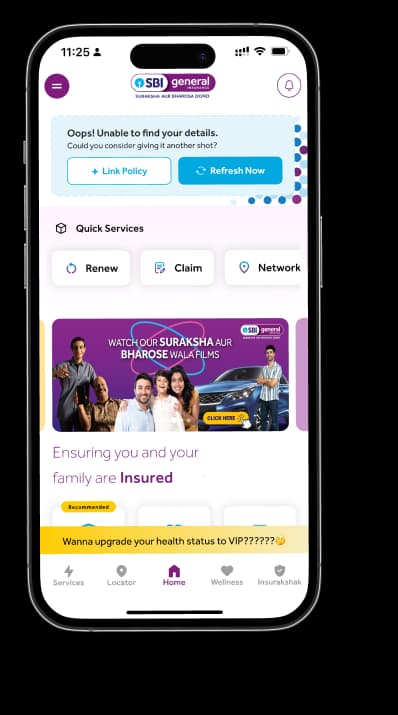
Access and manage all your Insurance Needs in one place, right at your Fingertips.



4/5*
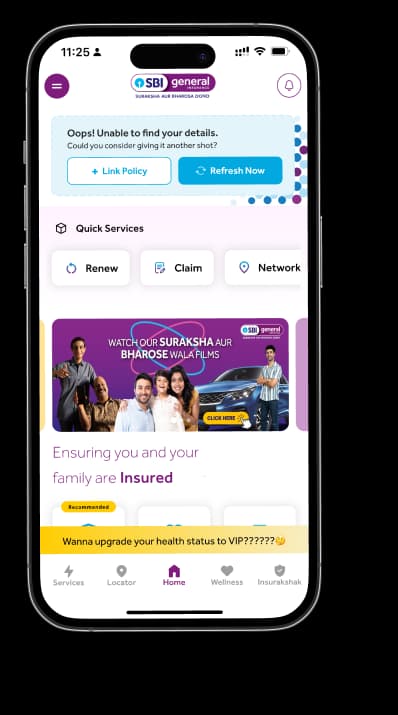
Access and manage all your Insurance Needs in one place, right at your Fingertips.


Vision
Our vision is to become the most trusted general insurer for a transforming India.
Mission
Our mission is to provide simple and innovative general insurance solutions, be responsive to our customers' needs and build a sustainable business for the future.
We're socially active!