


 Contact Us


 Other Insurance
How Many Times Can I Claim Car Insurance in India? A Complete Guide

Date: Aug 19, 2026 - Last Modified Aug 19, 2026


Accidents can happen unexpectedly, and it's natural to wonder whether you can raise more than one insurance claim in a policy year. Understanding how many times can car insurance be claimed can help you stay prepared and aware of what to expect during the claim process. This guide explains how multiple claims work and the factors that may be considered at the time of renewal.
Is There a Limit on the Number of Car Insurance Claims?
In general, most comprehensive car insurance policies do not specify a fixed limit on the number of claims that can be made during a policy year. If a covered incident occurs, a claim can generally be raised, subject to the policy terms and conditions.
Learning ‘how many times can a car insurance be claimed?’ begins with reviewing the policy wording to know the applicable terms, conditions, and exclusions.
How Many Car Insurance Claims Are Too Many?
There isn't a fixed number of claims that's considered "too many". If an individual is curious about how many car insurance claims are too many, it's a good idea to look at the repair costs, the applicable deductible, and the terms of the policy.
For smaller repairs, such as minor scratches or dents, some policyholders may choose to pay the cost themselves. However, if the damage is significant, raising a claim can help reduce the financial burden, provided the incident is covered under the policy.
It's also worth remembering that each claim is assessed individually. Certain add-ons* may have specific conditions or usage limits. Multiple claims may affect benefits such as the No Claim Bonus (NCB) at the time of renewal.
What Happens When You Make Multiple Car Insurance Claims?
Multiple claims can have different effects, such as:
Loss of No Claim Bonus: A No Claim Bonus (NCB) is earned by completing the policy period without raising an own-damage claim. If you raise an own-damage claim, your NCB may be reduced or reset at the time of renewal, depending on the policy terms. However, if your policy includes an NCB protection add-on*, you may be able to retain this benefit, depending on its terms and conditions.
Repeated Deductibles: A deductible is the portion of a damage claim that the policyholder bears. Since the deductible applies to every claim, multiple small repairs may result in repeated out-of-pocket expenses. Claiming may be less useful when the out-of-pocket expenses are high.
Renewal Assessment: Claim history and frequency may be considered during policy renewal. Optional covers, premiums, or other policy terms may change, depending on the frequency of claims, subject to the insurer’s approach.
Closer Verification: Several consecutive claims may be evaluated closely. The circumstances of the incidents, the extent of the damage, and the supporting documents may be examined more closely.
Factors That Determine Whether You Should File a Claim
Before registering a claim, consider the following factors:
Repair Cost: Compare the estimated repair cost with the applicable deductible. If the difference is small, paying for the repair out of pocket may be more practical.
NCB Value: If the repair costs are relatively low, consider whether paying for them yourself may help preserve yourNo Claim Bonus in Car Insurance. Since even one claim can lead to the NCB becoming zero, it may not be worth using the policy for small damage.
Extent of Damage: Major accidental damage or theft requires more serious consideration. Such incidents may create large expenses or legal responsibilities which can make insurance support important.
Policy Conditions: Check whether damage to the car is covered by the policy or an add-on*. Some add-ons* may have their own claim limits or specific conditions.
Can an Insurer Reject or Decline Policy Renewal Due to Frequent Claims?
Making multiple claims does not automatically mean that future claims will be rejected. Each claim is assessed individually based on the nature of the incident, the coverage available, the policy terms, and the applicable exclusions. Claims may be rejected for reasons such as delayed intimation, incorrect information, an expired policy, damage that is not covered, or repairs carried out before the insurer's inspection, where required. While your claim history may be considered at the time of policy renewal or when determining the terms for optional covers, it does not, by itself, determine the outcome of future claims.
Why Choose SBI General Insurance?
A dependable car insurance policy is backed by responsive support and a smooth claims experience. That's where SBI General Insurance can help.
Smooth claims process for a seamless claims experience.
24x7 customer support whenever you need assistance.
Access to 8,700+ network garages for cashless repairs.
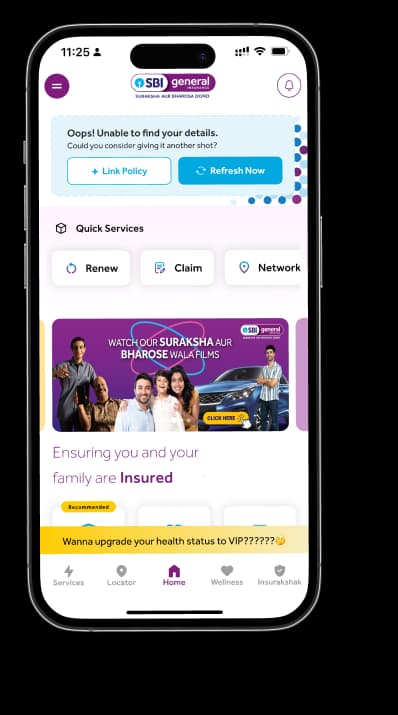
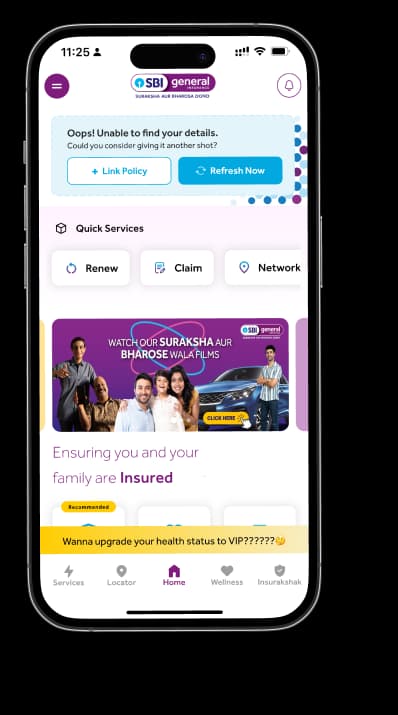
Easy policy and claim tracking through the SBI General Insurance App.
Conclusion
Knowing how many times car insurance can be claimed can help you make informed decisions if an unexpected incident occurs. However, before raising a claim, it is important to review your policy terms, coverage, and exclusions. That way, you know what to expect during the claims process.
FAQs
1. Can I raise two car insurance claims in the same year?
Yes, you can raise two claims in the same year if the incidents are covered under your policy. However, deductibles, No Claim Bonus (NCB) implications, and add-ons* may have separate terms or limits.
2. Will multiple claims increase my car insurance premium?
Multiple claims may influence the renewal premium, as claim history can be considered during the insurer's risk assessment.
3. Do all car insurance policies allow unlimited claims?
No. A base policy may not have a fixed limit on the number of claims, but add-ons* or specific benefits may have separate limits.
*Add-ons are subject to payment of an additional premium. For more details, please refer to the policy wordings and prospectus before purchasing the policy.
This blog is intended solely for educational and informational purposes. Content reflects data at time of publication and may not accurately reflect current premiums, terms, or regulations. Readers are encouraged to confirm the accuracy and relevance of the data before making any significant decisions. SBI General Insurance disclaims responsibility for any errors or consequences arising from the use of outdated information provided herein. For more details, please refer to the policy wordings and prospectus before concluding the sales. *Add-ons are subject to payment of additional premium.
Access and manage all your Insurance Needs in one place, right at your Fingertips.



4/5*
Access and manage all your Insurance Needs in one place, right at your Fingertips.


Vision
Our vision is to become the most trusted general insurer for a transforming India.
Mission
Our mission is to provide simple and innovative general insurance solutions, be responsive to our customers' needs and build a sustainable business for the future.
We're socially active!