


 Contact Us


 Other Insurance
RTO Number Plate Rules in India
Date: Jun 30, 2026 - Last Modified Jun 30, 2026


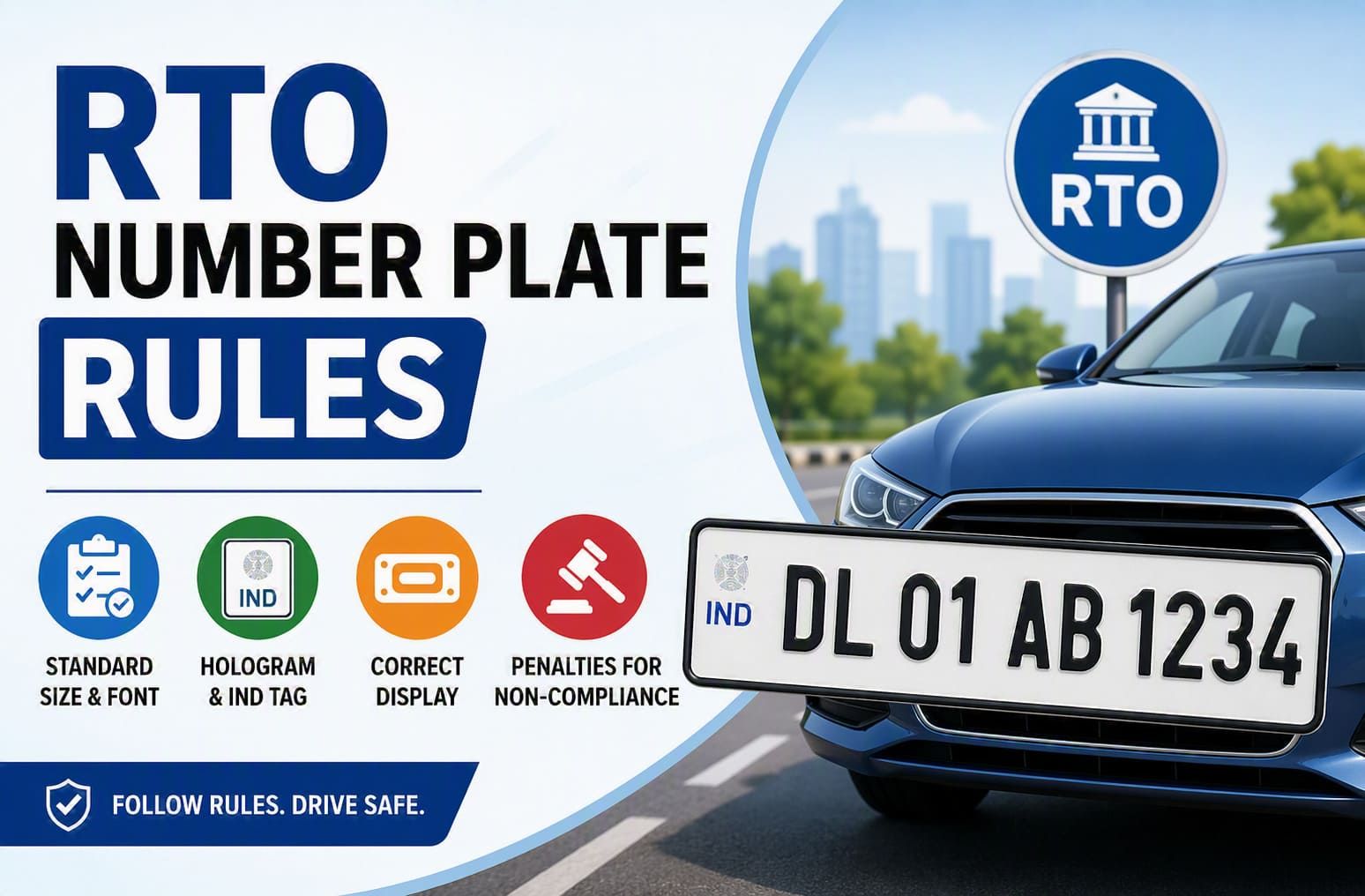
Buying a car is an exciting milestone. However, ensuring that it complies with the latest RTO guidelines and number plate regulations is equally important. Even a small mistake in following the prescribed RTO rules for number plate can lead to penalties and unnecessary expenses.
RTO number plate rules in India ensure uniform vehicle identification and promote road safety. These rules define the format, colour, placement, and security features of number plates.
This article focuses on the RTO rules and how they may help vehicle owners remain compliant with legal requirements, avoid penalties, and support efficient vehicle tracking by transport authorities and law enforcement agencies.
Understanding the Standard Format of Indian Vehicle Number Plates
Indian vehicle number plates may follow a structured format defined by the Ministry of Road Transport and Highways. All motor vehicle owners must have a unique licence plate number.
The registration number generally consists of the state code, district or RTO code, an alphabetical series, and a unique numerical sequence.
For instance, in a registration number such as MH 05 AJ 2519.
Here:
MH indicates the State ‘Maharashtra’
05 represents the sequential number of a state district, also known as the RTO Code where the vehicle was registered
AJ denotes the unique alphabet (in case the numbers are unavailable) to identify the unique vehicle
2519 is the unique number between 1 and 9999, which might be issued sequentially and is unique to each registration.
These RTO rules for number plate help create a uniform system for vehicle identification throughout the country. They may also specify font type, size, spacing, and colour contrast for better visibility.
Plates must be clearly readable and securely fixed at the front and rear of the vehicle. For bikes, the licence plate needs to be placed parallel to the handlebars in front of the vehicle.
Moreover, the registration alphabet and number should be in black against a white background for light vehicles like cars or bikes and a yellow background for commercial vehicles.
These number plate rules ensure uniformity across the country and help in tracking and enforcement.
Types of Number Plates in India
In India, different types of registration plates are issued based on vehicle ownership and purpose. Understanding the number plate guidelines in India and the various categories helps vehicle owners comply with applicable number plate rules and registration requirements.
Private Vehicle Number Plates
Private vehicles may display black characters on a white background. These number plates are the most common type, and they might be issued to vehicles used exclusively for personal and non-commercial purposes.
Commercial Vehicle Number Plates
Commercial vehicles may carry black characters on a yellow background. They are commonly used by taxis, buses, auto-rickshaws and other vehicles engaged in commercial activities. They have a commercial vehicle licence and a different tax structure from private vehicles.
Electric Vehicle Number Plates
Electric vehicles (EVs) exclusively may use green number plates to distinguish them from conventional fuel-powered vehicles. The colour scheme varies for private and commercial electric vehicles. All private electric vehicles get a green number plate with white lettering, and commercial EVs get a green number plate with yellow lettering.
Bharat Series (BH) Number Plates
BH-series registrations might facilitate vehicle transfers across states without requiring re-registration or obtaining NOC. They are primarily available to eligible government and private-sector employees.
Temporary Registration Plates
Newly purchased vehicles may receive temporary registration numbers until permanent registration formalities are completed. These number plates have limited validity.
High Security Registration Plates (HSRP): Features and Benefits
The High-Security Registration Plate (HSRP) is a security number plate made up of aluminium fixed onto a vehicle's front and rear sides. It is similar to a standard licence plate. It may display a hot-stamped 20 mm x 20 mm chromium hologram of Ashoka Chakra in blue colour on the top of the left side corner. Moreover, a 10-digit PIN (permanent identification number) is laser branded onto the bottom of the plate on the left corner.
As per Rule 50 of Central Motor Vehicle Rules (CMVR), 1989, all vehicles registered after April 1, 2019, must have a High Security Registration Plate. The new rule for number plate mandates the use of HSRP for all vehicles. Failing to comply with the RTO rules for number plate can result in penalties. The exact amount varies with each state, ranging from ₹500 to ₹5,000.
The key features of HSRP may include:
Chromium-based hologram
Laser-etched unique identification number
Tamper-proof snap locks
Standardised design specifications
Improved durability and visibility
The mandatory implementation of HSRP number plates is not just for legal purposes. It may also have its set of benefits.
Let's understand these benefits in detail:
Better vehicle identification: The unique linked HSRP number plate with the registration details may make it easier for authorities to identify vehicles accurately during checks or investigations.
Lower risk of tampering and misuse: The snap-lock system and laser-etched code may create difficulties to remove or duplicate the HSRP plate, which may help prevent number plate fraud.
Uniform and standardised design: Standard fonts, sizes, and material may help improve visibility of the HSRP number plates for traffic cameras, toll booths, and law enforcement systems.
Seamless resale and transfer process: Vehicles fitted with HSRP face fewer complications during ownership transfer or re-registration.
The Ministry of Road Transport and Highways has promoted HSRP implementation as part of broader efforts to strengthen the national security, which may also help in the reduction of vehicular crimes, identification of all vehicles plying on roads and in prevention of tampering and counterfeiting.
These number plate rules may help ensure better tracking, improved compliance, reduced vehicle registration frauds, and enhanced road safety.
Colour-Coded Stickers and Their Significance
Colour-coded stickers may complement HSRPs and provide information regarding a vehicle's fuel type and emission category. These stickers are as follows:
Blue Sticker: For petrol & CNG-powered vehicles
Orange Sticker: For diesel-powered vehicles
Green Stickers: For electric vehicles (EVs)
These stickers may need to be displayed on the left-hand side of your vehicle’s windshield. They may help authorities quickly identify vehicle categories and implement pollution-control measures when required. Compliance with these number plate rules helps improve environmental monitoring and traffic regulation across urban areas.
Rules for Displaying Vehicle Registration Numbers
Vehicle owners may need to display registration numbers clearly and in accordance with prescribed standards.
Important RTO rules for number plate may include:
- Registration numbers must remain clearly visible
The size of the number plates must comply with the type of vehicle (For two and three-wheelers: 200 x 100 mm, light motor vehicles: 340 x 200 mm, and medium or heavy commercial vehicles: 340 x 200 mm)
Fancy fonts and decorative modifications are prohibited.
Number plates should not be obscured by stickers or accessories.
Registration numbers must be clearly displayed on both the front and rear number plates, as required by RTO regulations.
It is also mandatory for vehicle owners to have a valid motor insurance policy and licence plate number.
Failure to comply with these number plate rules may attract fines and penalties, applicable under motor vehicle regulations.
Why Valid Registration and Insurance Go Hand in Hand
Proper registration and valid insurance are both essential legal requirements for vehicle ownership. While registration confirms that a vehicle has been officially recorded with transport authorities, insurance provides financial protection against covered risks.
In fact, without the valid registration, vehicle owners may not be able to proceed with insurance and claim settlements. For two-wheelers, ensuring timely bike insurance renewal helps maintain continuous coverage.
Vehicle owners should also monitor policy validity and broad protection against unforeseen situations and risks. Whether for four-wheeler or two-wheeler, insurance providers like SBI General Insurance may offer comprehensive bike insurance policies to help support broader financial protection.
Together, registration and insurance ensure compliance with legal requirements and reduce financial risks.
Conclusion
Understanding and complying with RTO rules for number plate is essential for every vehicle owner in India. These rules ensure uniform identification, enhance safety, and support law enforcement. By installing proper number plates, following display guidelines, and staying updated with the new RTO rules for number plate helps avoid penalties and ensure smooth vehicle usage.
While following RTO regulations helps ensure legal compliance, having suitable motor insurance can provide an additional layer of financial protection. SBI General Insurance offers motor insurance plans designed to support vehicle owners through different stages of their driving journey.
FAQs
1. Is HSRP mandatory for all vehicles in India?
Yes, HSRP is mandatory for most vehicles under updated RTO rules for number plate.
2. Can I change my vehicle's registration number?
In certain cases, vehicle owners may apply for special or preferred registration numbers, subject to approval and applicable fees.
3. What is the cost of installing an HSRP number plate?
The cost varies depending on vehicle type, state regulations, and authorised vendors.
4. Can I drive without a number plate after purchasing a new vehicle?
Temporary plates are allowed for a limited period, after which permanent plates are required.
5. Are number plate frames and covers legal in India?
No, covers that obstruct visibility are not allowed under number plate rules.
6. How long does it take to receive an HSRP?
The timeline depends on the issuing authority and application process.
This blog is intended solely for educational and informational purposes. Content reflects data at time of publication and may not accurately reflect current premiums, terms, or regulations. Readers are encouraged to confirm the accuracy and relevance of the data before making any significant decisions. SBI General Insurance disclaims responsibility for any errors or consequences arising from the use of outdated information provided herein. For more details, please refer to the policy wordings and prospectus before concluding the sales. *Add-ons are subject to payment of additional premium.
Access and manage all your Insurance Needs in one place, right at your Fingertips.



4/5*
Access and manage all your Insurance Needs in one place, right at your Fingertips.


Vision
Our vision is to become the most trusted general insurer for a transforming India.
Mission
Our mission is to provide simple and innovative general insurance solutions, be responsive to our customers' needs and build a sustainable business for the future.
We're socially active!