




 Contact Us


 Other Insurance
Myths About Health Insurance Busted
Date: Jan 16, 2026 - Last Modified Jan 30, 2026


India is currently the world's most populous country, but has one of the lowest rates of health insurance coverage when compared to other nations. Several key variables, including pricing issues and limited access to suitable coverage options for various demographic groups, contribute to this decline. Notably, most Indians struggle to comprehend the complications of health insurance plans.
However, rising healthcare costs and lifestyle changes that raise health risks have made having sufficient health insurance coverage essential. Although the COVID-19 pandemic has brought attention to the importance of health insurance, there is limited understanding of how it operates in India.
Many customers struggle to understand the benefits and protections offered by health insurance policies because of widespread myths and misconceptions. It's important to clarify these misunderstandings to protect your financial stability and well-being.
Discover common health insurance myths and how to avoid them.
Common Health Insurance Myths
1. Young Individuals do not Require Health Insurance
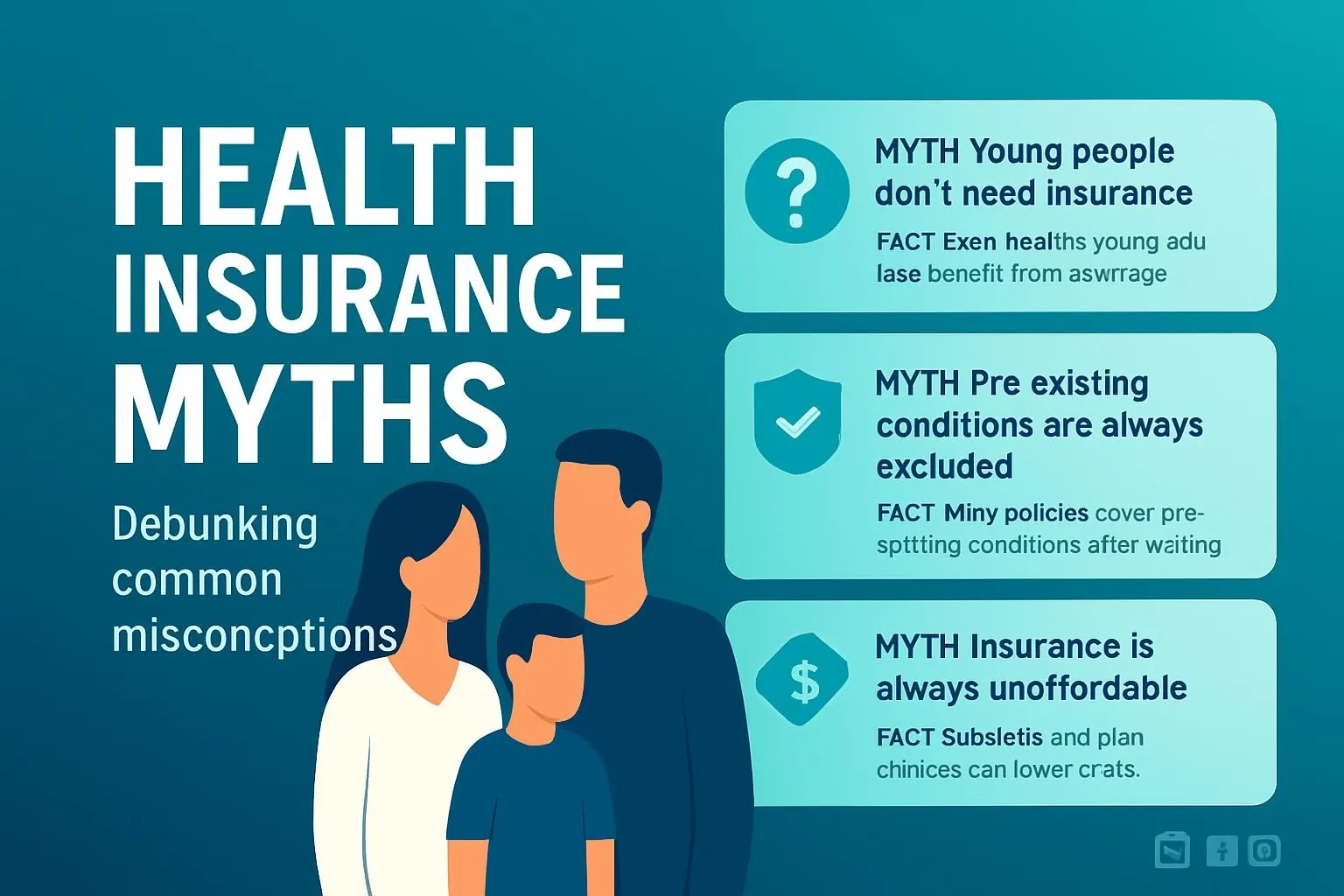
Many believe that if you are young and healthy, you don't need health insurance. However, there's no guarantee against illness or accidents. Therefore, obtaining a suitable health insurance policy in India is wise for everyone, regardless of age or health status. Additionally, coverage costs are typically lower for younger individuals.
2. Coverage is Activated as Soon as the Plan is purchased.
Some health insurance plans may have a waiting period before certain conditions are covered. To know when you can file a claim, carefully review the policy details at the time of purchase.
3. The Cheapest Plan is the Best Option
A common misconception about health insurance in India is that the least expensive plan is the best choice. However, coverage should not be chosen based only on price. It is essential to evaluate the plan’s features in relation to your individual health needs. Your ideal plan should be affordable yet comprehensive enough to meet your requirements.
4. Employer-Provided Group Insurance is Adequate
Most employers provide their employees with health insurance policies that can be beneficial; however, these plans often lack sufficient coverage. Therefore, it’s important to supplement them with a personalized plan that includes options tailored to your lifestyle and specific needs.
5. Health Insurance does not Include Pregnancy
A common myth preventing many women from accessing quality maternity care is that it isn’t covered. Most family floater plans include maternity coverage, and there are also specific health insurance plans available for maternity. Be aware of any waiting periods associated with these plans.
6. Hospitalisation is Mandatory to File Claims
You don’t need to be hospitalized to file a claim under your health plan. Claims can also be made for diagnostic tests, outpatient (OPD) expenses, and childcare treatments.
7. Online Plans are Fraudulent
In today's digital age, it is disheartening to see people fall for this misconception. Online health insurance is not only popular but also secure. Purchasing a health insurance plan online allows you to access some of the best and most affordable options available.
8. Pre-Existing Illnesses are not Covered
Medical insurance covers many pre-existing conditions, but only after a specified waiting period.
9. Customisations are Rarely Possible
Riders can help you customize your health insurance plan. These are additional coverages that can be purchased separately.
10. All Insurance Policies Cover Day-care Procedures
People often pay significant attention to the day-care procedures covered when selecting health insurance. While it may seem advantageous for the insurer to offer a range of day-care services, be aware that there may be numerous limitations on reimbursement for these services.
11. Health Insurance is Denied if You Smoke and Drink
Many individuals mistakenly believe that smokers and drinkers cannot obtain health insurance. Despite their elevated health risks, insurance companies do provide coverage for these individuals. However, due to this increased risk, smokers and drinkers typically pay higher premiums and may be required to undergo comprehensive pre-policy medical examinations.
12. Concealing Pre-Existing Illnesses Can Help Get Insurance
Many people conceal their medical conditions from insurance companies, believing this will ensure coverage. However, insurers expect individuals to disclose any pre-existing conditions when purchasing a policy. If an undisclosed condition is discovered during the claim process, the insurance company may deny coverage.
13. Network Hospitals are Only Connected in Big Cities
Contrary to popular belief, health insurance providers in India do not restrict their coverage to hospital networks in major cities. Most insurers have extensive networks that extend to towns and rural areas throughout the country. You can benefit from cashless services at participating hospitals, and non-network hospitals can still receive reimbursement for covered services.
14. Insurance Companies Cover all Hospitalisation Expenses
Health insurance does not ensure that all hospital expenses will be covered. Policies may have exclusions that require you to pay for specific ailments or treatments out of pocket. Additionally, some policies include co-payments, meaning you pay a percentage of the hospital bill while the insurance company covers the remainder.
If you have a pre-existing condition, there may be a waiting period before the insurer covers related expenses. Additionally, if your expenses exceed the daily room rent cap set by your health insurance policy in India, you will be responsible for the difference. To fully understand these terms and avoid unexpected costs, review the policy details carefully.
15. Health Insurance in India is too Expensive
Many people avoid getting health insurance because they believe it will increase their financial stress. However, health insurance can be reasonably priced. Some insurance providers offer affordable policies with financing options similar to those available for electronics purchases. Additionally, many consumers are unaware that health insurance premiums are tax-deductible, which can further reduce costs.
It’s advisable to retain all insurance policies from the last three to four years, in addition to your current one, to facilitate claim settlements. With an ABHA card, you can also store your medical records online.
Conclusion
India's growing population highlights the necessity for expanded health insurance coverage. Dispelling misconceptions and raising awareness are vital steps toward achieving financial stability and enhancing public health outcomes.
Securing your family against medical uncertainties is much easier with a trusted partner like SBI General Insurance, which offers reliable and comprehensive coverage. Enjoy a hassle-free claims process and access an extensive network of healthcare facilities that deliver affordable options.
Access and manage all your Insurance Needs in one place, right at your Fingertips.




4/5*
Access and manage all your Insurance Needs in one place, right at your Fingertips.



Vision
Our vision is to become the most trusted general insurer for a transforming India.
Mission
Our mission is to provide simple and innovative general insurance solutions, be responsive to our customers' needs and build a sustainable business for the future.
We're socially active!




