


 Contact Us


 Other Insurance
Car Defoggers and How to Use Them
Date: May 26, 2026 - Last Modified May 27, 2026


Fogged-up car windows can make driving difficult, especially during rain, winter mornings or humid weather conditions. Reduced visibility affects driving safety and may make it harder to react to traffic, pedestrians or road signs. This is where a defogger in a car becomes useful.
Car defoggers help clear moisture and condensation from the windshield and windows, improving visibility and driving comfort. Understanding how to use car defogger systems properly can help drivers maintain safer road visibility in changing weather conditions.
What is a Car Defogger?
A car defogger is a system designed to remove moisture, mist or condensation from a vehicle’s windows and windshield. Fogging usually happens when there is a temperature difference between the inside and outside of the vehicle, causing moisture to collect on the glass surface.
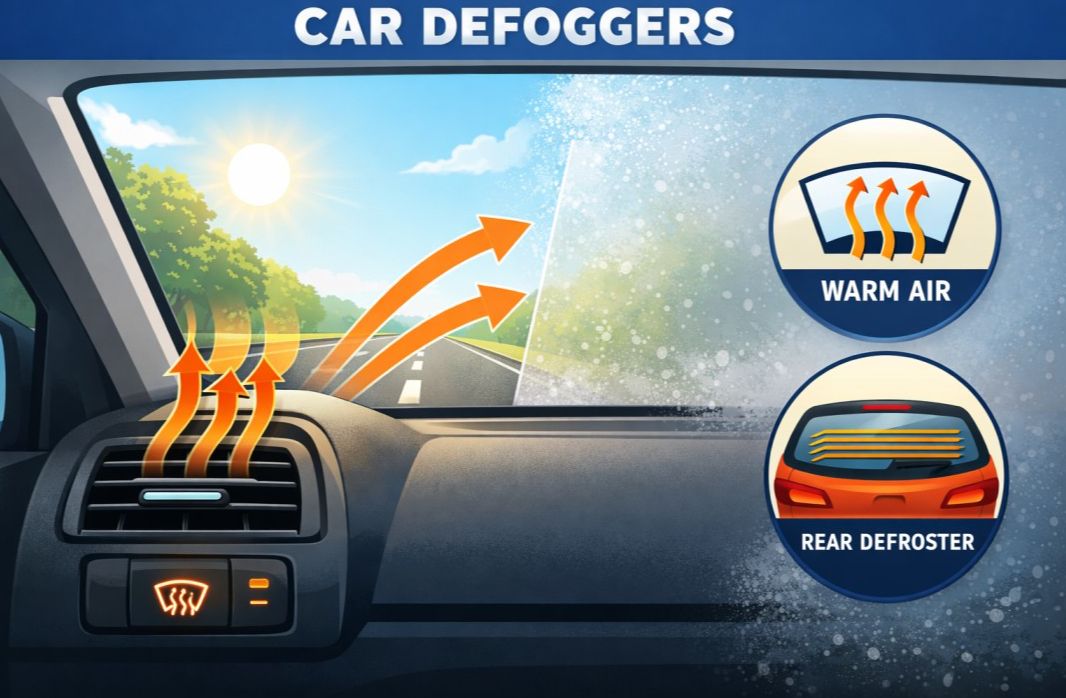
Modern vehicles generally include front and rear defogger systems to improve visibility during rain, cold weather or humid conditions. The system works by either blowing air onto the glass or heating the window surface to remove moisture build-up.
Types of Car Defoggers
Most vehicles usually come with two main types of defoggers.
Front Windshield Defogger
A front windshield defogger uses the car’s air-conditioning or heating system to direct airflow toward the windshield. This helps reduce moisture and clears fog from the front glass area.
The airflow may use warm or cool air depending on the weather conditions and humidity levels inside the cabin.
Rear Window Defogger
A rear defogger in car systems usually works through thin heating lines placed on the rear windshield. When activated, these lines generate heat that removes fog, moisture or frost from the rear glass.
Rear defoggers are especially useful during rain, winter mornings and cold weather when rear visibility becomes limited.
Why Does Car Glass Fog Up?
Car windows fog up when warm, moist air inside the cabin comes into contact with a colder glass surface. The moisture in the air condenses into tiny water droplets, creating a foggy appearance on the windshield and windows.
This commonly happens during:
- Rainy weather
- Cold winter mornings
- Humid climates
- When several passengers are inside the vehicle
- After switching on the heater in cold conditions
For example, during monsoon season, passengers entering the car with wet clothes or shoes may increase cabin humidity, causing the windows to fog quickly.
How to Use a Car Defogger Effectively?
Understanding how to use car defogger systems correctly can improve visibility faster and help maintain safer driving conditions.
Step-by-Step: Front Defogger
- Start the vehicle and switch on the air-conditioning system.
- Select the windshield defogger mode on the climate control panel.
- Increase airflow toward the windshield vents.
- Adjust the temperature depending on weather conditions.
- Slightly open the windows if cabin humidity is very high.
In humid weather, using the AC along with outside air circulation may help clear fog more quickly.
Step-by-Step: Rear Defogger
- Press the rear defogger button on the dashboard.
- Wait for the heating lines to warm up.
- Allow the system a few minutes to clear the moisture or fog.
- Switch it off after visibility improves to avoid unnecessary power usage.
Many modern vehicles automatically turn off the rear defogger after a few minutes.
Defogger vs AC vs Heater – What’s Better?
Many drivers compare defogger vs defroster functions without fully understanding how they work. While both systems improve visibility, they may function differently depending on the situation.
A defogger mainly removes moisture from the glass, while a defroster is often designed to remove frost or ice build-up. In practical use, most modern vehicles combine both functions through the climate control system.
Using the AC is usually effective during humid or rainy weather because it removes moisture from the cabin air. Warm air from the heater may work better during cold weather by reducing condensation on the windshield.
For example:
- During monsoon conditions, AC-based defogging may work faster.
- During winter mornings, warm airflow may clear condensation more comfortably.
The ideal method often depends on outside temperature, humidity and cabin conditions.
Common Defogger Mistakes to Avoid
Some drivers unknowingly reduce the effectiveness of the defogger system through incorrect usage.
Using the recirculation mode continuously
Recirculation mode may trap moisture inside the cabin, increasing fog build-up. Fresh air mode often works better while defogging.
Ignoring dirty windshields
Dust, grease and dirt on the windshield may worsen fogging and reduce visibility. Regular windshield cleaning helps improve defogger performance.
Switching off the defogger too early
Drivers sometimes turn off the system immediately after partial visibility improves. This may allow fog to return quickly in humid conditions.
Blocking air vents
Objects placed near dashboard vents may reduce airflow toward the windshield and lower defogging efficiency.
Defogger Maintenance Tips
Proper maintenance helps ensure that the defogger system works effectively when needed.
- Clean the windshield and windows regularly.
- Check AC performance periodically.
- Inspect rear defogger heating lines for visible damage.
- Avoid placing stickers over rear defogger lines.
- Replace cabin air filters when required.
If the rear defogger stops working completely, damaged heating lines or electrical issues may require professional inspection.
Car Insurance and Windshield Damage
Defoggers improve visibility, but drivers should also pay attention to windshield condition and glass damage. Cracked or damaged windshields may affect visibility further during rain or foggy conditions.
Some comprehensive car insurance policies may provide coverage for windshield damage or repair, depending on the policy terms and selected add-ons. Maintaining clear visibility is important for safer driving and reducing accident risks.
Drivers should also review coverage details during car renewal to understand whether glass protection or related add-ons are included under their motor insurance policy.
Conclusion
A properly functioning defogger system plays an important role in maintaining road visibility during rain, winter and humid weather conditions. Understanding how to use car defogger systems correctly can help car owners clear fog faster and drive more safely.
Regular maintenance, correct airflow settings and clean windows all contribute to better defogger performance. Along with safe driving habits and proper vehicle maintenance, clear visibility can help improve overall road safety.
With SBI General Insurance, vehicle owners can also explore comprehensive insurance solutions designed to support safer and more secure driving experiences.
FAQs
1. What does the defogger button look like in a car?
The defogger button usually shows a windshield or rear window symbol with upward wavy arrows indicating airflow or heat. Front and rear defogger buttons may have slightly different icons.
2. Should I use AC or heat to defog my car?
Both may help depending on weather conditions. AC generally removes moisture faster during humid weather, while warm air may work better during cold conditions.
3. Why does my car windshield fog up from the inside?
Interior fogging usually happens when warm, moist air inside the cabin comes into contact with a colder windshield surface, causing condensation.
4. How long does it take for a defogger to clear fog?
Most defoggers may begin clearing fog within a few minutes, depending on weather conditions, humidity levels and system performance.
5. Can a broken defogger wire be repaired?
Yes, damaged rear defogger lines or wires can often be repaired using specialised repair kits or professional servicing, depending on the extent of the damage.
This blog is intended solely for educational and informational purposes. Content reflects data at time of publication and may not accurately reflect current premiums, terms, or regulations. Readers are encouraged to confirm the accuracy and relevance of the data before making any significant decisions. SBI General Insurance disclaims responsibility for any errors or consequences arising from the use of outdated information provided herein. For more details, please refer to the policy wordings and prospectus before concluding the sales. *Add-ons are subject to payment of additional premium.
Access and manage all your Insurance Needs in one place, right at your Fingertips.



4/5*
Access and manage all your Insurance Needs in one place, right at your Fingertips.


Vision
Our vision is to become the most trusted general insurer for a transforming India.
Mission
Our mission is to provide simple and innovative general insurance solutions, be responsive to our customers' needs and build a sustainable business for the future.
We're socially active!