


 Contact Us



 Other Insurance
Upgrading Your Car This Festive Season? How to Calculate and Transfer NCB

Date: Nov 19, 2026 - Last Modified Nov 19, 2026


A new car for Diwali? A bigger SUV for the family? Or perhaps it's finally time to replace that old hatchback. Whatever the reason, upgrading your car feels exciting. There's a new registration, fresh interiors, and plenty of plans for the road ahead. But there's one thing you shouldn't leave behind: your accumulated No Claim Bonus.
If you've driven claim-free for several years, you've earned a discount on your car insurance. Selling your old car doesn't mean you have to give up that benefit. You can retain it and use it when you insure your next vehicle, subject to your insurer's terms.
Here's where many car owners get confused. The bonus belongs to the policyholder, not the vehicle. So, the person buying your old car doesn't automatically get your accumulated discount.
Before handing over the keys, it's worth understanding how the transfer works. A little paperwork now can save you money on your new car's insurance.
Let's walk through the process, the calculation, and the details worth checking about NCB in insurance.
What is NCB in Car Insurance?
In the insurance industry, NCB stands for No Claim Bonus. It is a discount an insurer offers when you complete a policy year without making an eligible claim. It reduces the Own Damage (OD) premium during car insurance renewal. The discount starts at 20% and can reach 50% after five consecutive claim-free years.
In simple terms, your insurer rewards you for not making a claim during the policy period. The longer your claim-free record continues, the higher your discount becomes.
Here is an example of NCB slabs:
Consecutive claim-free years | NCB discount |
1 year | 20% |
2 years | 25% |
3 years | 35% |
4 years | 45% |
5 years and above | 50% |
Please note: that NCB may vary. It is recommended to check the policy wordings and terms and conditions to get exact details related to your policy plan.
The discount begins at the first eligible renewal. It can increase with every subsequent claim-free year, up to the maximum limit.
One detail matters here. NCB in car insurance applies to the Own Damage premium, not the entire car insurance premium. It doesn't reduce the mandatory Third-Party Liability premium.
So, when someone asks what is no claim bonus in car insurance, the simplest answer is this: it's a reward for a claim-free policy history that helps reduce your own-damage insurance cost.
Who Owns the NCB When You Sell Your Car?
Here's a detail worth remembering when you sell your old car: your NCB in insurance stays with you, not with the car.
The buyer gets the vehicle and can arrange the insurance transfer. However, your accumulated discount doesn't automatically move to the buyer's policy.
Why? Because the insurer rewards the policyholder for maintaining a claim-free record. The registration number may change, but your earned benefit can stay with you.
Let's say you've owned a car for six years and earned 50% NCB. You decide to sell it and buy a new SUV. The buyer of your old car cannot claim your 50% discount. You can request an NCB retention letter and use the eligible discount for your new car.
There's one important condition. The new vehicle must belong to the same vehicle class under the applicable motor tariff. Car-to-car transfer generally qualifies, subject to insurer verification.
What if the new owner is a family member? The bonus doesn't transfer simply because you're related. However, specific provisions allow NCB to pass to eligible legal heirs when the insured dies and the vehicle's custody and use pass to them. The insurer will check the applicable conditions and documents.
How Does NCB Affect Your Own-Damage Premium?
Your NCB discount applies to the Own Damage component of your car insurance premium. It doesn't reduce the Third-Party Liability premium, so calculating the discount on the total premium will give you the wrong figure.
Say the Own Damage premium for your new car is ₹20,000. The Third-Party premium is ₹7,500. Before applying NCB, the total comes to ₹27,500.
You've completed three claim-free years, so you're eligible for a 35% NCB discount. But remember, this discount applies only to the Own Damage premium.
Here's what the calculation of NCB in insurance looks like:
Premium component | Amount |
Own Damage premium | ₹20,000 |
NCB discount (35%) | ₹7,000 |
Own Damage premium after discount | ₹13,000 |
Now, add the Third-Party premium. It stays the same.
Premium component | Amount |
Own Damage premium after NCB | ₹13,000 |
Third-Party premium | ₹7,500 |
Total before add-ons and taxes | ₹20,500 |
So, you save ₹7,000 on your premium. The Third-Party amount doesn't change because NCB applies only to the Own Damage portion of your car insurance.
This is how no claim bonus in car insurance is calculated. Your actual payable amount may also include add-ons, applicable taxes, and other policy charges.
You can also read our guide on how NCB is calculated for more details.
How to Transfer NCB When Upgrading Your Car
Selling your old car and booking a new one can involve several moving parts. Don't leave the insurance paperwork until the last minute.
The process is fairly straightforward if you follow the steps in order.
Step 1: Check How Much NCB You've Earned
So how to check NCB in car insurance? Start with your existing car insurance policy. The policy schedule should mention the NCB you've earned so far. Check the claim details too. An open claim could affect the bonus your insurer approves.
Can't find the percentage? Call the insurer or check your policy online. Keep your policy number and car registration number nearby. You'll need these details when you ask about your NCB.
Step 2: Complete the Sale of Your Old Car
Found a buyer? Good. Now, get the ownership transfer paperwork in order.
You'll generally need Forms 29 and 30 for the vehicle ownership transfer process. Keep copies of these forms, along with your sale agreement or delivery proof.
Why does this matter? Your insurer will need proof that you've sold the old car before processing your NCB retention request.
Step 3: Let Your Existing Insurer Know
Once the sale is complete, get in touch with your current insurer. Tell them you've sold the car and want to retain your accumulated NCB.
Ask what documents they need and how to proceed. They may also guide you through the old policy cancellation process.
Here's something worth remembering. Transferring car ownership and retaining your NCB are two separate things. The buyer needs insurance in their name. Your earned bonus stays with you, subject to the applicable terms.
Step 4: Get Your NCB Retention Letter
After you send the documents, your insurer will check your policy and claim history. If you meet the conditions, they'll issue an NCB retention letter or certificate.
Try to get this done soon after selling your car. Don't leave it until you're ready to buy another one. The letter records your NCB percentage and serves as proof when you ask for the discount on your next car insurance policy.
Keep it somewhere safe. You'll need to share it with your new insurer when you buy the replacement vehicle.
Step 5: Buy Insurance for Your New Car
Once you've selected your new vehicle, share the retention letter with the new insurer.
You can approach the same insurance company or choose another provider. The new insurer will verify your NCB details and apply the eligible discount to the Own Damage premium.
If you're switching insurers, mention your existing NCB while requesting a quote. Don't wait until after purchasing the policy to raise the transfer request.
Step 6: Check the New Policy Schedule
Before you accept the new policy, take a minute to check the schedule. Look at the NCB percentage. Does it match the one on your retention letter? Has the insurer applied the discount to the Own Damage (OD) premium?
If something looks wrong, get it checked before the policy is finalised. It's easier to sort out at this stage.
Which Documents Do You Need for NCB Transfer?
The paperwork to transfer NCB from old car to new car depends on your insurer and the type of transfer. However, keeping a few basic documents ready can make the no claim bonus transfer to the new car process easier.
Document | Why it is needed |
Previous car insurance policy | Confirms your existing policy details |
NCB certificate or retention letter | Confirms your earned discount |
Forms 29 and 30 | Supports the ownership transfer process |
Sale agreement or delivery note | Provides proof of vehicle sale |
Old car's RC details | Helps verify the previous vehicle |
New car's booking receipt or RC | Identifies the replacement vehicle |
Identity proof | Confirms the policyholder's details |
NCB transfer request | Records your request to retain the bonus |
Your insurer may ask for additional documents. For instance, it may need the cancellation request or original policy documents before issuing the retention letter.
How Many Times Do You Have to Transfer Your NCB?
Two timelines around NCB in insurance are often confused here. Let's keep them separate.
The 90-day renewal window: Generally, you must renew an expired car insurance policy within 90 days to retain your accumulated NCB. If the gap exceeds this period, you may lose the benefit. Check the applicable policy terms before relying on this window.
The three-year certificate validity: Some insurers issue NCB retention certificates with a validity of three years from the date of issue. This gives you time to purchase another vehicle and use your retained discount. However, confirm the actual validity printed on your certificate.
These are separate timelines. The 90 days concern policy renewal after expiry. The three-year period concerns the validity of an issued retention certificate.
If you're planning to sell your car now and buy another after a few months, contact your insurer before making arrangements.
NCB Transfer vs NCB Protection Add-on: Are They the Same?
Not quite. Both relate to your accumulated discount, but they serve different purposes.
An NCB transfer lets you carry your earned discount from an old car to a replacement vehicle. An NCB Protection add-on helps preserve your existing discount under specified claim conditions.
Here's a quick look at the difference:
NCB Transfer | NCB Protection Add-on |
Moves your earned NCB to an eligible new vehicle | Protects eligible accumulated NCB after specified claims |
Usually requires an NCB certificate or retention letter | Requires an additional cover in the policy |
Useful when replacing your car | Useful when you want to safeguard your discount |
Subject to vehicle class and insurer terms | Subject to claim limits and add-on conditions |
If you want to understand this cover better, read about NCB Protection Cover by SBI General Insurance.
Common Mistakes That Can Cost You Your NCB
Selling a car involves enough paperwork already. A small insurance oversight can create another problem. Watch out for these mistakes.
Assuming the buyer gets the NCB. They don't. The discount stays with you, and you still have to ask for the letter.
Selling first and asking later. Request the retention letter right after the sale, while the old policy is easy to find.
Letting the old policy lapse past the renewal window. Most insurers allow about 90 days, but you have no cover during that time.
Forgetting the certificate's end date. Check whether your insurer counts three years from expiry or from issue, and note it in your calendar.
Moving it across vehicle types. A bonus earned on a car can’t be used on a two-wheeler; a bike builds its own NCB in bike insurance separately.
Making a small claim without doing the sums. One claim resets the bonus to zero. A minor repair you can pay for yourself may be cheaper than five years of building the discount back.
Disclaimer: NCB slabs, retention and transfer rules, the renewal window and certificate validity depend on the applicable motor tariff, prevailing regulations and the terms, conditions and wording of the SBI General Insurance policy selected. Please confirm the current rules with the insurer before acting.
Frequently Asked Questions
1. Can I transfer my No Claim Bonus to a new car?
Yes, you can. Even if you sell your old car, your NCB will continue with you. Request an NCB retention certificate from your current insurer. Share it with your new insurer when you acquire your next policy. But be sure that the new car satisfies the eligibility criteria.
2. Does the buyer of my old car get my No Claim Bonus?
No. The NCB is the policyholder’s, not the car’s. If you sell your car, the new owner does not gain the benefit of your accumulated discount. You can keep it for your next qualified car. The buyer would need to get insurance individually.
3. How long is an NCB certificate valid for?
Up to three years. Some insurers count from the day the certificate is issued and others from the old policy’s expiry, so look at the date printed on yours before you start shopping for a car.
4. Can I transfer NCB from a car to a two-wheeler?
No. The bonus carries over only between vehicles of the same type, such as car to car or bike to bike.
5. What happens to my NCB if there is a gap between selling and buying?
A gap is usually fine. After selling your old car, you can obtain an NCB retention certificate, which commonly stays valid for up to three years, so you can use the discount when you buy your next car within that window. The separate 90-day rule applies to renewing a lapsed policy, not to this certificate. Confirm both timelines with your insurer before your next purchase.
*Disclaimer: Add-on covers are optional and available at an additional premium. Please read the policy wordings and terms & conditions carefully for exact details.
This blog is intended solely for educational and informational purposes. Content reflects data at time of publication and may not accurately reflect current premiums, terms, or regulations. Readers are encouraged to confirm the accuracy and relevance of the data before making any significant decisions. SBI General Insurance disclaims responsibility for any errors or consequences arising from the use of outdated information provided herein. For more details, please refer to the policy wordings and prospectus before concluding the sales. *Add-ons are subject to payment of additional premium.
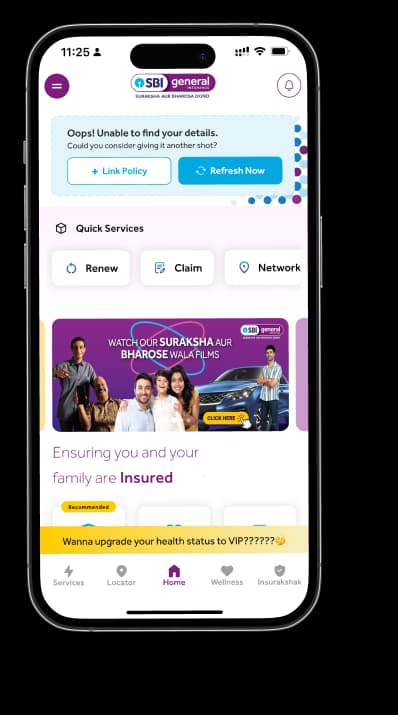
Access and manage all your Insurance Needs in one place, right at your Fingertips.



4/5*
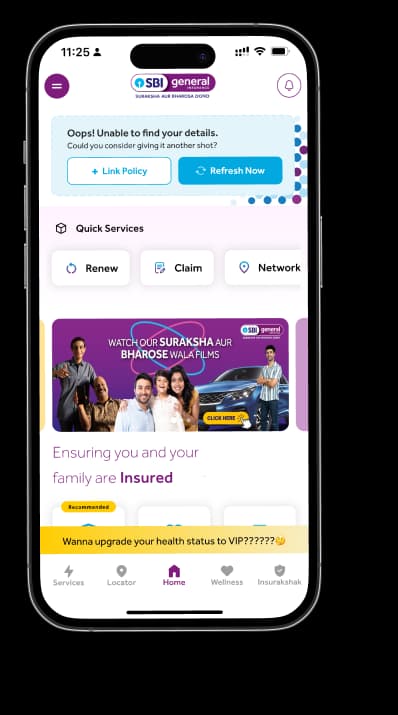
Access and manage all your Insurance Needs in one place, right at your Fingertips.


Vision
Our vision is to become the most trusted general insurer for a transforming India.
Mission
Our mission is to provide simple and innovative general insurance solutions, be responsive to our customers' needs and build a sustainable business for the future.
We're socially active!