


 Contact Us


 Other Insurance
What Is an NOC for a Car?

Date: Jul 8, 2026 - Last Modified Jul 9, 2026


The NOC full form in vehicle documentation is No Objection Certificate, a document issued by the RTO permitting certain registration and ownership-related changes. It is a significant document that is required in various legal and administrative processes. It is commonly required when a vehicle is transferred to another state, sold to a buyer in a different jurisdiction, or when certain registration-related updates are needed.
As per guidelines mentioned under Section 48 of the Motor Vehicles Act, 1988, an NOC for the car is a mandatory requirement. A vehicle owner must obtain it from their original registering authority, before officially transferring ownership or moving the vehicle to another state.
This article focuses on understanding the purpose of an NOC and the documents required for it. Also looked at is the application process that can help vehicle owners complete ownership and registration formalities efficiently.
When Do You Need a Vehicle NOC?
An NOC for a car may be required in several situations involving vehicle ownership and registration changes.
Some of the most common circumstances include:
Permanent transfer of a vehicle to another state
Sale of a vehicle to a buyer residing in a different state
Changing the jurisdiction from one RTO to another
Vehicle relocation due to employment or residence changes
Certain ownership transfer procedures
Registration updates involving interstate movement
In many interstate transactions, an NOC for RC transfer becomes an essential requirement before the vehicle can be registered with the new transport authority.
Moreover, if the vehicle was bought on a loan and its entire repayment has been completed, then the NOC might be required to remove hypothecation from the RC.
Understanding the NOC full form for vehicle process can help vehicle owners prepare for these requirements in advance.
Documents Required for a Car NOC
Obtaining an NOC certificate for car usually requires submission of several supporting documents to the concerned RTO.
Commonly required documents include:
Application in Form 28
Certified copy of the Registration Certificate (RC)
Valid motor insurance certificate
Recent road tax payment receipts
Pollution Under Control (PUC) certificate
Chassis and engine pencil print
Signature identification of the owner
Vehicle owner's identity proof
Address proof
Applicants may also need to submit the prescribed car NOC form provided by the transport authority.
Note: Requirements may differ slightly depending on the state and specific circumstances of the application.
Step-by-Step Process to Obtain a Vehicle NOC
The process to obtain an NOC for a car involves several steps that must be followed carefully.
Here are the necessary steps:
Step 1: Collect the Required Documents
Gather all necessary documents, which may include the RC, valid insurance certificate (such as a car insurance policy), identity proof, signature proof, vehicle details, and PUC certificate.
Step 2: Complete the Application
Fill out the prescribed car NOC form accurately with vehicle and owner details.
Step 3: Submit the Application
Submit the completed application (Form 28) and supporting documents to Parivahan Seva portal online or to the RTO office where the vehicle is currently registered.
Step 4: Pay the Prescribed Fee
Make a payment of ₹100 as part of the process for the NOC application.
Step 5: Verification Process
The transport authority verifies the submitted documents and checks for any pending taxes, challans, or legal issues.
Step 6: Issuance of NOC
Once all verifications are completed successfully, the RTO issues the NOC certificate for car within a specified timeframe.
The certificate can then be submitted to the destination RTO for further registration procedures.
Vehicle owners should also ensure that their car insurance remains valid during the transfer process and complete any required car insurance renewal formalities to avoid coverage gaps.
Importance of an NOC During Vehicle Transfer
An NOC for a car plays a critical role during ownership transfer and re-registration. To put it simply, having the NOC certificate means that the issuing authority has approved the transfer, making the process legally valid.
Here’s why it is important:
- It confirms that there are no objections to the transfer.
- It ensures that all formalities are legally met during the vehicle transfer and ownership process
- It verifies that taxes and dues have been cleared
- It supports smooth interstate registration procedures
- It facilitates hassle-free sales, purchases, and registration of vehicles
- It prevents future ownership disputes
It assists authorities in maintaining accurate vehicle records.
Common Reasons for NOC Rejection
While obtaining an NOC is generally straightforward, certain issues may result in rejection or delays. Here are some of the most common mistakes to avoid NOC rejection:
Incorrect Information
Providing accurate and up-to-date information is crucial during the NOC process. Failing to do so can result in delays or rejection of the NOC Certificate.
Incomplete Documentation
Failure to submit all required documents may result in the NOC being rejected.
Pending Road Taxes
Outstanding tax liabilities are among the most common reasons for rejection.
Unpaid Traffic Challans
Pending traffic penalties must usually be cleared before approval.
Police Verification Issues
Negative verification findings may result in rejection depending on applicable regulations.
Vehicle owners should carefully review all documentation before submission and ensure that there are no pending liabilities.
Maintaining valid and mandatory third-party insurance coverage can also help ensure smooth ownership and registration processes. Insurance providers such as SBI General Insurance help provide broader coverage and financial protection by offering third-party insurance and comprehensive solutions.
Additionally, the car NOC validity period is generally 6 months. Hence, applicants should complete subsequent registration formalities within the prescribed timeframe after receiving the certificate.
Conclusion
A No Objection Certificate is an important document that facilitates lawful vehicle transfers and registration updates. Whether moving a vehicle to another state or completing ownership transfer procedures, obtaining a valid NOC for car by adhering to all the requirements beforehand may help to ensure compliance with transport regulations and reduce the risk of future disputes.
After completing the NOC process, reviewing your motor insurance coverage is equally important. SBI General Insurance offers plans that can help protect your vehicle against unexpected situations.
Note: The given information has been compiled from digitally available resources and is indicative in nature. It is subject to change due to several factors. Individuals are advised to verify information with their nearest RTO before proceeding.
FAQs
1. What is a No Objection Certificate (NOC) for a car?
The No Objection Certificate (NOC) is an official document issued by the RTO confirming that there are no objections to transferring the car’s registration to another jurisdiction.
2. When is an NOC required for a vehicle?
It is commonly required during interstate vehicle transfers, ownership changes involving another state, and certain registration-related procedures.
3. How can I apply for a car NOC from the RTO?
You can apply by submitting the required car NOC form, supporting documents, and applicable fees to the concerned RTO.
4. What documents are needed to obtain a vehicle NOC?
Common requirements include the RC, insurance certificate, identity proof, address proof, PUC certificate, and other supporting documents as specified by the RTO.
5. How long is a car NOC valid after issuance?
The car NOC validity period is usually 6 months, but it may vary depending on applicable RTO guidelines. Applicants should generally complete the transfer process within the specified timeframe after obtaining the certificate.
This blog is intended solely for educational and informational purposes. Content reflects data at time of publication and may not accurately reflect current premiums, terms, or regulations. Readers are encouraged to confirm the accuracy and relevance of the data before making any significant decisions. SBI General Insurance disclaims responsibility for any errors or consequences arising from the use of outdated information provided herein. For more details, please refer to the policy wordings and prospectus before concluding the sales. *Add-ons are subject to payment of additional premium.
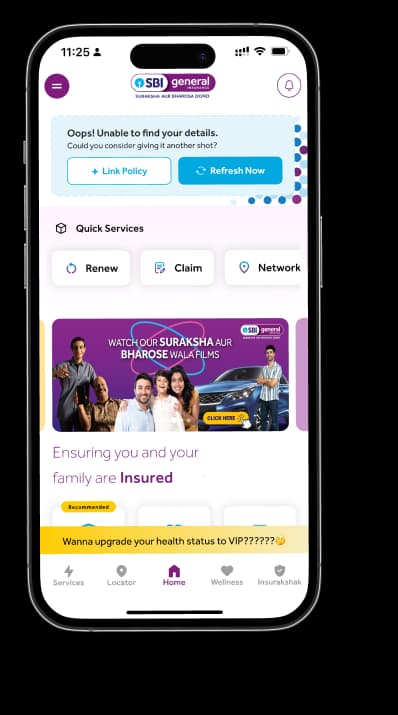
Access and manage all your Insurance Needs in one place, right at your Fingertips.



4/5*
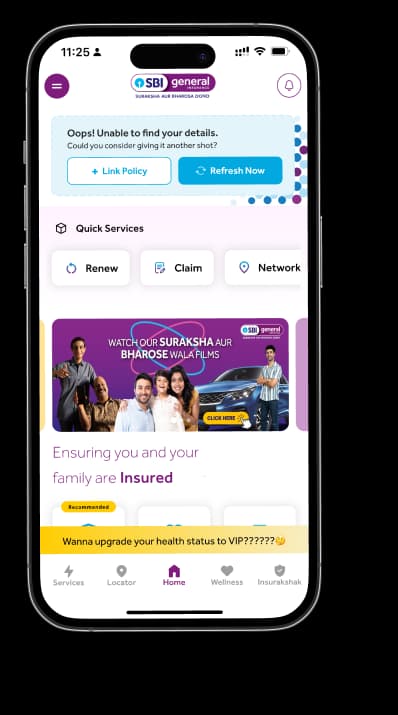
Access and manage all your Insurance Needs in one place, right at your Fingertips.


Vision
Our vision is to become the most trusted general insurer for a transforming India.
Mission
Our mission is to provide simple and innovative general insurance solutions, be responsive to our customers' needs and build a sustainable business for the future.
We're socially active!