


 Contact Us


 Other Insurance
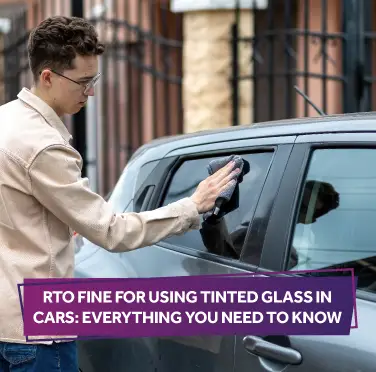
RTO Fine for Using Tinted Glass in Cars: Everything You Need to Know
Date: Nov 22, 2024 - Last Modified Sep 15, 2026


Tinted windows in cars offer a blend of privacy, aesthetic appeal, and protection from harmful UV rays.
This article delves into the RTO guidelines for tinted glass in vehicles, the fines associated with violations, the legal framework governing tinted windows, and the impact of such modifications on car insurance.
What are RTO Guidelines for Tinted Glass in Cars?
The Regional Transport Office (RTO) in India has established clear guidelines regarding the permissible levels of tint on vehicle windows. These regulations focus on the visible light transmission (VLT) levels for front, rear, and side windows. The primary goal is to ensure that sufficient light penetrates the vehicle, allowing for clear visibility from both inside and outside.
How much tinting is legal in India?
- Front and Rear Windshields: Must allow a minimum of 70% VLT.
- Side Windows: Must allow a minimum of 50% VLT.
These requirements are designed to ensure that drivers maintain optimal visibility, especially during adverse weather conditions or at night. Additionally, they allow police officers to see your car's interiors, supporting crime prevention and helping to ensure public safety.
Exceptions
Certain individuals, such as those with Z or Z+ security coverage, are permitted to use darker tints for security reasons. However, this does not apply to the general public.
Also Read: Know Everything about RTO Registration Process
What is the Fine for Tinted Glass in Cars in India?
Violating the RTO's regulations on tinted glass means you will have to pay fines and penalties. The severity of the fine increases with repeated offences, and authorities enforce these regulations strictly. The penalties are as follows:
- First Offense: ₹100 fine.
- Second Offense: ₹300 fine.
- Third Offense and Beyond: ₹300 fine, along with the possibility of driver's license suspension.
While the initial fines may appear minimal, repeated violations can result in more severe penalties, including suspending driving privileges. Additionally, police officers can ask violators to remove illegal tints on the spot.
Laws for Tinted Windows for Cars in India
The car tint rules in India stem from a commitment to public safety and transparency. These regulations are intended to minimize the risk of accidents and prevent the misuse of tinted windows for criminal activities. In addition to VLT requirements, the laws clearly state that no vehicle should have aftermarket tinting that reduces VLT levels below the legal limits.
Key Points to Remember:
- No Aftermarket Tinting: The application of aftermarket dark tints or films that violate the VLT levels is strictly prohibited.
- Factory Tinting: Some vehicles come equipped with factory-installed tints that comply with permissible VLT levels. Such factory tints are typically allowed, provided they meet the criteria of 70% VLT for front and rear windows and 50% for side windows.
Also Read: Five Motor Insurance Add-ons Explained
Why Is Car Window Tinting Not Allowed in India?
Several key reasons justify the restrictions on window tinting in India:
- Crime Prevention: Dark tints can be exploited by criminals to conduct illegal activities within vehicles, as they hinder clear visibility from the outside.
- Accident Prevention: Tinted windows can impair a driver’s visibility, particularly in low-light conditions or at night, leading to a higher likelihood of accidents.
While many vehicle owners may prefer tinted windows for privacy or aesthetic appeal, following these legal limitations is essential to avoid penalties and ensure safety on the roads.
Does Tinted Window Cars Affect Car Insurance?
When it comes to car insurance, violating traffic laws, including those concerning window tinting, can have serious implications. Insurance companies generally expect policyholders to comply with all traffic regulations, and any violations may affect claims.
In the event of an accident, if it is discovered that a vehicle's windows are illegally tinted, the insurance company may refuse to honour the claim. This is because violating tinting laws constitutes a breach of legal compliance, potentially nullifying the coverage.
Moreover, some motor insurance providers might impose higher premiums on vehicles with tinted windows, even if they fall within legal limits, due to perceived risks. Therefore, it is crucial to remain within permissible tint levels to avoid complications with insurance policies.
Conclusion
India’s regulations regarding tinted glass in cars are clear and strict, ensuring that all vehicles maintain a level of visibility that prioritizes safety and security. While certain exceptions exist, the general public must comply with these guidelines to avoid fines and potential issues with car insurance. Given the increasing severity of penalties for repeated offences, it is in every car owner’s best interest to adhere to these rules.
If you own a vehicle with tinted windows, ensure they comply with the legal visible light transmission (VLT) limits to avoid fines and guarantee full coverage from your insurance provider. Additionally, securing comprehensive car insurance is vital for protecting your vehicle and yourself against unexpected incidents.
For those seeking reliable insurance, SBI General Insurance offers a range of policies tailored to individual needs. With competitive premiums and extensive coverage, you can feel secure knowing your vehicle is protected, in the face of unexpected penalties or accidents.
Disclaimer: The above information is indicative in nature. For more details on the risk factor, terms and conditions, please refer to the Sales Brochure and Policy Wordings carefully before concluding a sale.
This blog is intended solely for educational and informational purposes. Content reflects data at time of publication and may not accurately reflect current premiums, terms, or regulations. Readers are encouraged to confirm the accuracy and relevance of the data before making any significant decisions. SBI General Insurance disclaims responsibility for any errors or consequences arising from the use of outdated information provided herein. For more details, please refer to the policy wordings and prospectus before concluding the sales. *Add-ons are subject to payment of additional premium.
Access and manage all your Insurance Needs in one place, right at your Fingertips.



4/5*
Access and manage all your Insurance Needs in one place, right at your Fingertips.


Vision
Our vision is to become the most trusted general insurer for a transforming India.
Mission
Our mission is to provide simple and innovative general insurance solutions, be responsive to our customers' needs and build a sustainable business for the future.
We're socially active!