

 Contact Us
 Other Insurance
A Complete Guide on Traffic Rules and Signs
Date: Apr 6, 2026 - Last Modified Apr 9, 2026


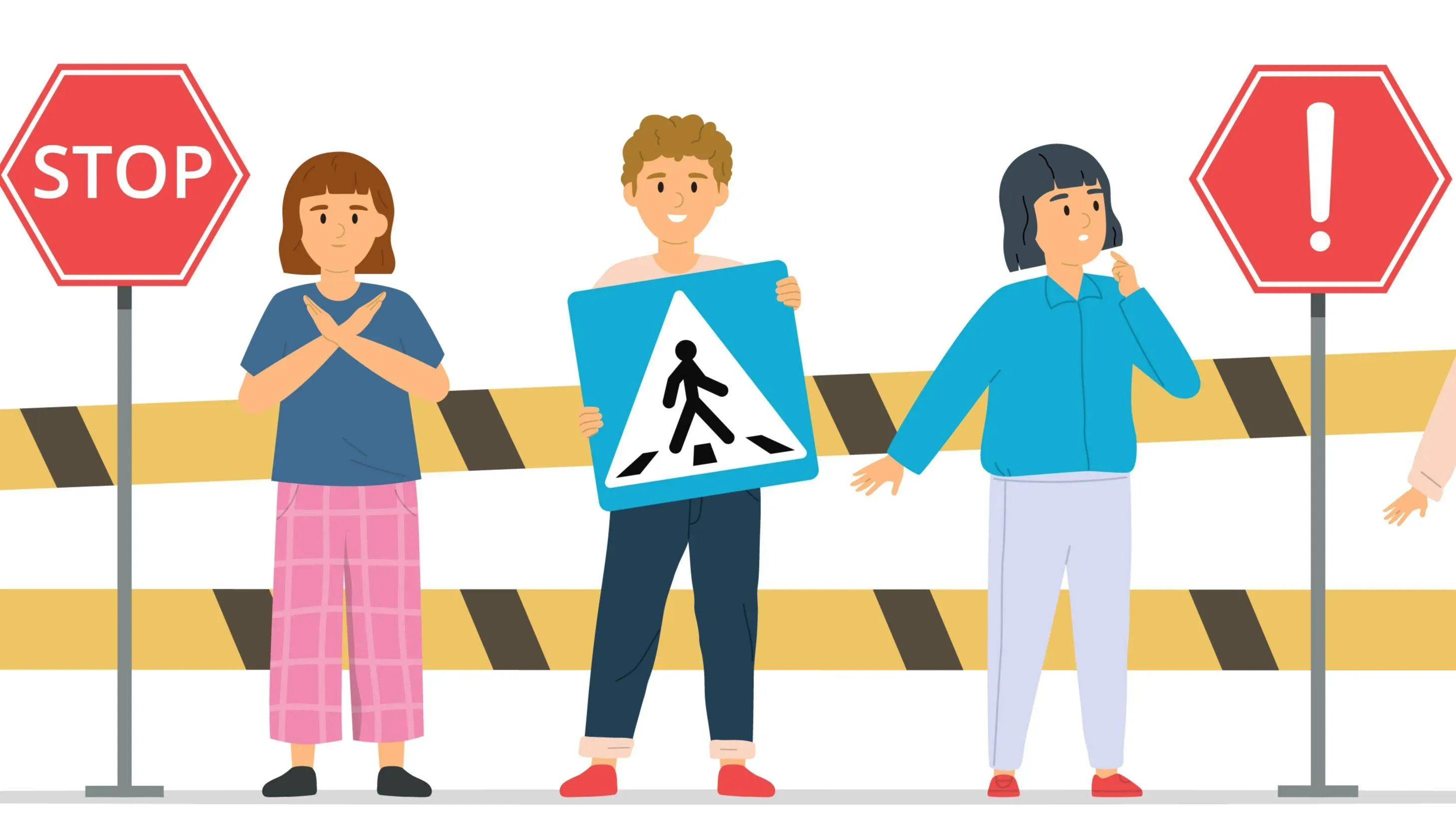
A shared understanding between the drivers or riders and pedestrians contributes to road safety. Traffic rules and signs play a crucial role in reaching such an understanding. They are simple visual guides helping everyone navigate smoothly. Whether you are an aspiring driver preparing to clear a driving test or simply wish to refresh your memory on the key norms, this guide on traffic rules and signs helps you stay compliant and confident on the road.
Why Traffic Rules Matter
As traffic rules and signs guide the vehicles and pedestrians in taking the right call on the road, they ensure road safety.
They help you understand the proper regulation for speed to maintain an ideal traffic flow and make your journey smoother.
The chances of accidents are significantly reduced as drivers and pedestrians coordinate better with the established rules.
Types of Traffic Rules & Signs
The different rules and signs for traffic control are broadly categorised into these segments:
1. Mandatory or Regulatory Traffic Signs
Mandatory traffic signs are designed for smooth traffic management. These are all basic signs indicating the right approach to stopping, crossing, and navigating different lanes and intersections.
Some different signs of traffic rules include stop signs, vehicle prohibition signs, limit signs, and regulations pertaining to turning.
Sub-Types | Signs Included | What They Indicate |
Safety Action-oriented Signs | Stop, Give Way, No Entry | Regulates proper movement of vehicles at junctions and intersection without collision |
Direction Control Signs | One Way, Compulsory Turn Left, Compulsory Turn Right, Compulsory Ahead or Turn Right, Compulsory Ahead or Turn Left, Compulsory Keep Left | Guides vehicles to maintain an organised traffic flow |
Access Restriction Signs | No Entry, Vehicles Prohibited in Both Directions | Restricts access to certain roads or directions when they’re closed or busy |
Turn Restriction Signs | Right Turn Prohibited, Left Turn Prohibited | Prevents turns that could create unsafe intersections |
Limit Control Signs | Speed Limit, Load Limit, Width Limit, Height Limit, Length Limit | Defines operational limits based on the road infrastructure |
Parking and Stopping Instructions | No Parking, No Stopping | Controls where vehicles can stop or park |
Mandatory Facility Signs | Compulsory Cycle Track, Compulsory Sound Horn | Helps drivers adapt to the changing conditions on the road |
2. Cautionary or Warning Traffic Signs
These signs alert you to take quick action, which helps in preventing hazardous situations. You typically find these signs at curves and crossings.
Some examples in this category include curve and bend signalling signs, boards indicating the type of road ahead, signs alerting about vulnerable entities ahead, etc. Based on these signals, you can control your vehicle’s speed or direction.
Sub-Types | Signs Included | What They Indicate |
Road Curve Warnings | Right Hand Curve, Left Hand Curve, Hair Pin Bend, Reverse Bend | Alerts about upcoming sharp road sections. |
Intersection Warnings | Cross Road, Y-Intersection, Staggered Intersections, Major Road Ahead | Warns about junctions where traffic can merge or intersect |
Road Structure Warnings | Narrow Road Ahead, Road Widens Ahead, Narrow Bridge | Informs about changing road width and bridge conditions |
Traffic Pattern Signals | Round About, Dual Carriageway Ends, Gap in Median | Indicates upcoming changes in road designs |
Community Zone Warnings | School, Pedestrian Crossing, Cycle Crossing | Alerts about areas where community movement is frequent |
Animal Crossing Warnings | Cattle, Horses | Warns about possible animal crossings |
Road Surface Condition Warnings | Slippery Road, Loose Gravel, Hump or Rough Road, Dangerous Dip | Alerts about road surface conditions that require speed adjustment |
Terrian Warnings | Steep Ascent and Descend | Informs about uphill and downhill sections |
Hazard Warnings | Men at Work, Barrier Ahead, Falling Rocks | Indicates risky zones to avoid |
Railway Crossing Warnings | Guarded and Unguarded Railway Crossing | Indicates halting possibilities ahead |
Other Cautionary Warnings | Speed Breaker, Ferry | Warns about speed adjustments |
3. Informative Traffic Signs
These signs give you crucial intel on the type of facilities on your way, like a public telephone, petrol pump, hospital, eatery, resting place, etc. You also learn about the possible routes for different destinations for advance preparation.
Sub-Types | Signs Included | What They Indicate |
Emergency and Public Service Facilities | Hospital, First-Aid Post, Police Station | Shows locations where essential services are available |
Transport and Travel Services | Petrol Pump, Taxi Stand, Airport | Indicates availability of refuelling and public transportation |
Communication Facilities | Public Telephone | Informs about public communication facilities in case private cell phone is inoperable |
Food and Rest Places | Eating Place, Light Refreshment, Resting Place | Informs about places to stop for meals or rest |
Navigation Signs | Advance Direction Sign, Destination Sign, Re-Assurance Sign, Place Identification Sign | Helps navigate routes or confirm directions to destinations |
Road Access Guidance | No Through Road, No Through Side Road | Indicates disconnecting roads and further routes |
Parking Guidance | Park This Side | Shows designated parking locations |
Pedestrian Facilities | Pedestrian Subway and Foot Over Bridge | Shows infrastructure for pedestrian crossing |
*Note: The breakdown above gives you a general overview of the important driving rules and signs. The traffic rules and signs are subject to variation as per the varied state laws. It’s best to check your specific state’s guidelines for the exact applicability.
Speed Limits & Lane Discipline
The maximum speed limit rules differ based on state laws. Commonly, the suggested speed limit near residential and sensitive areas is the minimum. They reach the maximum limit on highways.
Per the Ministry of Road Transport & Highways, speed limits as notified on 6th April, 2018 are:
| Motor Vehicle Category | Expressway with Access Control | 4 Lane & Above Divided Carriageway | Roads within Municipal Limits | Other Roads |
| Passenger-carrying motor vehicles compromising a maximum of 8 seats, including driver’s seat. | 120 km/h | 100 km/h | 70 km/h | 70 km/h |
Passenger-carrying vehicle with maximum seating of 9, including driver’s seat. | 100 km/h | 90 km/h | 60 km/h | 60 km/h |
Goods-carrying vehicles | 80km/h | 80 km/h | 60 km/h | 60 km/h |
Motorcycles | 80km/h (if permitted on Expressway) | 80 km/h | 60 km/h | 60 km/h |
Quadricycle | N/A | 60 km/h | 50 km/h | 50 km/h |
Three-wheeled vehicles | N/A | 50 km/h | 50 km/h | 50 km/h |
Other lane discipline and safety tips to maintain decorum on the roads include:
Comply with traffic signals, boards, and road signs.
Strictly avoid drinking and driving.
Carry driver’s license, vehicle insurance papers, vehicle registration, road tax & P.U.C. certificates.
Always wear seatbelts while driving a car, van, truck, etc.
Wear a government-approved helmet while riding a two-wheeler.
Use the indicator or hand signals without fail while changing lanes.
Prioritise vehicle maintenance to prevent sudden breakdowns and accidents while on the road.
Keep your mobile phone unattended while driving/riding a vehicle to focus on the different signs of traffic rules.
Turn the brake lights on before you halt to prevent a collision.
Be considerate of children, the elderly, and the handicapped, regardless of the warning signs.
Avoid sudden decisions like swerving your vehicle, moving unexpectedly, or hitting the brakes too late.
Avoid using the clutch or footrest while driving.
Park only in the designated areas and avoid parking on the road.
Avoid overloading your vehicle beyond the prescribed limit by the manufacturer.
Penalties for Traffic Violations
The penalty for violating traffic rules varies according to the particular offence. Here are some of the common fines and corrective measures enforced as per the Motor Vehicles Act:
a. Challan Related
Challan is issued for activities compromising road safety, like drunk driving, overloading, dangerous driving, juvenile driving, riding without a permit, not wearing a helmet or seatbelt, etc. The penalty can include a fee ranging between ₹1,000 and ₹10,000 and imprisonment based on the specific offence.
b. Traffic Signals Related
The penalty for signal jumping, driving past police hold-up, using high beam unnecessarily, failing to give an appropriate signal, improper use of headlights and tailgates, etc., comes under the violation of traffic signals. The penalty applicable for most offences is up to ₹500, while repeated offences attract a fine of ₹1,500.
c. Speeding Related
Another form of violation of traffic rules and signs pertains to speeding or rash driving, where other vehicles and/or other road participants are affected. Such an offence attracts a fee of ₹5,000 with up to ₹10,000 fine on repeated offence.
d. Parking Related
When you park in a no-parking zone and cause obstruction to the normal flow of traffic and other pedestrians, you incur parking-related penalties. The fee is typically ₹500 for the first offence and can go up to ₹1,500 for the second offence. In most cases, the penalty is calculated based on local authorities.
e. Vehicle-Related
The penalty for violation of traffic rule and signs can differ for commercial and privately owned vehicles. For commercial vehicles, the violations may include exceeding weight limits, misconduct, driving without the specified uniform (for applicable vehicles), transporting hazardous goods, etc. The fine ranges between ₹500 and ₹1,500 based on the extent of the offence.
For private vehicles, the violations may include unauthorised upgrades, driving without proper documents, violating bike or car safety rules, etc. The fine may be accompanied by imprisonment and differs based on the specific offence.
f. Towing Related
Parking violations and safety concerns can lead to towing of your two-wheeler, car, jeep, or truck. The towing challan is issued at a fine of ₹500 to ₹1,500 based on the vehicle type and the exact reason for towing.
g. Driving-Related
Non-compliance with the directional traffic signs and violation of safety standards while driving result in a fee ranging between ₹1,000 and ₹5,000 based on the type of driving offence.
In addition to the fines, penalties may also include licence suspension, community service, and in some cases, imprisonment.
*Note: Get a detailed list of penalties applicable for violation of traffic rules and signs here. The exact fine may differ as per local authorities and state-specific regulations.
Conclusion
With this guide on traffic rules and signs, you can confidently approach the traffic and changing road conditions. These are simple steps you take to make your journeys smoother and ensure the safety of everyone around you.
Besides adhering to these bike and car safety signs for regular commute, you also want to financially protect your vehicle from untoward situations. This is where motor insurance from SBI General Insurance comes to your rescue. You can choose the policy type specific to your needs and affordability. The buying process is streamlined with quick processing and smooth claim settlements.
Disclaimer: This blog offers general information on car insurance for educational purposes only. Content reflects data at time of publication and may not accurately reflect current premiums, terms, or regulations.
FAQs
1. What is the most important traffic sign for drivers?
Each traffic sign has its intended purpose. Hence, one single sign does not qualify as the most important. It’s critical to follow all mandatory, directional, and warning signs.
2. What does a red circle road sign mean?
A red circle typically indicates a restriction. It is primarily found on signs like No Entry, No Parking, No Right Turn, Stop, etc.
3. Are traffic rules tested during a driving license exam?
Yes, knowledge of driving rules and signs is an integral part of a driving license exam. It indicates that you have properly understood the guidelines to maintain road safety.
4. How strictly are traffic rules enforced in India?
Traffic rules are enforced through challans, police inspections, digital monitoring, and CCTVs. Violations result in fines and, in certain cases, imprisonment.
5. Why is lane discipline important on highways?
Lane discipline keeps traffic organised. When you stay in the correct lane, you can better respond to road signs and avoid overtaking confusion.
6. What should drivers do when they see a warning sign?
Drivers should, in most cases, slow down to prepare for the road conditions ahead when they see warning signs.
7. How can new drivers learn traffic signs easily?
New drivers can study driving school materials and review traffic sign charts available on the State Transport Authority websites. Practising during everyday travel is also important to quickly adapt to the learning.
This blog is intended solely for educational and informational purposes. Content reflects data at time of publication and may not accurately reflect current premiums, terms, or regulations. Readers are encouraged to confirm the accuracy and relevance of the data before making any significant decisions. SBI General Insurance disclaims responsibility for any errors or consequences arising from the use of outdated information provided herein. For more details, please refer to the policy wordings and prospectus before concluding the sales. *Add-ons are subject to payment of additional premium.
Access and manage all your Insurance Needs in one place, right at your Fingertips.


4/5*
Access and manage all your Insurance Needs in one place, right at your Fingertips.


Vision
Our vision is to become the most trusted general insurer for a transforming India.
Mission
Our mission is to provide simple and innovative general insurance solutions, be responsive to our customers' needs and build a sustainable business for the future.
We're socially active!